About half of consumers have expressed a willingness to purchase a 3D printed homes if the price and location conditions are right.
Recently, Realtor.com cited a survey by loan comparison firm LendingTree, reporting that 49% of respondents would consider buying a 3D printed home if it were located in their desired area and fit their budget.
Additionally, 36% of respondents anticipated that 3D printing technology would help lower housing affordability burdens within the next 10 years.
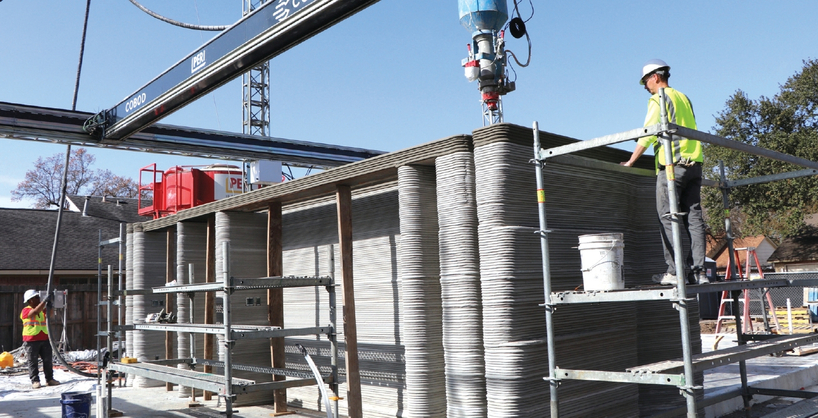
3D printed homes are constructed by large 3D printers layering special concrete materials to form walls. Based on digital blueprints, walls can be rapidly produced, allowing some construction phases to be completed in just a few weeks.
Experts cite fast construction times and high durability as the primary advantages of 3D printed homes.
They are known to withstand strong winds and fires better than conventional homes, while also showing relative resilience against pest damages such as mold and termites. Another advantage is the ease of implementing designs that are costly and time-consuming with traditional methods, such as curved walls or unique structures.
On the other hand, some analyses suggest that cost-saving effects may not be as significant as expected. Lance Thrailkill, co-founder of 3D printing technology firm Print3D Technologies, explained that the printer is only a part of the overall construction process, and costs for land acquisition, site preparation, foundation work, utilities, labor, transportation, and finishing still apply.
The difficulty of remodeling is also noted as a drawback. Changing the structure of concrete-printed walls later can present greater limitations compared to traditional wood-frame houses. Furthermore, the distinctive exterior appearance featuring stripe-like layers formed as the printer stacks concrete can appeal differently depending on consumer preferences.
Repairs and maintenance must also be considered. As 3D printed homes are not yet mainstream, finding specialized roofing, window, and painting contractors familiar with this type of concrete structure can be challenging.