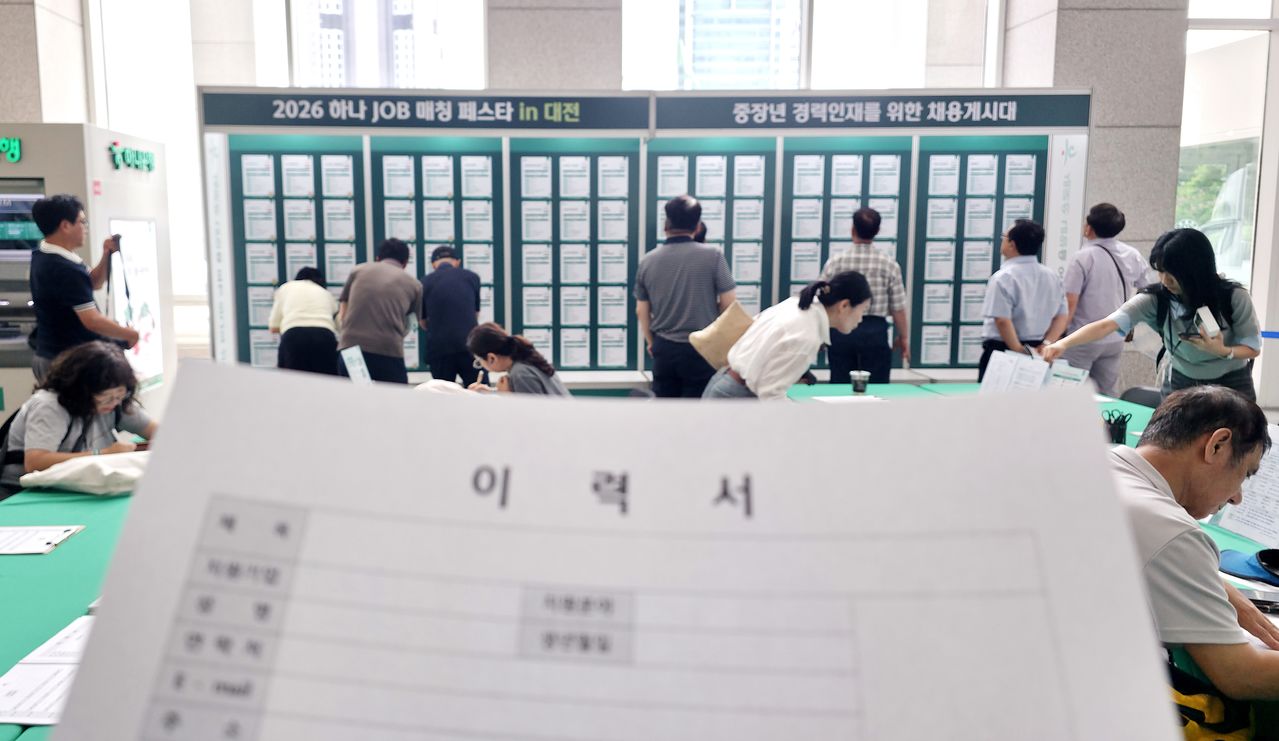
South Korea’s 40s job market is facing an unprecedented crisis as the generation trapped between youth and senior support falls into the employment blind spot. Ahn Si-young, turning 40 next year, visited a mid-aged job fair in Seoul last month because government support for young job seekers is no longer available to her. Despite holding a domestic bachelor’s degree, studying abroad in the US, and earning a master’s degree in China, finding stable employment in Korea proved difficult. She expressed her frustration over unrecognized experiences turning into ‘water careers’ that fit neither youth nor senior employment programs.
Similarly, Choi, a 48-year-old semiconductor engineer who resigned from a small-to-medium enterprise last May, is struggling with re-employment. As company conditions worsened, high-paying research positions were laid off first. Due to the specialized nature of semiconductor defect analysis, the recruitment market is narrow, yet he feels too young to transition into completely unrelated fields like taxi driving. Despite his willingness to adjust his salary expectations and undergo youth-style internship training, rigid hiring practices continue to lock him out.
Rising ‘Inactive’ Rates and Structural Pressures in the 40s Job Market
The job market for the ‘sandwich generation’ of 40-somethings is visibly unstable. According to National Statistics data from August, while overall employment increased, the number of employed individuals in their 40s dropped by 17,000 compared to the previous year. This marks an eight-month consecutive decline this year, driven by population shrinkage alongside slumps in manufacturing and construction, corporate restructuring, and early retirements.
A recent report by the National Assembly Research Service highlighted that the proportion of economically inactive 40-somethings who are resting without looking for work rose from 11.5% in 2010 to 19% last year. Furthermore, the percentage of individuals in their 40s citing ‘difficulty in finding a job’ as the reason for resting jumped from 23.1% in 2018 to 38.3% in 2025.
AI Expansion and Escalating Job Insecurity
Employment anxiety is further intensified by the rapid adoption of artificial intelligence. A 43-year-old IT worker who transitioned from a conglomerate to a commercial bank stated that AI integration has significantly reduced development assignments, creating an atmosphere of silent resignation and daily anxiety for older workers with young children.
Data shows that 57.4% of individuals in their 40s feel high levels of employment insecurity—the highest among mid-aged groups aged 40 to 64. Meanwhile, the average retirement age from primary jobs for workers aged 55 to 64 dropped further to 49 years, exacerbating long-term financial worries.
Experts emphasize that the employment instability of the core productive 40s demographic must not be neglected. Proposed solutions include introducing a ‘National Career Management Doctor’ system, similar to health check-ups, to provide personalized career management services and prevent mid-life job losses from cascading into retirement poverty.