The South Korean National Intelligence Service (NIS) faces increasing scrutiny after allegations emerged that it received information and help from a high-ranking Korean-American former U.S. intelligence officer with luxury bags and various entertainments.
The indictment details how officials from the South Korean government provided money and gifts, accompanied by explicit and detailed photos. Diplomats criticize these actions as lowly conduct.
The U.S. federal prosecutors indicted Sue Mi Terry, a former senior analyst at the CIA and a well-known North Korea expert, who is also a senior fellow at the Council on Foreign Relations, on July 16.
Terry is accused of accepting “luxury goods” and other gifts from South Korean NIS officials in exchange for writing articles, conducting interviews, and providing congressional testimony that supported South Korea’s positions.
Regarding this, South Korea’s presidential office said on July 18 that it would review the preceding Moon Jae-in administration’s alleged involvement with the former CIA official, who faces charges of being an unregistered agent for the South Korean government.
[Ex-CIA and NSC official Sue Mi Terry indicted as ‘unregistered agent’ for South Korea]
[Emmy nomination for ‘Beyond Utopia’ overshadowed by charges against producer Sue Mi Terry]
When asked whether there would be a government-wide investigation or a reprimand for the NIS agents involved in Terry’s case, a senior official from the presidential office told reporters that “if there is an investigation or reprimand, it would be necessary to direct them toward figures in the Moon administration.”
“Everything the NIS agents were photographed doing with Terry happened during the previous administration,” the official said. “I think the story emerged because the Moon administration purged the NIS of agents capable of professional overseas activities and replaced them with amateurish people.”
In fact, all luxury goods that she allegedly received from the South Korean government officials were delivered during the Moon administration.
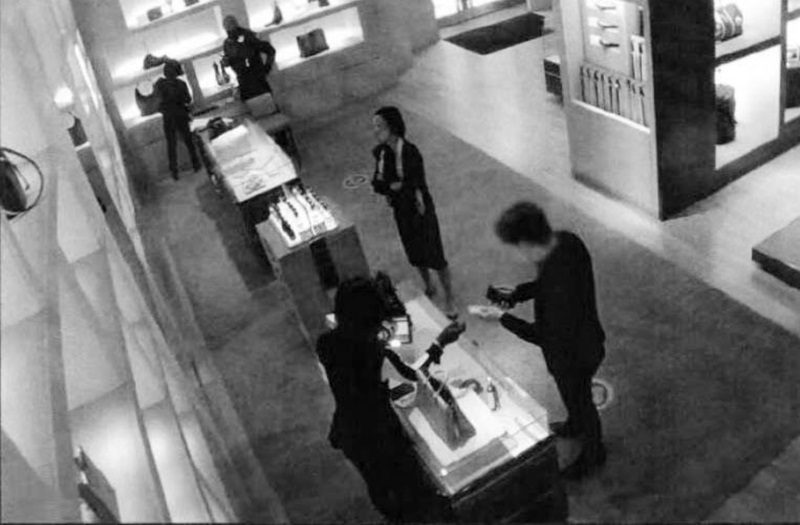
According to the indictment, South Korean NIS handlers gave Terry a $2,845 designer coat and a $2,950 designer handbag in late 2018 and early 2019 potentially as a reward for arranging a private meeting between the Director of the South Korean NIS and a senior official from the Department of Defense.
In specific, an NIS handler purchased a $2,845 Dolce and Gabbana coat for Terry in November 2019. In that same month, Terry returned the coat and purchased a $4,100 Christian Dior coat, paying the difference.
In November 2019, a NIS handler gave Terry a 2,950 Bottega Veneta handbag, and another NIS handler gave a $3,450 Louis Vuitton handbag to her in April 2021.
President Moon Jae-in’s term in office was from May 2017 to May 2022, and all “luxury goods” were delivered during this period. During President Park Geun-hye’s term (Feb. 2013-March 2017) and the current President Yoon (May 2022–present), no such items were delivered to Terry.
Under Park and Yoon’s terms, the U.S. authorities are looking into charges such as receiving $26,035 to a think tank where she was working and receiving $500 for writing articles such as the one highlighting the significance of President Yoon’s visit to the U.S.
Details are to be further investigated and revealed through the court process. However, it is noteworthy that she was a strong critic of the Moon administration. She wrote various opinion articles and conducted interviews with various media outlets, criticizing several of Moon’s policies, such as the one dubbed “Peace on the Korean Peninsula Process.”
Terry’s lawyer, Lee Wolosky, also pointed out this issue in a statement released after the indictment. “These allegations are unfounded and distort the work of a scholar and news analyst known for her independence and years of service to the United States,” he said.
“In fact, she was a harsh critic of the South Korean government during times this indictment alleges that she was acting on its behalf. Once the facts are made clear it will be evident the government made a significant mistake.”
One of the severest issues is that despite being trailed by the FBI for years, the NIS continued its clumsy contacts, turning this incident into a potential international diplomatic embarrassment.
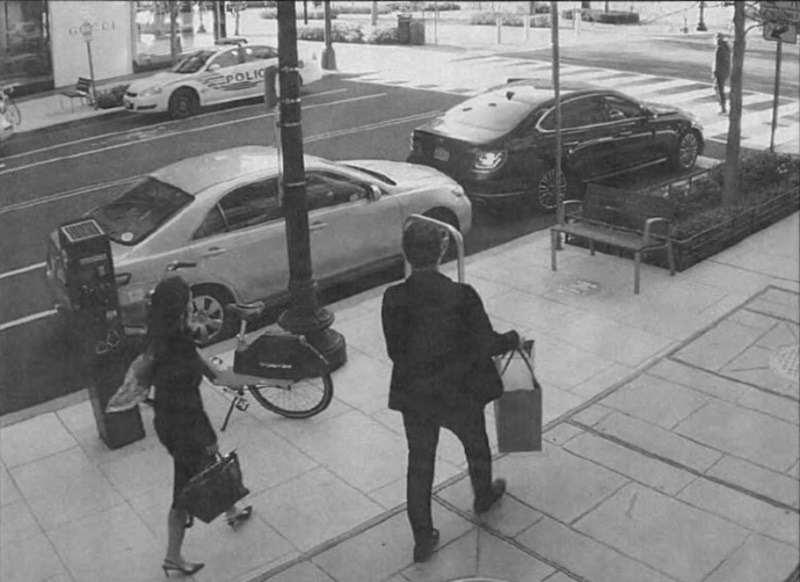
For example, the NIS used official embassy checks for payments, which could be tracked by U.S. intelligence agencies. They also continued problematic conversations via phone and text that could be searched and scrutinized.
Since the FBI began its surveillance in 2013, they have collected photo evidence from luxury stores’ internal cameras and upscale restaurants. The indictment reveals the FBI warned Terry multiple times about the risks posed by NIS activities. Essentially, the FBI had a comprehensive understanding of the NIS’s movements.
The NIS’s amateurish approach persisted for over a decade, regardless of changes in the South Korean government, making it even more concerning. Currently, the NIS has not clarified whose orders these activities were conducted under or if they were officially sanctioned through diplomatic channels.
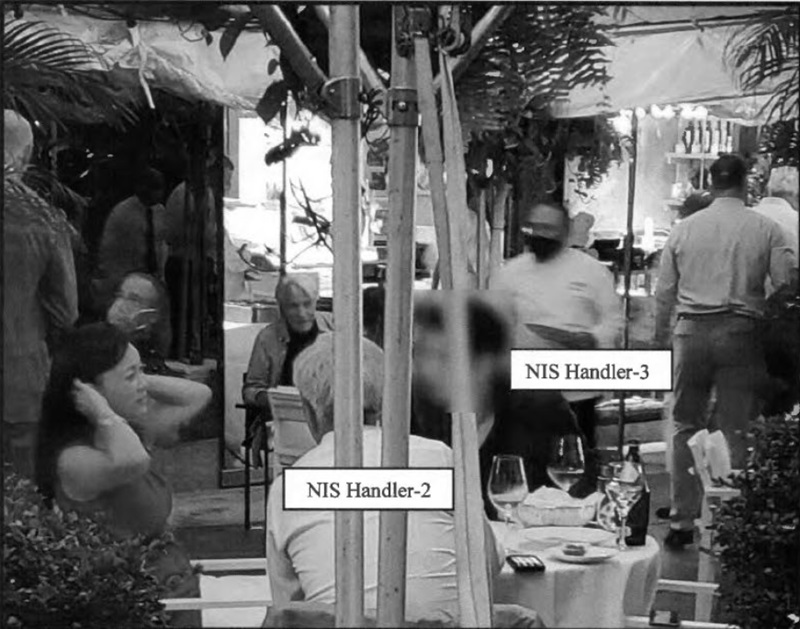
Furthermore, there is significant interest in identifying the South Korean officials who met with high-level U.S. officials. If these individuals are revealed, the NIS’s clumsy activities will likely spark further controversy.
A Korean expert in Washington, D.C., commented, “While we need to see how the trial proceeds, acting as a promoter and agent for Korea for $500 will draw lasting criticism from Americans. This incident, born from the NIS’s reckless actions and the former U.S. official’s greed, will be a shameful episode in U.S.-Korea diplomatic history.”
In the U.S., working as an agent or lobbyist for a foreign government requires registration under the Foreign Agents Registration Act (FARA) with the Department of Justice and must comply with established regulations.
Meanwhile, Terry was born in Seoul, South Korea, and raised in Virginia. She was a senior CIA analyst from 2001 to 2008, and director of Korean, Japan, and Oceanic Affairs at the NSC from 2008 to 2009.
In 2017 she became a senior fellow for the Korea Chair at the Center for Strategic and International Studies. In 2021, she became director of the Hyundai Motor-Korea Foundation Center for Korean History and Public Policy at the Wilson Center, succeeding Jean H. Lee.
BY INSEONG CHOI, YOUNGNAM KIM [choi.inseong@koreadaily.com]