Exploring the North-South ‘Spy War’
Part 1: The life and times of North Korean spy Kim Dong-sik
[First in a ten-part series]
The world of espionage is neither glamorous nor romantic. It is a realm dominated by the cold reality of life and death. Stories featuring spies as protagonists in novels or movie are mere fictionalized entertainment – “Spytainment,” as Amy Zegard puts it in her book “Spies, Lies, and Algorithms.”
In South Korea, the mention of spies evokes varied preconceptions depending on one’s generation and ideological stance. Some associate it with pro-North Korean factions, while others view it through the lens of old McCarthyism. The discourse around spies remains contentious.
Delving into the roots of South Korea’s severe ideological polarization, one finds it closely tied to the issue of espionage. Understanding the past and present of the spy war may help alleviate such divisions, bringing the shadowy discourse on espionage into the light of open dialogue. This series aims to explore the existential world of spies through comprehensive interviews with real spies, counterintelligence agents, and South Koreans who adhere to North Korean founder Kim Il-sung’s “Juche,” or self-reliance, ideology, presented without embellishment or bias.
Episode 1: Espionage—An unfinished war
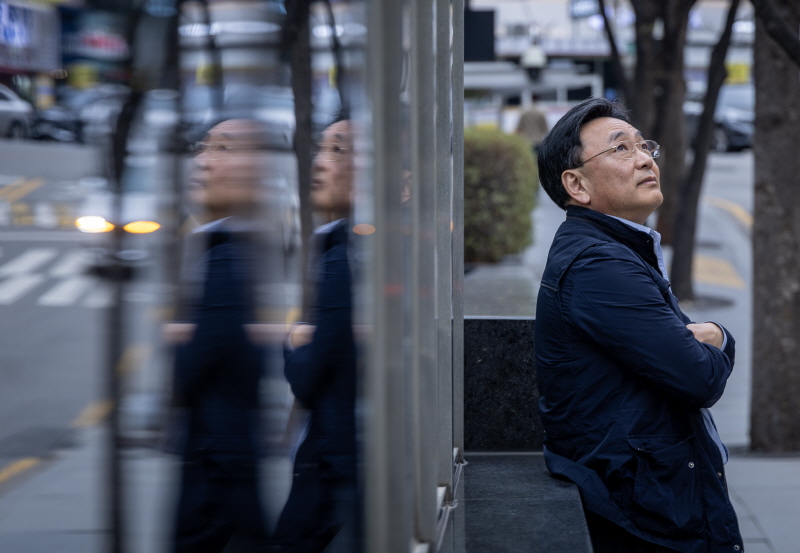
We were curious about former North Korean spy Kim Dong-sik (61), intrigued by his seemingly sensational background akin to a spy novel’s protagonist. We waited for him at a location in Seoul on February 29. The atmosphere was a mix of tension and excitement.
His gaze and expression, reflecting his arduous life, should have been harsh and intense, exuding the sharpness of a warrior. However, it was a pleasant surprise to find his demeanor warm and unassuming. His speech style, a blend of Pyongyang and Seoul dialects, was candid and unadorned. Though his 168 cm (5 feet 6 inches) frame remained sturdy, the weight of 61 years was undeniable.
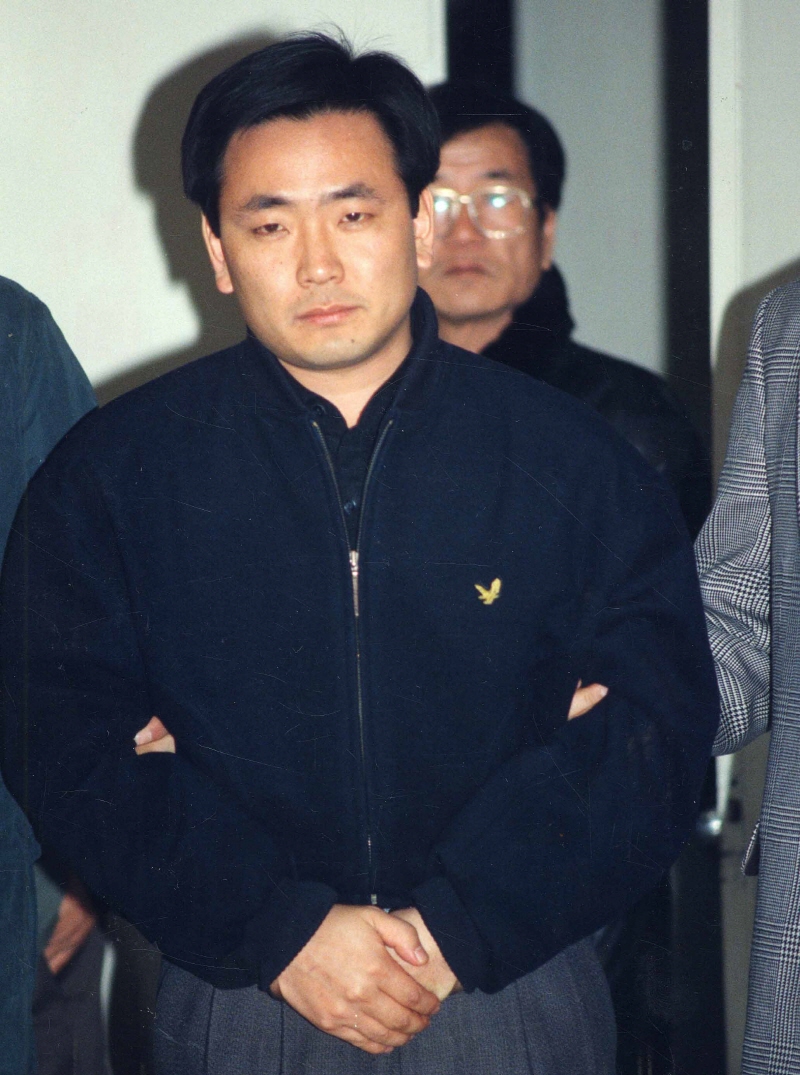
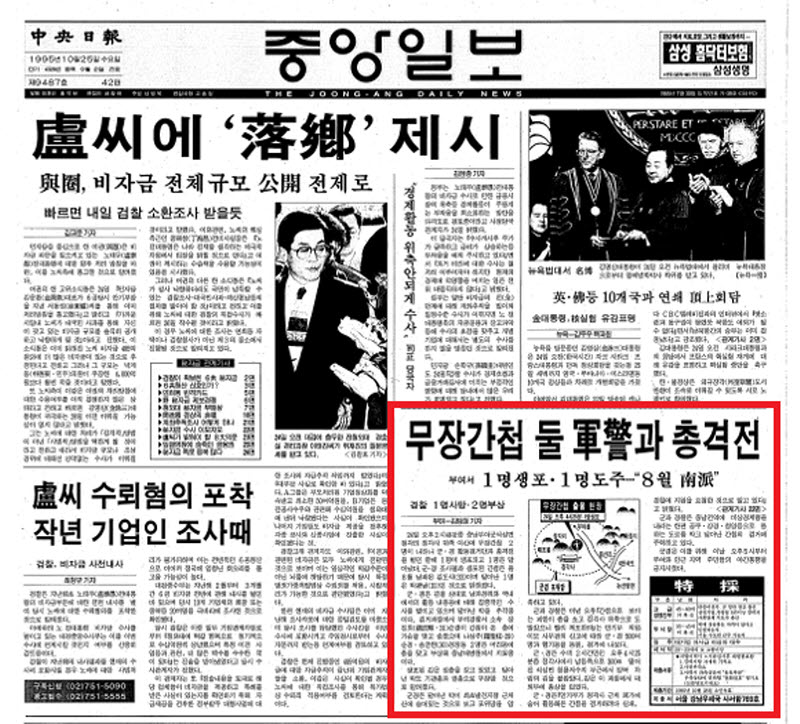
Kim Dong-sik, the main figure in the 1995 “Buyeo Armed Spy Incident,” became known when he infiltrated South Korea and attempted to contact a North Korean sleeper agent. Upon discovery, he engaged in a gunfight with the police, resulting in his capture after sustaining a leg wound. The incident, which saw two policemen killed, sparked public outrage. Kim, who narrowly escaped execution, later changed his ideology and settled in South Korea.
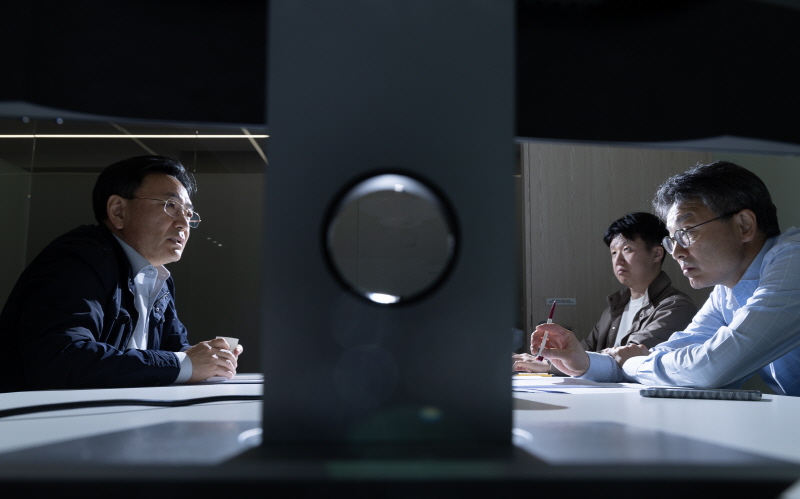
The JoongAng Ilbo, a leading Korean newspaper affiliated with the Korea Daily, met with him to hear about his long journey. His candid account of his experiences as a North Korean revolutionary, or “Spy dispatched to South Korea,” vividly recounted his life’s ups and downs.
At 18, Kim was selected for the Kim Jong-il Military and Political Academy without knowing the reason or purpose. There, he underwent four years of grueling training, emerging as a human weapon. He then spent five years in isolation, undergoing intensive education and training to blend into South Korean society, becoming an elite North Korean operative.
Late-night interviews over dinner and drinks revealed more of his true self. He openly discussed the trajectory of his life as an operative, his disillusionment with North Korea’s regime, and the sorrow of his family’s suffering due to his role, which led to the execution of his parents and siblings in North Korea. “His story was as dramatic as any movie” didn’t across as a cliché.
Kim was a victim of the North-South spy war, and he expressed a strong desire to rebel against the North Korean regime. “North Korea will never change on its own,” he said. “If it changes, it will collapse. I want to repay them with the same mission they gave me, but in the opposite way—instead of overthrowing South Korea’s capitalist system, I aim to incite a revolution in North Korea.”
Readers may wonder, “Why talk about spies out of the blue? Are there still spies in South Korea today?”
The motivation behind this series stems from last year’s “Kim Dae-jung (DJ) Oral Memoirs” published in the JoongAng Ilbo.
In the lead-up to the 14th presidential election in 1992, which saw DJ competing fiercely against Kim Young-sam (YS), the “South Korean Workers’ Party Central Region Spy Incident” was disclosed in October of that year.
In his memoir, DJ recounted, “Rumors were spread that Lee Sun-sil, a spy responsible for North Korean operations, came to our house and took a commemorative photo with my wife, Lee Hee-ho. This was leaked by the Agency for National Security Planning (NSP) to make it seem like I was involved in the spy incident. It was a malicious attempt to sway the situation in favor of YS.”
Ultimately, DJ lost the election.
The 1997 election saw similar disruptions with the “North Wind” scandal involving Oh Ik-je, an advisor to DJ, who defected to North Korea. DJ might have lost again if the situation had not turned in his favor.
These incidents, among others, stirred the journalist’s curiosity about the truth behind spy cases in South Korea’s history. The team interviewed over 30 individuals, including spies, counterintelligence agents, scholars, activists, and defectors, gathering diverse perspectives and testimonies.
In such political administration, luck also played a part. Contact was made with the northern and southern spies involved in the two key incidents mentioned above: the Central Region Party and the North Wind.
Kim Dong-sik infiltrated Seoul and participated in operations with the Central Region Party organization. He returned to Pyongyang accompanied by Lee Sun-sil, a candidate member of the Political Bureau of the Workers’ Party of Korea (ranked 22nd), and was awarded the title of Hero of the Republic. The detailed story he revealed will be introduced soon in our investigative reporting on spy warfare.
Spy warfare is ongoing in Jeju, Changwon, and Cheongju
Summarizing the testimonies of the sources, it can be concluded that spy warfare is an unfinished war that has penetrated the confrontation structure between North and South Korea since the division. As Kim Jong-un declared on December 30, 2023, at the Workers’ Party Central Committee meeting, stating that inter-Korean relations are “hostile and at war,” spy warfare has flowed as a substitute for conventional warfare and will continue to do so.
History tells us that our past is marked by numerous spy cases. Is today any different? In 2024, several cases are being contested in court over charges of espionage and acts of aiding the enemy. In the case of the Chungbuk Comrades Association (also known as the Cheongju Spy Ring), the first trial court sentenced three defendants to 12 years in prison last February. Spy warfare is ongoing.
Kim Dong-sik, who understands South Korean strategy thoroughly
Encountering Kim Dong-sik is perfect for understanding the true nature of North Korean spies sent to South Korea. This is why he was selected as the first subject of our investigation.
The spy Kim Dong-sik was “manufactured” under Kim Jong-il’s guidance to cultivate elite operatives equipped with strong physical stamina, adherence to Juche ideology, military and technical knowledge, and recruitment abilities.
There are five operatives and combatants from Kim Jong-il Military and Political Academy living in South Korea. They have either been arrested, defected, or sought asylum in a third country. Among them, Kim Dong-sik is the only one who carried out a southern operation mission after graduating from the combatant class at Kim Jong-il Military and Political Academy, working as an operative under the Workers’ Party of Korea’s External Liaison Department.
Few individuals know North Korea’s sentiment, spy operations, and southern strategies as thoroughly as Kim Dong-sik. Although he has been away from North Korea for quite some time, he has transformed into an expert in helping to catch spies and has continued to study North Korea. Thus, his insights are worth listening to.
“Saying ‘there are no spies’ is a naïve statement that shows ignorance of North Korea,” Kim said. “The fact that institutions like Kim Jong-il Military and Political Academy, which trains spies, and other organizations involved in southern operations, like the Bureau of Cultural Exchange, still exist means they are continuously nurturing spies in some form or another.”
Training to blend into South Korean society
He was proud and had a strong sense of elitism. He was one of the top operatives for the Social and Cultural Department (now the Bureau of Cultural Exchange) of the Workers’ Party of Korea. The Social and Cultural Department is tasked with infiltrating and establishing secret underground organizations (underground parties) within South Korea and managing spies or these underground organizations. His anecdotes provide a glimpse into the prestige of Kim Jong-il Military and Political Academy.
“Students who go to Kim Il-sung University cannot come to our side (Kim Jong-il Military and Political Academy). Kim Il-sung University admits about 5,000 to 10,000 students per year. However, Kim Jong-il Military and Political Academy admits only 200 students annually. While Kim Il-sung University is overseen by the Ministry of Education, our university is directly managed by the Workers’ Party, the highest decision-making body in North Korea, highlighting the differences in student selection and treatment. Specifically, only 5 to 6 out of the 200 annual graduates become elite operatives for southern operations.”
His memory was extraordinary. He could vividly recount the names, peculiarities, conversations, and places related to his past activities. He was well-versed in South Korean culture from the 1980s and 90s learned during hostile territory education. Here’s an example:
“I sang Cho Yong-pil’s ‘Come Back to Busan Port,’ memorized the songs and names of singers like Kim Soo-hee, Yoon Bok-hee, Ha Chun-hwa, and Sim Soo-bong. Since there’s no baseball in North Korea, we watched South Korean TV tapes and learned the rules and names of players like ‘That’s Lee Man-soo and Sun Dong-yeol.’ I read ‘JoongAng Ilbo’ and ‘Shindonga’ and enjoyed the drama ‘Sandglass.’”
Kim Jong-il Academy manufacturing human weapons
He described the training process in detail, something one cannot know without experiencing it firsthand. Here’s one example:
“We march at a run. Every evening, we run 10 kilometers (6.2 miles) carrying a 20 kilograms (44 pounds) sandbag. Once a month, we must complete a 40 km marathon with a 20 kg sandbag in under 4 hours. The training is likened to a ‘blast furnace’ where any metal is melted to make steel. There is a saying ‘fly like a bird.’ After training for 10 years, the body moves like it’s flying.”
In South Korea, he worked as an analyst at the Defense Security Command and a research fellow at the Korea Institute for National Unification, earning a Ph.D. in North Korean studies from University of North Korean Studies. He recently started working as the chairman of the North Korea Strategy Center.
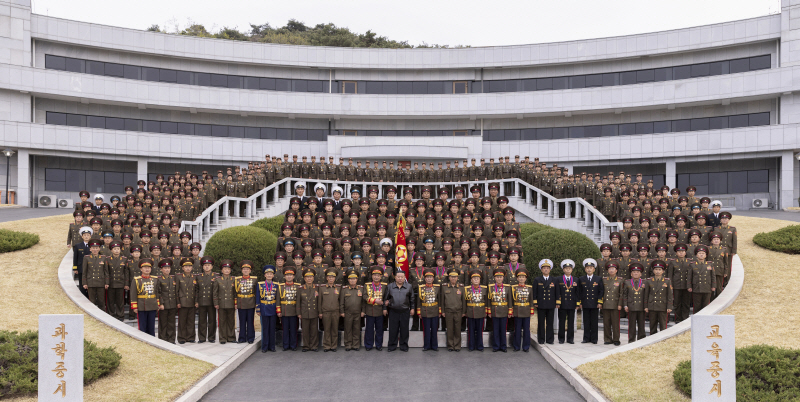
From now on, based on Kim Dong-sik’s testimony, we will introduce in several parts how North Korean spies sent to South Korea are trained, and how they infiltrate, recruit, and organize underground parties. The series opens with ‘Making human weapons through harsh training.’
Let’s briefly go back to a spring day in March 1981. Upon entering Kim Jong-il Military and Political Academy in Pyongyang, a Workers’ Party official called him in and informed him. His fate was thus decided.
“Comrade, you have been trusted and cared for by the dear Comrade Kim Jong-il to join the ranks of revolutionaries in South Korea.”
(To be continued)
BY DAEHOON KO, MINSANG KIM, YOUNGNAM KIM [ko.daehoon@joongang.co.kr]