
When Ruben Antonio Cruz, a 60-year-old lawful permanent resident, sat in a Chicago park last month, he could not have imagined that forgetting his green card at home would cost him more than $130—and his peace of mind.
Federal immigration agents stopped him, demanded identification, and after learning he had left his card behind, took him for questioning before fining him for “failure to carry registration.” His companion, whose status was unclear, was detained.
For decades, U.S. law has technically required all foreign nationals aged 18 and older to carry proof of legal status. The rule—Title 8, Section 1304(e) of the U.S. Code—has existed since the Alien Registration Act of 1940, but until recently, enforcement was rare. It was a relic of another era, seldom invoked against ordinary residents who had long made their lives in America.
Now, under President Donald Trump’s renewed immigration crackdown, that old statute has been pulled from the archives and weaponized.
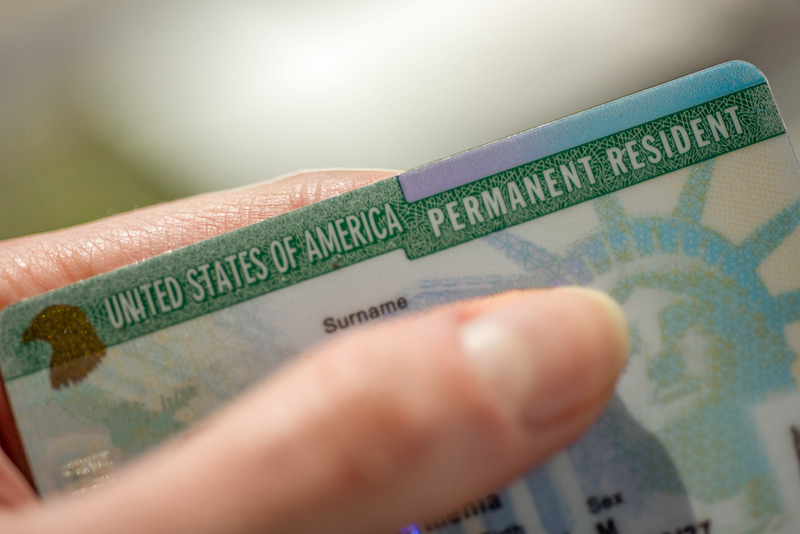
Last July, U.S. Customs and Border Protection (CBP) issued a public advisory reminding all non-citizens—including green card holders—that they must “carry documentation proving their immigration status at all times.”
The Department of Homeland Security later increased penalties for violations: up to $5,000 in fines and even jail time for failing to carry or present the proper identification. What was once a minor oversight has become a misdemeanor offense.
Immigration lawyers warn that this policy shift creates a climate of fear not only for undocumented individuals but also for millions of lawful residents. The American Civil Liberties Union (ACLU) called Cruz’s case “an unnecessary and cruel act,” stressing that “America is not a ‘show me your papers’ society.” Yet that is precisely what it is beginning to resemble.
When agents can stop a man quietly sitting in a park, question him, and
issue a fine for a forgotten wallet, the line between legality and intimidation blurs.
The new enforcement reality has left many immigrants—especially in Korean and other Asian communities—feeling anxious and vulnerable. Even long-term residents, who have lived and worked in the U.S. for decades, now wonder if they could be next.
Immigration attorneys increasingly advise clients to carry their original green card at all times, noting that copies or digital images are not legally valid. Some call it “the only reliable defense” in an unpredictable environment.
But what kind of society demands that lawful residents carry proof of identity wherever they go, lest they face arrest or fines? The symbolism is chilling. It reflects not just a tightening of immigration control, but a broader erosion of trust between government and community. The message seems clear: even if you are legal, you are still suspect.
There was a time when America prided itself on being a nation of immigrants. Today, it is becoming a nation of checkpoints. For millions of lawful residents, safety no longer means freedom from fear—it means making sure your green card never leaves your pocket.
By Mooyoung Lee [lee.mooyoung@koreadaily.com]