When first stepping inside Hyundai Motor Group Metaplant America in Savannah, Georgia, what stood out wasn’t humans.
During a media tour held on April 23, an HMGMA official emphasized that automation has significantly improved production efficiency by taking over physically demanding or hazardous tasks such as vehicle transport and painting.
Dozens of robotic arms moved in sync along the assembly line. Autonomous mobile robots (AMRs) navigated the factory floor on their own. Even Boston Dynamics’ quadruped robot Spot scanned components for quality control. The description of a “future-oriented factory” did not feel exaggerated.
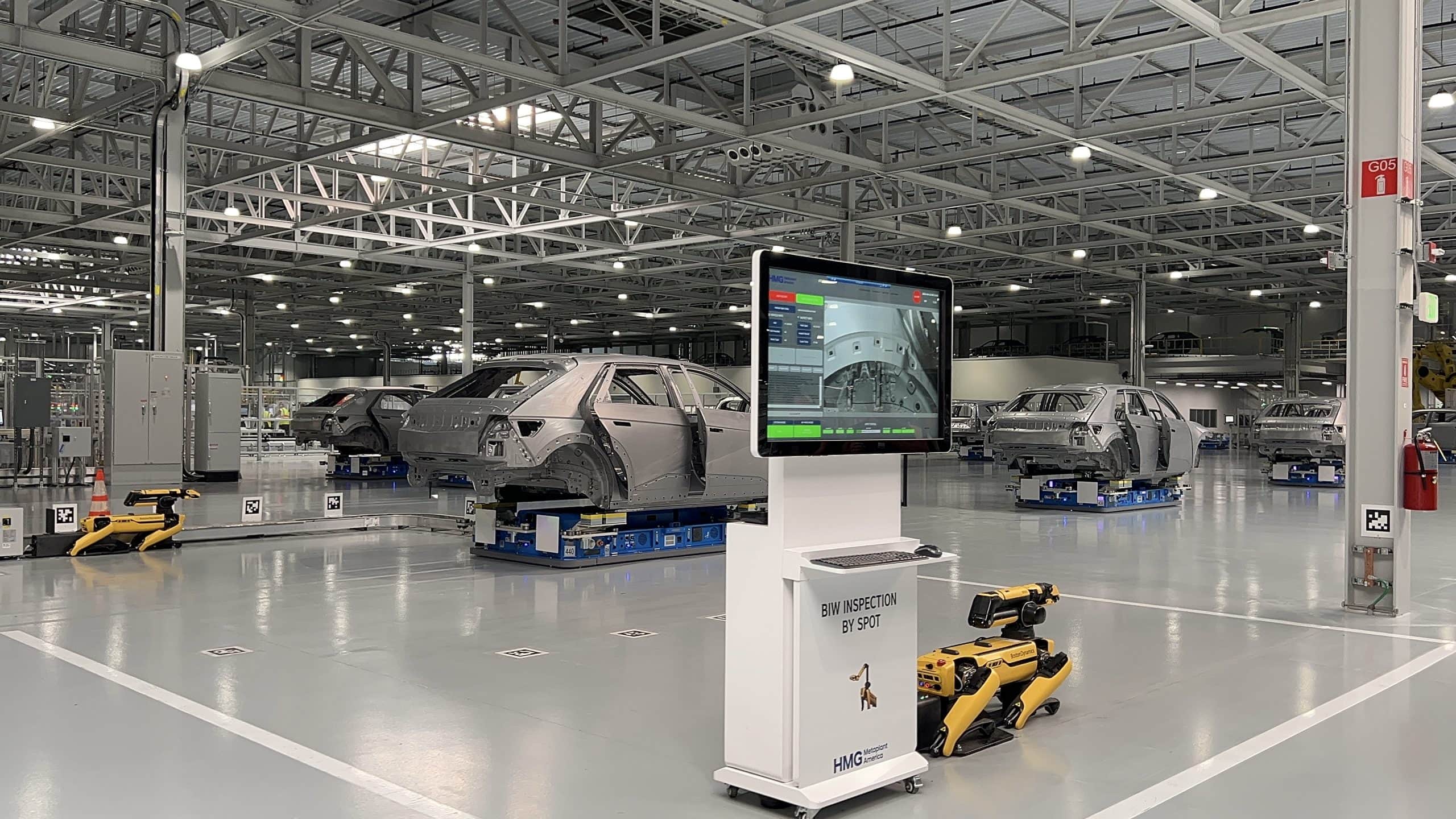
Yet looking deeper, the more a disconnect became apparent—between Hyundai’s promise of job creation and the reality of extensive automation on the ground.
Hyundai has strongly promoted the plant as a major source of local employment. The broader metaplant project in Bryan County, Georgia, aims to create 8,500 jobs in total. That includes 2,600 positions at HMGMA itself, around 2,000 at a battery joint venture, approximately 1,600 at Hyundai Mobis, and thousands more through suppliers, with a target completion timeline of 2031.
But the regional labor landscape tells a different story. According to local reports, unemployment in the Savannah area is already low, hovering around 3%. Manufacturing turnover exceeds 60%, and roughly a quarter of the workforce is over the age of 55. Younger workers continue to favor college over factory jobs.
In other words, the issue isn’t a shortage of jobs—it’s a shortage of workers. If jobs were already available, creating more does not necessarily translate into a competitive advantage.
Another layer of complexity is emerging. Hyundai Motor Group has already signaled plans to introduce humanoid robots such as Atlas, also developed by Boston Dynamics. While Atlas was not present during the tour, it is expected to be gradually integrated into production processes—suggesting that automation could extend beyond repetitive tasks into areas traditionally performed by humans.
When asked about this, a manager from Hyundai Motor’s North American operations responded cautiously. Human roles—such as problem-solving and safety management—will remain essential for a long time, the official said, adding that collaboration between humans and robots will become increasingly important.
Still, the tension is hard to ignore. “Job creation” and “expanding automation” are fundamentally opposing goals. The plant will undoubtedly create thousands of jobs. But as robots take on more responsibilities, the number of workers required inevitably declines. Walking through the production line, it was difficult to shake the impression that fewer human workers might be needed than originally anticipated.
So what exactly is Hyundai trying to achieve—creating jobs, or reducing them?
The HMGMA unveiling was meaningful in many ways. It highlighted the expansion of EV production, showcased cutting-edge manufacturing technologies, and reinforced Hyundai’s strategy for the North American market. But leaving the site, one question lingered: What was Hyundai really trying to show?
BY HOONSIK WOO [woo.hoonsik@koreadaily.com]