International Student Job Market conditions are becoming increasingly challenging as the U.S. graduation season arrives, with many international students facing a colder hiring environment and stricter visa hurdles.
Students say the difficulty of finding employment has intensified alongside tighter immigration scrutiny that has continued since the Donald Trump administration, raising the bar for foreign graduates seeking to stay and work in the United States.
Job Fair Highlights Hiring Challenges
The “2026 K-Move Job Fair,” jointly hosted by the Korea Trade‑Investment Promotion Agency (KOTRA) Los Angeles office and the Consulate General of the Republic of Korea in Los Angeles, took place on April 28 at the University of Southern California campus.
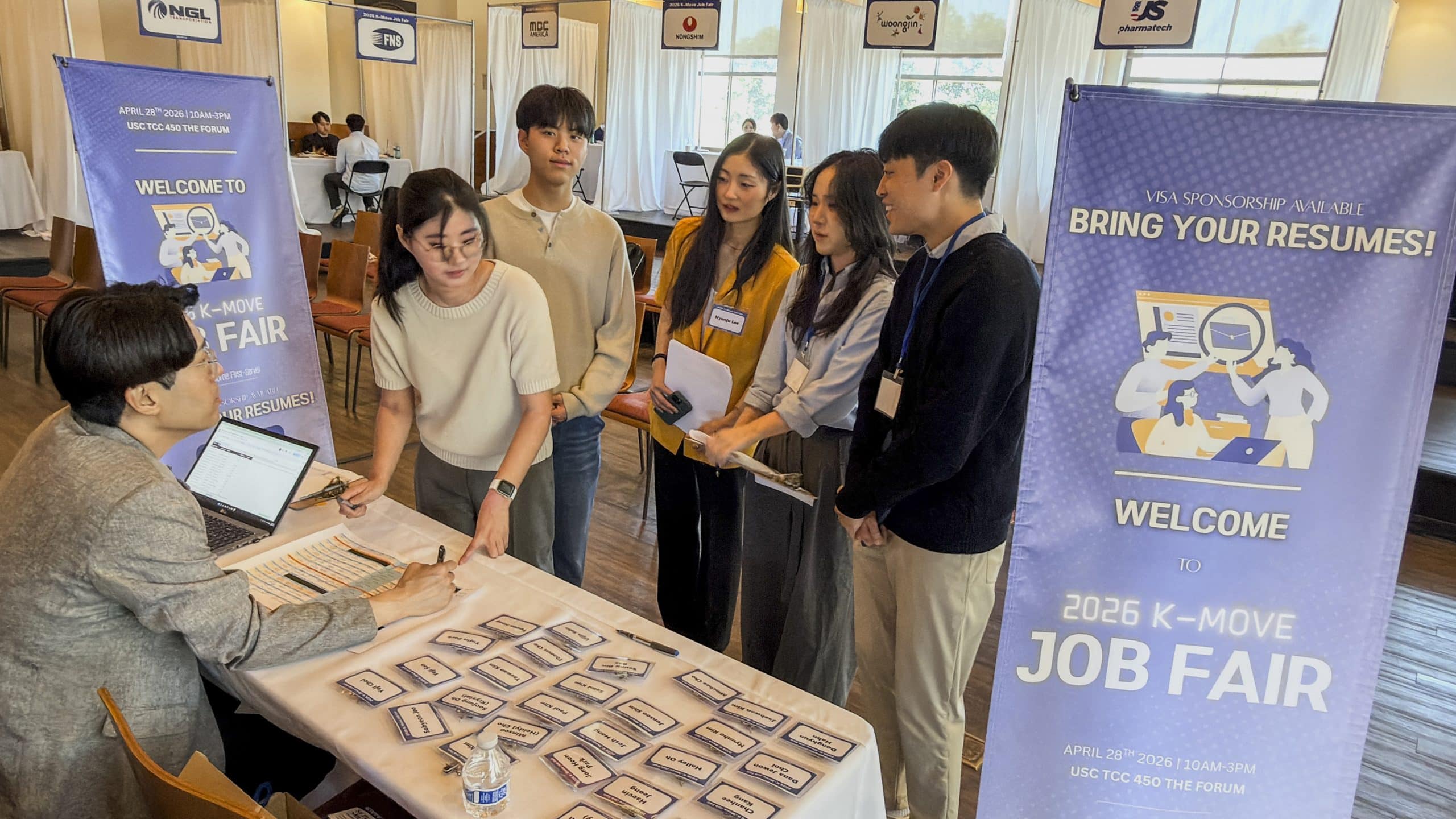
Sixteen companies—including Korea Daily—participated in the event, offering interviews and career consultations to roughly 70 job seekers, including graduating seniors and recent alumni.
Sage Lim, 23, who will graduate from the University of Utah in May, said many international students are preparing to leave the U.S. after graduation.
“Looking around, it feels like more than 80% of my friends are planning to return to Korea,” Lim said. “Even if international students find jobs, visa issues limit our options.”
Internships Also Hard to Secure
Students searching for internships to build experience report similar difficulties.
One participant who expects to graduate in May next year said companies appear increasingly reluctant to hire interns due to visa-related administrative burdens.
“Getting a job is already hard, and without internship experience it becomes even harder,” the student said. “But many companies seem to be cutting back on internships because of visa complications.”
Kim Jae-hwan, 28, an accounting student at California State University, Northridge, said many employers raise visa sponsorship concerns before interviews even begin.
“Even small and midsize companies often say upfront that visa sponsorship is difficult,” Kim said. “Still, I keep applying because I want any opportunity I can get.”
Kim added that he has submitted applications to more than 36 companies since late last year but has yet to secure a job.
Data Reflects the Difficult Job Market
Recent economic data supports the concerns voiced by graduates.
According to the Federal Reserve Bank of New York, the unemployment rate for recent college graduates aged 22 to 27 stood at 5.7% in the fourth quarter of 2025, significantly higher than the overall college-graduate unemployment rate of about 3.1%.
Underemployment among graduates is also rising. The same analysis found that 42.5% of college graduates are working in jobs that do not require a bachelor’s degree, the highest level recorded since the pandemic.
These trends underscore the broader pressures shaping the International Student Job Market, where foreign graduates often face additional barriers beyond those experienced by domestic applicants.
Companies Weigh Long-Term Hiring Risks
Employers say they must carefully evaluate visa considerations when hiring international students.
Moses Yang, HR Associate at Nongshim, said the company places importance on candidates who demonstrate long-term growth potential and a clear understanding of the role.
“Visa sponsorship is possible,” the representative said. “However, from a company perspective it involves long-term workforce planning, so we have to review candidates very carefully.”
Hiring risks also play a role. If a candidate fails to secure a work visa through the H-1B lottery, companies may lose the employee altogether after the hiring process.
The chief talent officer at FNS, Inc. noted that STEM graduates often have an advantage.
“Students with STEM majors have longer OPT work authorization periods, which allows them to apply for the H-1B visa multiple times,” the executive said. “That makes them a relatively more stable option for employers.”
Connecting Employers and Students
Event organizers say the job fair aims to bridge the gap between employers and international talent.
Park Ji-hye, a manager at KOTRA’s Los Angeles office, said visa sponsorship is an important consideration but not the only factor companies evaluate.
“Visa support matters to students, but job compatibility is equally important,” Park said. “The goal of this event is to connect companies and students so they can find opportunities that truly match.”