On my first visit to Seoul, the National Museum was housed in the former Japanese General Government Building for its final year on the grounds of Gyeongbok Palace. The Japanese chose this location to obstruct the view of the palace and assert dominance over the Korean people. Though there was debate over the demolition in 1995, it was ultimately decided that this imposing symbol of Japanese imperialism was a defacement that should no longer be tolerated. Now Gyeongbokgung, established in 1395 as the Joseon Dynasy’s first royal palace, is one of Korea’s most visited tourist sites. And the National Museum, in its new location in Yongsan Family Park since 2005, has gone from being known not only as the world’s sixth-largest museum by physical size but also as the third-largest in attendance numbers. With 6.5 million visitors in 2025, it is close to second place, where the Vatican Museums had 6.9 million visitors. (The Louvre Museum remains eternally in first place at 9 million annual visitors.)
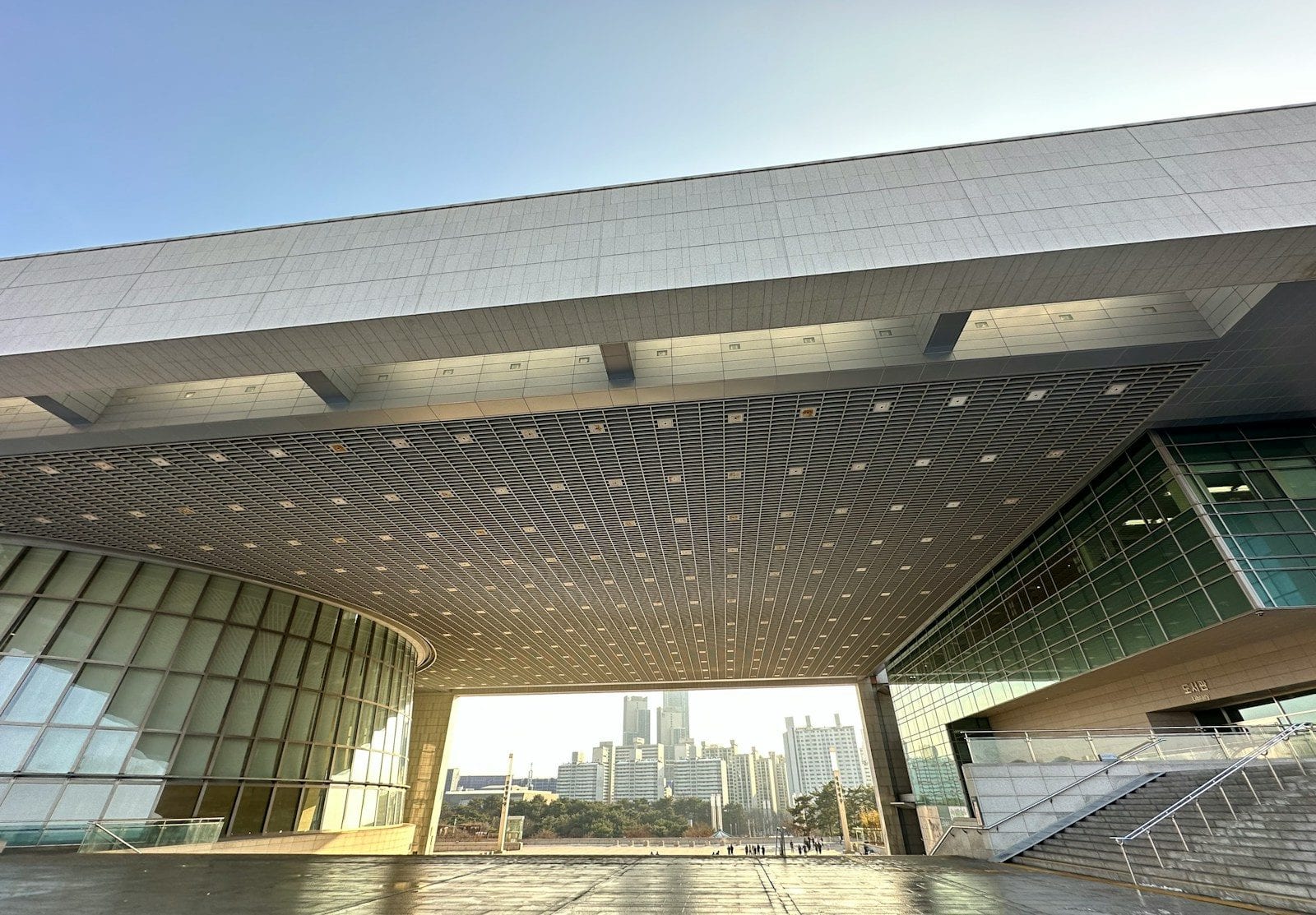
It is significant that the National Museum of Korea achieved this high rank with a collection composed almost entirely of objects from its own country. When you realize the National Museum has achieved the rank of 3rd in the world with a native collection, you really appreciate what a monumental accomplishment it is. And in its smaller collection of art and artifacts from other nations, none have been reported stolen. There is a purity to this museum’s acquisition process that contrasts with the plundering of cultural treasures that Korea has suffered over the centuries by other countries.
When you visit the museum, I recommend spending an entire day exploring it. With a collection that spans 5,000 years of history, you will need plenty of time. After you become familiar with the collection, you can always revisit to view the temporary exhibitions. I have enjoyed some of the most imaginative exhibitions at the National Museum. And the art on display in the permanent spaces is constantly being rotated, so there is always a reason to return to those galleries in the museum, as well. I have been to the museum dozens of times, and with each visit I am rewarded with new sights and wonders to behold, and I always learn something new.
Be sure to check out the branches of the National Museum outside of Seoul, as well. They are all world-class museums. And now there is even a branch in the Incheon International Airport where you can spend time while waiting for your flight.
If I may offer just one mildly critical observation of the museum: It would be good if the objects in the eleven donor galleries, each featuring the collection of a different benefactor, were integrated into the regular permanent exhibition galleries. It is disjointing that, in order to finish viewing the museum’s collection, the visitor has to leave the permanent galleries and walk through a dozen extra galleries, each with its own chronology that starts and ends and starts over again in each space. It would make for a more cohesive and educational experience if all items in the permanent collection were organized together by chronology and medium. Maybe the museum could offer a different incentive to generous donors, rather than their name and picture in a gallery of their own. Perhaps they could advise the donors’ families that no other museum does that. There are better ways to honor their benefactors without disrupting the experience of millions of visitors.
Nonetheless, I am sure you will thoroughly enjoy your trip to the third most visited museum in the world. Give your mind an adventure and take your curiosity on an excursion through the halls and galleries of the National Museum of Korea.