Food Insecurity in LA Hits Korean Seniors and Low-Income Families
Food Insecurity in LA is worsening as soaring grocery and gas prices drive more Korean seniors and low-income residents to free food distribution sites across Los Angeles.
Community organizations and food banks say demand has remained unexpectedly high throughout 2026, with some distribution events running out of food within hours. Residents increasingly describe struggling to afford basic necessities as inflation continues to squeeze household budgets.
Michael Flood, president and CEO of the Los Angeles Regional Food Bank, said demand for food assistance surged last year due to devastating wildfires, immigration enforcement activity, and the federal government shutdown.
“We expected conditions to improve this year, but demand has remained very high,” Flood said in an interview on May 14.
He added that even large-scale food distribution events are exhausting supplies much faster than expected.
“Los Angeles already has one of the highest housing cost burdens in the country,” Flood said. “Now rising food and gas prices are adding even more pressure on working families and seniors.”
Korean Community Feeling the Pressure
The situation is also affecting the Korean American community in Koreatown.
At Immanuel Presbyterian Church, a weekly food bank operates every Wednesday and Friday morning. On May 8, hundreds of residents lined up before distribution even began.
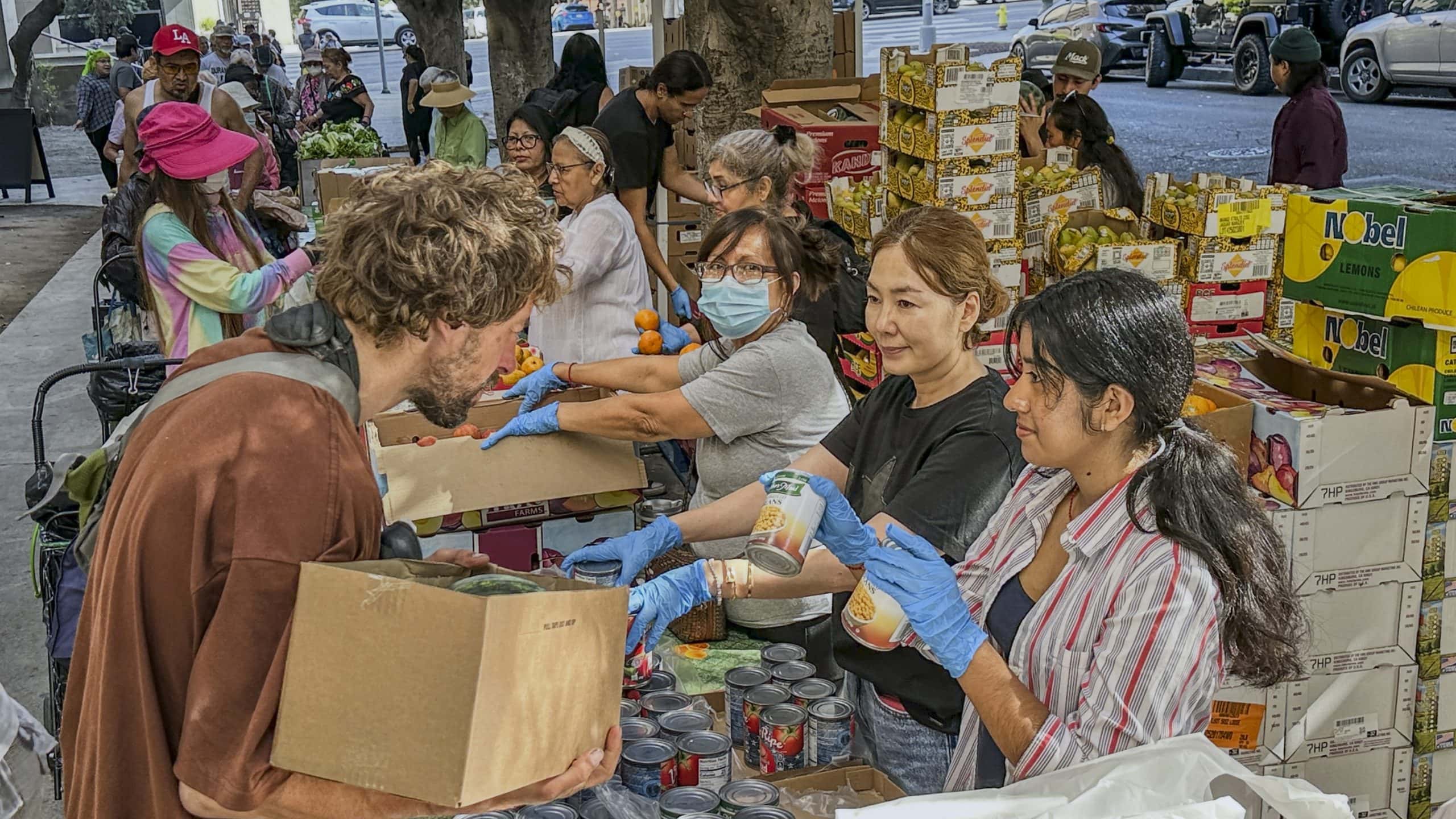
According to church officials, food shortages and early closures have become increasingly common in recent months.
Niamby Rendon, operations manager at the church, said approximately 300 to 400 residents now attend each distribution event.
“On that day, all prepared food supplies were gone shortly after 10 a.m.,” Rendon said. “Many people who arrived later had to leave empty-handed.”
One Korean senior waiting in line said the cost of living has become overwhelming.
“In the past, grocery shopping didn’t feel this expensive,” the resident said. “Now just buying milk, eggs, and vegetables can easily cost over $100. Filling up a gas tank used to cost around $60, but now it’s well over $100.”
Large Food Distribution Events Running Out Early
The growing Food Insecurity in LA crisis has also become visible at large public food giveaways.
Thousands of vehicles reportedly gathered at a recent drive-through food distribution event in Baldwin Park on May 13. According to the Los Angeles Times, approximately 2,000 food boxes were distributed and quickly ran out, leaving many residents without assistance.
Economic data also reflects the mounting financial pressure on households.
According to the U.S. Department of Labor, the Producer Price Index (PPI) rose 6% year-over-year in April, marking the highest increase in more than three years. The monthly increase of 1.4% was also the sharpest in nearly four years.
Korean American Association Restarts Food Distribution
The Korean American Federation of Los Angeles recently resumed its own free food distribution program and plans to continue holding events every two months.
Officials said more than 400 Korean residents gathered before the doors even opened at a recent event earlier this month.
Jeff Lee, executive director of the organization, said requests for rental and utility assistance have also risen sharply.
“We reopened the food bank after seeing more residents struggling with rising living costs,” Lee said. “At the last event, some Korean seniors arrived as early as 2 or 3 a.m. to wait in line.”