Spring Buying Season Ignites LA Koreatown Real Estate Market
The spring buying season is officially underway in Southern California, and Los Angeles’ Koreatown neighborhood is experiencing a notable surge in transaction volume. According to a fresh market analysis based on property data from Dream Realty, total home sales in the area jumped to 85 units in April, marking a substantial 16% increase compared to the 73 properties closed during the exact same period last year.
While macroeconomic hurdles like persistent interest rate pressures continue to loom over the broader Southland, the local market found its footing through a strong revival in end-user demand. While transaction volume for income-generating residential rental properties saw a slight decline, a double-digit percentage boost in single-family home and condominium transactions single-handedly carried the neighborhood’s monthly gains.
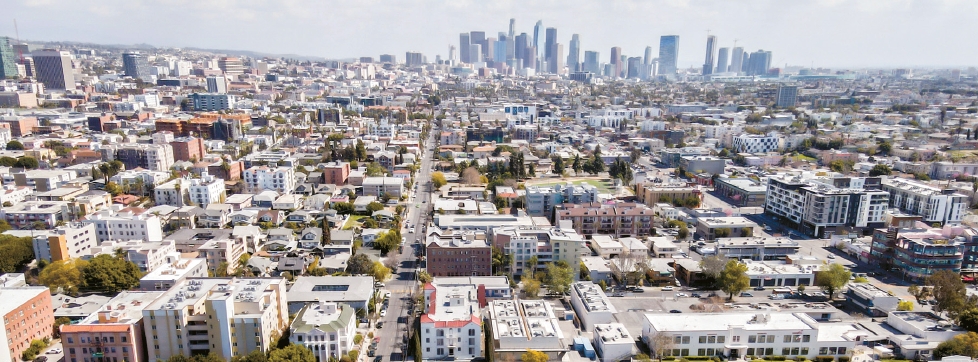
Single-Family Homes Speed Up While Buyers Gain Negotiating Power
The standalone residential sector experienced the most dramatic acceleration in volume. A total of 38 single-family homes found buyers in April, representing a sharp 27% increase over the 30 homes sold in the previous year’s matching month.
Interestingly, this aggressive spike in transactions did not push prices into an unmanageable spiral. The median sales price for a single-family home in the area softened ever so slightly, moving down 1% to land at $1,794,937 down from last year’s $1.81 million benchmark. On a granular level, the average price per square foot settled at $896.59, remaining practically unchanged from the previous year’s $903.68 average.
The real shift for detached housing appeared in market velocity and negotiation dynamics:
-
Accelerated Deal Timelines: The average time a home spent on the market before going into escrow dropped down to just 26 days—a 16% decrease from last year’s 31-day average.
-
A Shift to Buyer-Friendly Terms: The final sales-to-list price ratio dipped to 98.73%, falling from the previous year’s over-ask average of 101.76%. This subtle shift indicates a healthier environment where buyers hold genuine leverage to negotiate price cuts below the initial asking price.
Condos Capitalize on Affordability as Rental Investments Cool
As high mortgage rates keep monthly financing costs top of mind for working professionals, the condominium market has continued its steady upward trajectory. Buyers priced out of detached properties heavily gravitated toward high-density options, pushing condo sales volume up 17% year-over-year to 34 closed units.
This sustained pool of buyers drove the median condo sales price up 4% to reach $742,500. However, the average price per square foot actually fell by 4% to settle at $591.43. This dynamic suggests that buyers are successfully targeting larger, more space-efficient units that offer a more favorable price-to-space ratio.
In stark contrast to the primary residence sectors, the local multi-family and residential income property sector cooled down. Total transactions slipped by 7% down to 13 closed deals. While the median sales price for these investment properties surged 17% to land at $1.63 million, the average price per square foot plunged 10% to $373.28. Furthermore, the average days on market for income properties ballooned by 47%, climbing from 36 days up to 53 days as investors took a significantly more cautious “wait-and-see” approach to capital allocation.
Industry experts urge a balanced perspective on these numbers. Real estate analysts point out that while end-user demand for standalone homes and condominiums is showing a highly encouraging and steady recovery rhythm, a recent upward trend in mortgage interest rates means both buyers and sellers must keep a watchful eye on shifting financing conditions in the coming weeks.
This localized real estate market report tracks transaction data exclusively within the specific Los Angeles boundaries of zip codes 90004, 90005, 90006, 90010, 90019, 90020, and 90036. Consequently, these metrics may vary from adjacent sub-markets or alternative regional neighborhood definitions.