 Inflation outpaces pay growth as purchasing power declines
Surging gasoline prices have effectively wiped out the benefits of recent wage increases for American workers, as inflation continues to outpace earnings growth and erode household purchasing power.
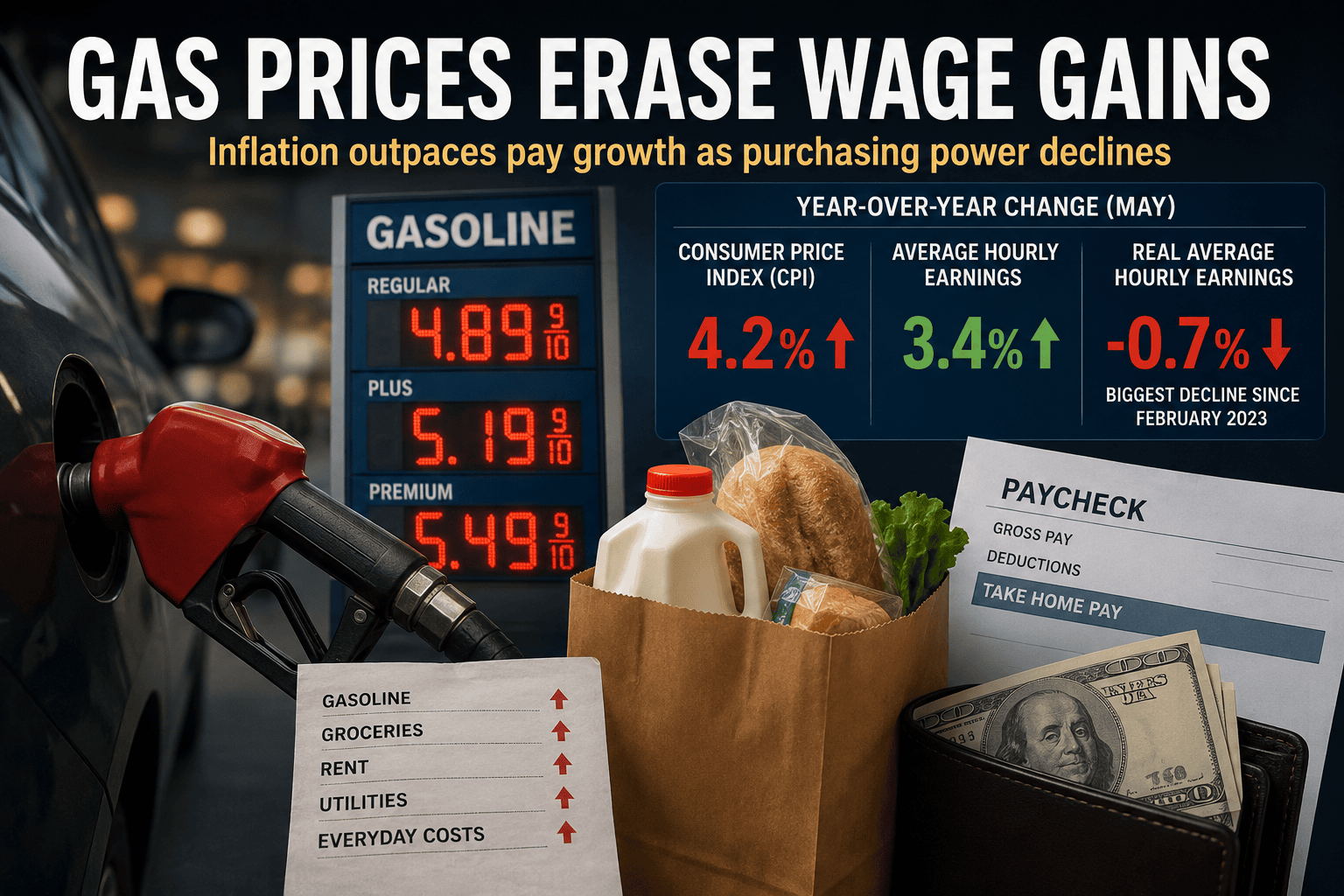
According to data released by the U.S. Department of Labor on Wednesday, the Consumer Price Index (CPI) rose 4.2% in May from a year earlier. During the same period, average hourly earnings increased by just 3.4%.
As a result, inflation-adjusted wages, commonly referred to as real wages, fell 0.7% from a year ago, marking the steepest decline since February 2023.
A decline in real wages means that workers can purchase fewer goods and services despite receiving higher paychecks. Economists say the recent surge in gasoline prices has been a major contributor to overall inflation, placing additional strain on household budgets.
The drop in real wages marks the second consecutive month in which inflation has exceeded wage growth. Analysts point to rising energy prices following U.S. and Israeli military actions against Iran in late February as a key factor behind the increase in gasoline costs. At the same time, wage growth has begun to moderate, making it more difficult for workers to keep pace with rising prices.
The latest figures suggest that Americans’ inflation-adjusted earnings have fallen back to levels seen in January 2025, when President Donald Trump returned to the White House.
Economists note that shrinking purchasing power is one reason consumer sentiment remains weak despite relatively low unemployment and strong stock market performance. While the labor market continues to show resilience, many households are feeling the effects of higher prices for fuel, housing, and other everyday necessities.
The erosion of wage gains has become an increasing concern for policymakers and consumers alike as rising living costs continue to weigh on family finances and dampen confidence in the broader economy.