Hong Myung-bo Backlash Divides Korean American Community Over Criticism and Online Shaming
Hong Myung-bo Backlash has spread beyond South Korea and into Korean American communities in the United States following the national team’s group-stage elimination from the 2026 FIFA World Cup. While many fans argue the former head coach deserves criticism for the team’s disappointing performance, others warn that public anger is increasingly crossing the line into online harassment and social ostracism.
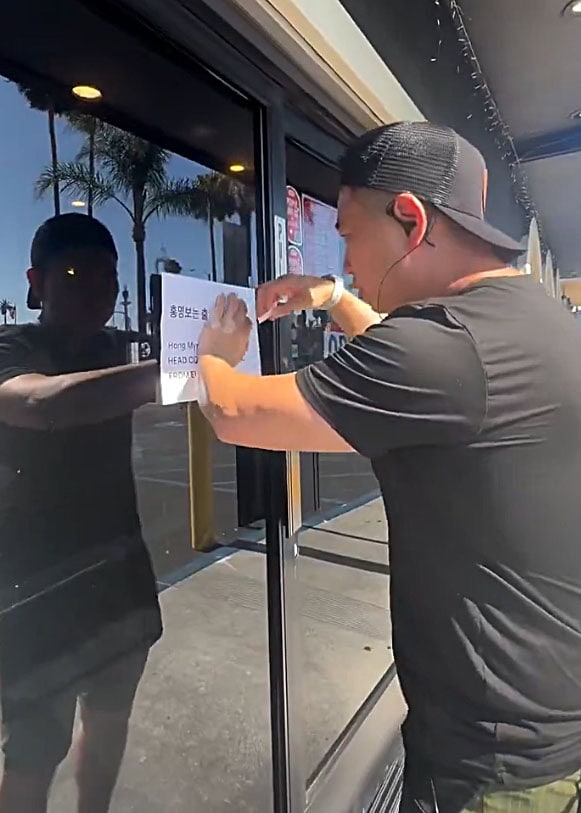
As news circulated that Hong had traveled to the United States after the tournament, signs reading “Hong Myung-bo Not Welcome” began appearing at several Korean-owned businesses in Los Angeles and Orange County. The trend has sparked debate over where legitimate accountability ends and personal attacks begin.
Hong Myung-bo Backlash Extends Beyond the Pitch
Social media platforms have been flooded with posts claiming to have spotted Hong in various U.S. cities.
Posts such as “Hong Myung-bo has been seen in Los Angeles,” “I spotted him in Suwanee, Georgia,” and “Share a photo if you see him” have circulated widely. Others have mocked him by asking whether there are more restaurants displaying “Hong Myung-bo Not Welcome” signs.
The growing volume of posts suggests that online criticism has evolved beyond dissatisfaction with football results into efforts to track Hong’s personal whereabouts.
Danny Ko, owner of Unicorn Optical in Fullerton, temporarily displayed a “Hong Myung-bo Not Welcome” sign at the entrance of his business shortly after South Korea failed to advance beyond the group stage.
“People were more disappointed by what they saw as his refusal to take responsibility than by the result itself,” Ko said. “Most customers understood the message. Our staff had prepared to support the national team, and we even planned promotional events. The early elimination caused unexpected business losses.”
Kim Jin, owner of All You Can Eat Sushi & BBQ in Buena Park, also posted a similar sign.
“It wasn’t meant as an expression of hatred or anger over the football result,” Kim said. “It was intended as a humorous statement. After hearing that Hong had actually come to Los Angeles, I was surprised, and I received many messages through social media afterward.”
Concerns Grow Over Public Shaming
Online criticism has continued to intensify, with posts claiming Hong was “looking for a house in Suwanee,” questioning whether he had moved from Los Angeles to Atlanta, and predicting he would “live as a fugitive forever.”
Some of these posts have attracted hundreds of comments, while unverified sightings continue to spread across social media.
Not everyone believes the reaction is justified.
Seo Kyung-seok, 35, of Irvine, said the public response has become excessive.
“As a football fan, I was deeply disappointed by South Korea’s World Cup elimination,” Seo said. “But treating him like a criminal and placing a permanent social stigma on him is another matter. Once people begin saying he shouldn’t be welcomed anywhere, it can quickly turn into a witch hunt.”
Park Hyung-jun, 45, of Fullerton, expressed similar concerns.
“I have no intention of defending Hong,” Park said. “But seeing people encourage others to ‘hunt him down,’ even within Korean American communities, reflects a culture of collective condemnation that can completely destroy someone’s reputation after a mistake. If things continue in this direction, even legitimate criticism risks losing its credibility.”
The Hong Myung-bo Backlash has become more than a debate over football. For many Korean Americans, it now raises broader questions about accountability, public outrage, and whether social media criticism can cross the line into personal persecution.