Koreatown LA gentrification is fundamentally reshaping Los Angeles’s traditional center of Korean business, rapidly converting a long-standing commercial powerhouse into a dense residential hub.
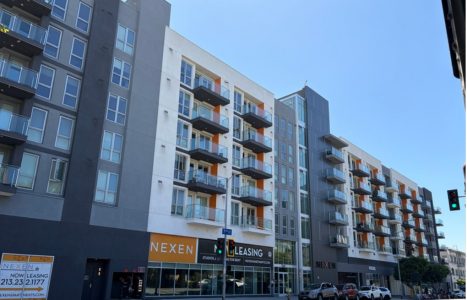
Across the district, thousands of new multi-family housing units are rising at an unprecedented rate. In the process, corporate offices that housed Korean-owned firms, medical practices, law offices, and accounting agencies are systematically being converted into apartment complexes. At the same time, low-rise commercial plazas and retail storefronts that once formed the backbone of the neighborhood’s daily commercial activity are giving way to high-density real estate developments. Driven by soaring property values and rising commercial rents, independent business owners are increasingly finding themselves priced out of the area they helped build.
This swift evolution has sparked growing concern among community members and local business leaders. As long-time Korean residents move out and commercial spaces disappear, the self-sustaining economic ecosystem built over decades of collective effort is beginning to fray. Urban planners and community advocates warn that while redevelopment expands Koreatown’s physical footprint and skyline, the actual economic share and cultural influence held by the Korean-American community within the district is steadily shrinking.
This massive structural transition stems from an intense decade-long residential development boom. According to a real estate market analysis based on data from Jamison Services, the primary property owner and developer in the region, 38 multi-family residential projects totaling 7,083 units have been launched or completed in the area since 2013.
The vast majority of this construction—33 individual projects comprising 5,874 units—is concentrated directly within Koreatown and the adjacent Westlake district. The momentum shows no sign of slowing down, with the total number of completed, active, or planned multi-family housing projects across the greater Koreatown area now surpassing 50 individual developments.
The drive toward residential conversion has expanded well beyond small commercial plazas to target major corporate corridors, most notably Wilshire Boulevard. Prominent mid-rise and high-rise office buildings that long served as central hubs for Korean corporate enterprise are being adapted into residential properties, such as 3424 Wilshire Boulevard, a major commercial office building currently slated for conversion into a 260-unit residential apartment complex, and 3550 Wilshire Boulevard, a landmark 20-story corporate office tower being converted into a 495-unit residential structure. In tandem with office conversions, historic commercial landmarks across the neighborhood are being replaced by large-scale mixed-use developments, including The Former Assi Market Site, where the historic grocery location has been redeveloped into “The Rise Koreatown,” a seven-story mixed-use residential complex, Jeongs Department Store, where the former retail center was demolished to make way for a 228-unit mixed-use apartment building, and Western Department Store and Dong Il Jang Sites, where both notable commercial sites are currently undergoing active multi-unit residential redevelopment.
Local economists emphasize that the rapid expansion of housing stock and rising land values do not automatically lead to economic growth for the existing Korean-American business community. Historically, Koreatown functioned as a tightly integrated economic unit. Local residents, service businesses, corporate entities, financial institutions, and professional firms created an internal cycle of capital, generating employment and business opportunities within the community. As offices and retail centers are replaced by residential towers, these crucial economic connections are becoming increasingly fragmented.
Real estate experts point out that current land values simply favor residential construction over commercial operations. Ryan Oh, President of Coldwell Banker Commercial Wilshire Properties, noted that Koreatown’s central geographic position in Los Angeles creates immense demand for transit-oriented housing. He explained that for property owners, redeveloping commercial parcels into residential units or selling land to housing developers yields far higher financial returns than maintaining traditional retail storefronts or restaurant leases.
Even when newly constructed mixed-use buildings offer ground-floor retail spaces, the dramatically higher commercial rents pose a major barrier for small independent merchants. Over recent years, numerous multi-generational legacy establishments—including Chunju Han-Il Kwan, Dong Il Jang, Beverly Soon Tofu, and Nak Won Restaurant—have permanently closed their doors due to steep rent increases, shifting demographics, and aging proprietors.
Ultimately, Koreatown’s physical expansion and its local economic vitality are moving in opposite directions. Analysts warn that if the commercial ecosystem supporting local entrepreneurship continues to deteriorate, Koreatown risks becoming a dense neighborhood of modern apartment towers that retains the name, but loses the cultural identity and economic strength that defined it for decades.
By Eunyoung Lee