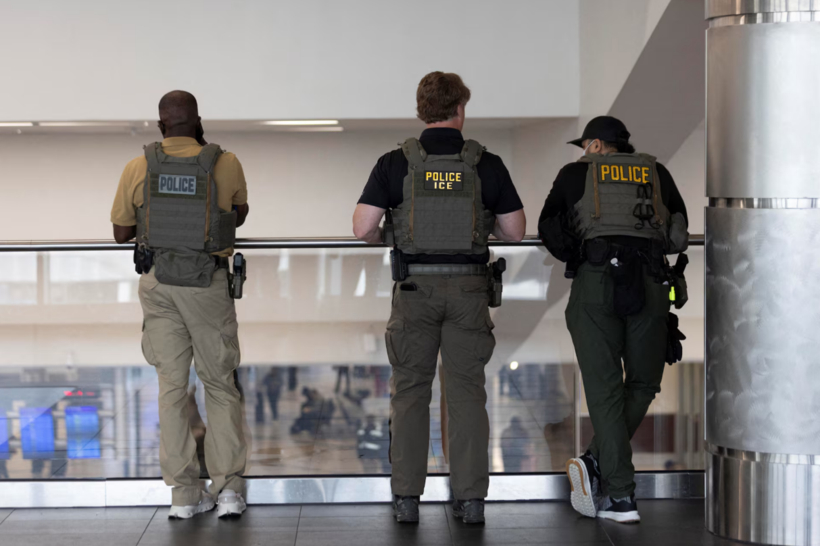
U.S. Immigration and Customs Enforcement (ICE) arrested approximately 50,000 people in July, marking the highest monthly total under the second Trump administration. According to government data analyzed by the Associated Press and obtained through a Freedom of Information Act lawsuit by UC Berkeley’s Deportation Research Clinic, July arrests reached 49,571—a 15% increase from 43,021 in June and a 70% jump compared to 29,241 in February.
The sharp rise highlights the administration’s relentless push for mass deportations. Following public backlash earlier this year over high-profile raids in major cities like Chicago, Los Angeles, and Minneapolis, enforcement tactics have shifted to be less conspicuous, yet more effective. ICE has increasingly relied on traffic stops, expanded cooperation with state and local law enforcement agencies, and begun targeting immigrants from Haiti who have lost deportation protections.
Mark Krikorian, executive director of the Center for Immigration Studies, noted that enforcement has not stopped but rather changed tactics to operate more efficiently. Just before President Trump took office, monthly ICE arrests stood at just over 8,000, largely consisting of individuals transferred from local and state jails. With loosened restrictions and massive federal funding—including billions secured from Congress last summer to hire 12,000 new deportation officers and investigators—arrest numbers have skyrocketed.
Texas and Florida accounted for nearly 20,000 of the July arrests, heavily utilizing 287(g) agreements that allow local law enforcement to act as federal immigration agents. Meanwhile, community advocates and journalists report a surge in traffic stops targeting minor infractions—such as expired tags or dark window tinting—to question drivers about their immigration status, affecting even those with pending asylum claims or valid work permits.
This dramatic escalation has reignited intense debate. Supporters praise the stricter enforcement of immigration laws, while immigrant rights advocates and local communities warn that routine traffic stops and local police partnerships are effectively resulting in indiscriminate mass deportations.