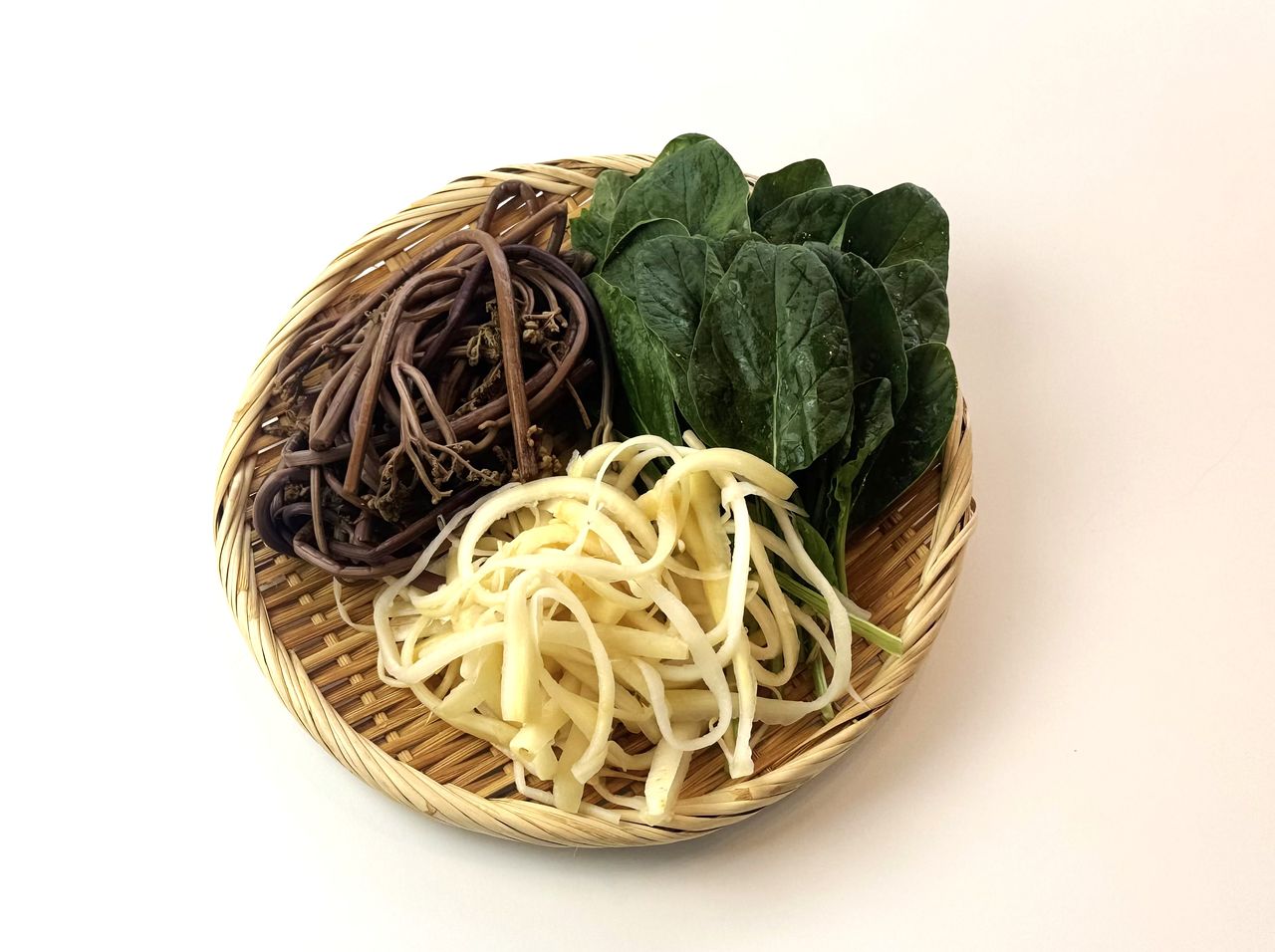
The Significance of Samsik Namul in South Korean Cuisine
Samsik Namul is a quintessential trio of seasoned vegetable side dishes that holds deep traditional meaning during major holidays like Chuseok in South Korea. Crafted by culinary researcher Lee Jung-woong, this classic dish features bellflower root (doraji), bracken fern (gosari), and spinach (sigeumchi). Beyond their nutritional benefits—such as saponins in doraji and vitamins in spinach—these three ingredients symbolize ancestral continuity, with roots representing ancestors, stalks representing parents, and leaves representing descendants.
Expert Preparation Tips for Each Vegetable
Because each vegetable possesses a distinct texture and flavor profile, applying a uniform cooking method will ruin the dish. Doraji must be vigorously scrubbed with salt to extract its bitterness before stir-frying. Sigeumchi is briefly blanched and gently tossed with a blend of sesame oil, perilla oil, and tuna liquid for enhanced nutty aromas. Meanwhile, gosari requires simmering in anchovy broth until the savory flavors deeply penetrate the fibers. Utilizing simple seasonings like tuna liquid, sesame oil, and perilla oil allows the natural qualities of each vegetable to truly shine in just 30 minutes.