Minority political power is not determined simply by population size or economic strength. What matters is how effectively a community organizes its voters, financial resources and talent — and connects those assets to the political system.
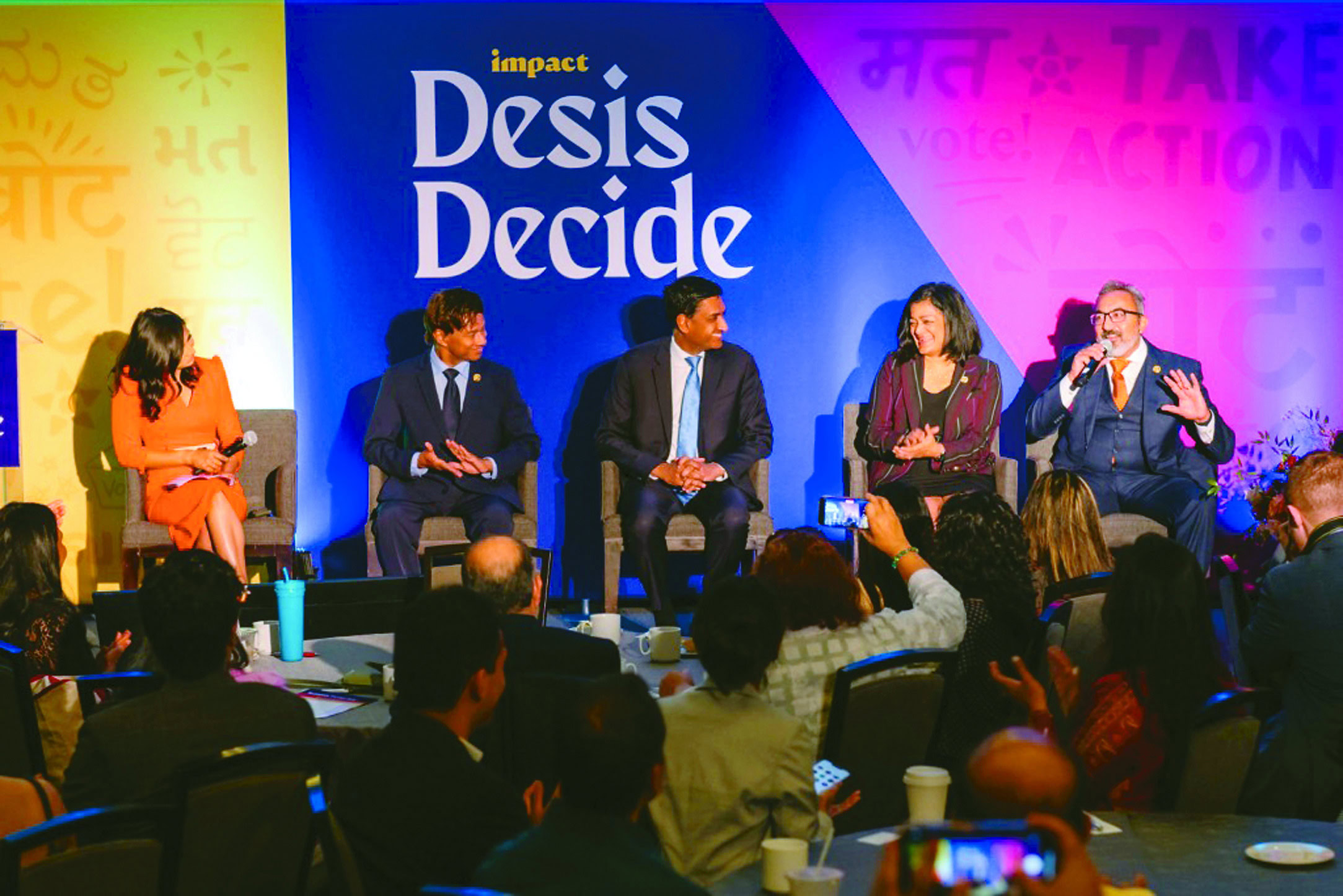
What these communities have in common is that their political engagement does not begin and end with elections.
Nonprofits focus on voter education and developing future leaders. Advocacy organizations work on legislation and public policy. Political action committees, or PACs, support candidates. Elected officials form caucuses within legislatures to advance shared priorities.
Rather than expecting one organization to perform every function, these communities have developed interconnected political ecosystems in which different organizations specialize in distinct roles.
Minority Political Power and the Jewish American Model
Founded in 1906, the American Jewish Committee (AJC) has built long-term relationships with government officials, diplomats and religious leaders while addressing antisemitism and human rights issues.
The American Israel Public Affairs Committee (AIPAC) has advocated for stronger U.S.-Israel relations since the 1950s, working with Congress and presidential administrations on public policy. It has connected supporters across congressional districts with lawmakers, provided information on legislation and federal spending, and regularly organized visits to Washington and meetings between constituents and their representatives.
For decades, AIPAC operated without its own PAC, relying primarily on policy advocacy and networks of political donors. That changed in 2021 with the launch of AIPAC PAC.
The following year, it established the United Democracy Project (UDP), a super PAC permitted to make independent political expenditures. According to UDP, it raised more than $35.9 million during the 2022 midterm election cycle and spent $26.1 million supporting candidates backed by its political network.
Campaign money alone, however, does not fully explain Jewish American political influence.
Decades of policy expertise, sustained relationships with lawmakers and congressional staff, locally organized membership networks and engagement with both Democrats and Republicans have combined with political fundraising to amplify the community’s influence.
Nor does the Jewish American community speak with a single political voice.
J Street, founded in 2008, describes itself as pro-Israel, pro-peace and pro-democracy and advocates for diplomatic solutions to the Israeli-Palestinian conflict. JStreetPAC, established the same year, supports candidates who share those policy goals.
Jewish American political influence, therefore, is not simply the product of universal agreement within the community. It also reflects an environment in which different organizations have built their own policy arguments, candidate networks and donor bases.
Indian Americans Turn Professional Success Into Political Representation
Indian Americans have translated success in professional and technology sectors into political representation over a relatively short period.
The U.S. India Political Action Committee (USINPAC) was founded in 2002 with participation from both Democrats and Republicans. It sought to amplify Indian American voices in Washington and provide Congress and the White House with information on issues including foreign policy, trade, immigration and education.
Indian American Impact, founded in 2016, combined candidate support with voter mobilization and leadership development.
According to the organization, only five Indian Americans had been elected to public office in the United States by 2000. By 2024, more than 300 South Asian Americans held elected office.
Since its founding, the organization says it has invested more than $20 million in mobilizing South Asian and Asian American voters and supporting candidates, helping nearly 200 candidates reach public office.
A major turning point came in 2016.
Pramila Jayapal, Raja Krishnamoorthi and Ro Khanna joined Ami Bera in the U.S. House of Representatives, while Kamala Harris became the first Indian American elected to the U.S. Senate.
Candidate development was not limited to Congress.
Indian American organizations also recruited and supported candidates seeking positions on school boards and city councils as well as seats in state legislatures, creating a step-by-step pipeline that could eventually lead to higher office.
Instead of treating an individual candidate’s success as an isolated achievement, the community sought to turn it into an institutional asset capable of producing future candidates and experienced campaign professionals.
The AAPI Victory Fund similarly works to elect Asian American, Native Hawaiian and Pacific Islander candidates. Its founder, real estate finance executive Shekar Narasimhan, and other leaders from business, technology and finance have helped connect professional networks and financial resources with campaign strategy and political fundraising.
Japanese Americans Turn Incarceration Into a Legislative Campaign
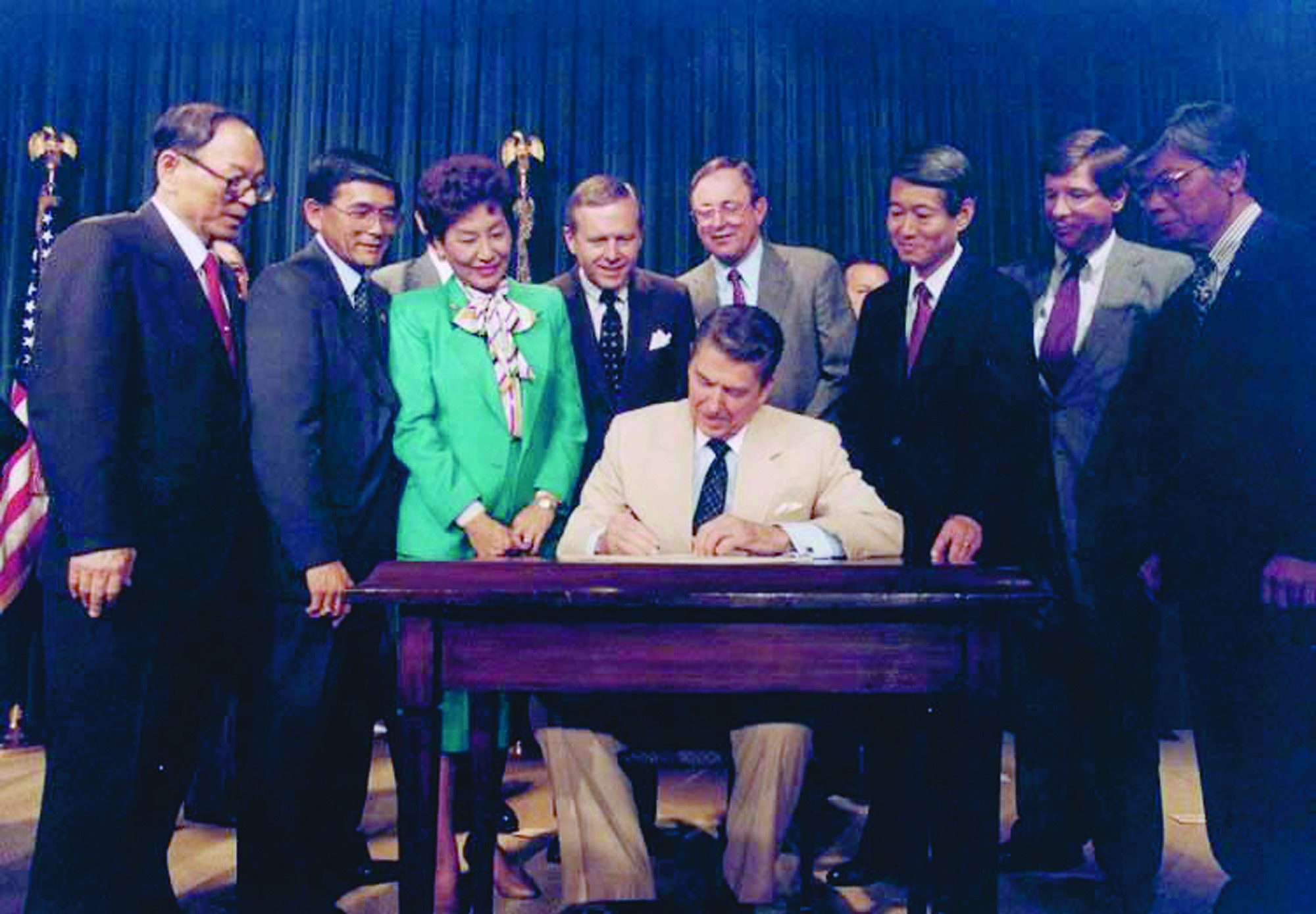
The Japanese American Citizens League (JACL) formally launched its campaign for World War II incarceration redress in 1978. Its initial demands included $25,000 for each person incarcerated, an apology from Congress and the creation of an educational trust fund.
JACL combined survivor testimony and historical records with constitutional arguments and sustained outreach to members of Congress.
The effort developed into a long-term grassroots campaign.
A decade later, President Ronald Reagan signed the Civil Liberties Act of 1988, providing $20,000 to each eligible surviving victim and issuing a formal apology from the federal government.
The campaign went beyond commemorating the injustice or documenting the suffering of those affected. Organizers connected historical records and personal testimony directly to congressional hearings and legislation, turning collective memory into a specific policy outcome.
Latino Organizations Focus on the Rules of Political Participation

The Mexican American Legal Defense and Educational Fund (MALDEF) was established in 1968, modeled in part on the NAACP Legal Defense Fund. It eventually became widely known as a legal advocate for the Latino community.
Its strategy reflected a fundamental challenge: Population growth does not automatically translate into political representation if communities are divided through electoral maps or face barriers to voting.
Rather than focusing solely on supporting candidates, MALDEF challenged the rules and structures that shaped political participation.
The National Association of Latino Elected and Appointed Officials (NALEO), founded in 1976 by U.S. Rep. Edward Roybal, created a nationwide network of Latino public officials.
The Congressional Hispanic Caucus Institute (CHCI), established in 1978, developed another part of the political pipeline. Through internships and fellowships, it has helped place more than 4,000 participants in congressional offices and federal agencies over more than four decades.
Black Political Power From the Courts to Congress
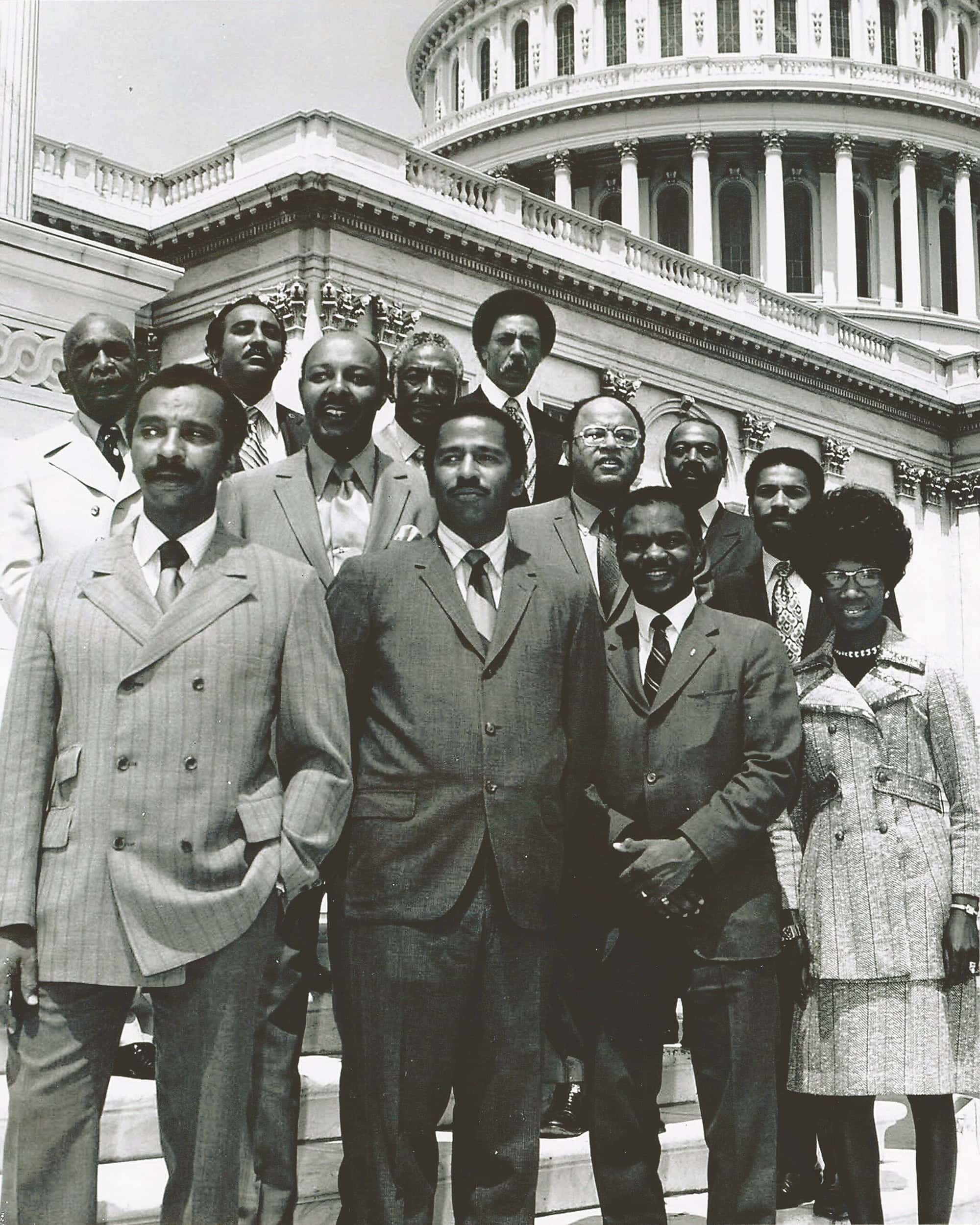
The Black community developed political influence by linking legal challenges, mass movements, voter registration and representation in Congress.
Founded in 1909, the NAACP became a central civil rights organization, while the NAACP Legal Defense Fund, established in 1940, pursued major civil rights litigation.
Those efforts produced landmark legal victories, including the 1954 Supreme Court decision in Brown v. Board of Education, which declared racial segregation in public schools unconstitutional.
Legal victories were accompanied by growing voter participation.
The number of Black registered voters in the South increased from roughly 200,000 in 1944 to about 1 million by 1952. Mass movements, including the 1965 Selma campaign, helped build momentum for passage of the federal Voting Rights Act that year.
Political representation then created another institutional layer.
In 1971, 13 Black members of Congress established the Congressional Black Caucus (CBC), giving Black lawmakers an organized mechanism to pursue shared legislative priorities and exercise collective influence within Congress.
Political Influence Requires an Ecosystem
The experiences of these communities illustrate that lasting political influence cannot be built around the election of one or two prominent politicians.
Voter registration organizations, candidate recruitment networks, PACs capable of raising campaign funds, policy specialists, civil rights lawyers and professionals working inside government all play different roles.
When those institutions develop together, political participation becomes more durable and less dependent on a single election, candidate or organization.
That institutional depth is ultimately what turns population, money and individual achievement into sustained minority political power.