Korean American political power has entered a new stage. The question is no longer simply how many Korean Americans win elected office, but how those victories can be translated into lasting influence for the broader community.
The number of Korean American elected officials has steadily grown at the federal, state, and local levels. Yet building a durable system that can turn the success of individual politicians into sustained political influence remains a major challenge.
The Korea Daily asked current Korean American elected officials to assess the community’s political standing, its limitations and what must come next. Their answers varied, but several themes emerged repeatedly: participation, organization, leadership development and coalition-building. Their message was clear — political influence cannot be built only during election season. It requires a community that participates consistently, develops the next generation of leaders and builds the infrastructure to turn representation into real influence.
“Never Underestimate Our Collective Power”
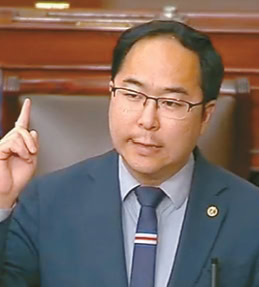 U.S. Sen. Andy Kim
For Korean American political power to advance further, the community must first break through the assumption that Asian Americans are somehow less likely to emerge as political leaders.
U.S. Sen. Andy Kim, the first Korean American in U.S. history to serve in the Senate, said he encountered those assumptions firsthand throughout his political career.
“When I first ran for Congress, I was told I couldn’t win because it was a majority white district,” Kim said. “When I was running for the Senate, I was told I was the wrong kind of minority to win statewide.”
Those experiences, he said, reflect a lingering expectation that Asian Americans are not positioned to step forward as leaders.
“We should never underestimate ourselves or our collective power,” Kim said.
For Kim, overcoming that barrier begins with Korean Americans finding and asserting their own political voice rather than allowing others to define their place or potential. That means voting, speaking out and remaining engaged, while continuing to create new opportunities and pathways for the next generation of Korean American leaders.
Kim said he regularly speaks with young Korean Americans across the country and carries their perspectives into his work in Congress. He has also sought to strengthen connections among Congress, government leaders in South Korea and Korean diaspora communities in the United States.
Looking ahead, Kim expects the next decade to be a consequential period for Korean American and broader AANHPI political participation. His longer-term vision goes beyond simply increasing the number of Korean American officeholders: Korean Americans and other Asian Americans should be seen leading diverse constituencies so naturally that their presence in American political life is no longer viewed as unusual.
Ultimately, he said, political representation should help create a country where future generations no longer feel they must prove that they belong.
“Turn Individual Success Into Collective Power”
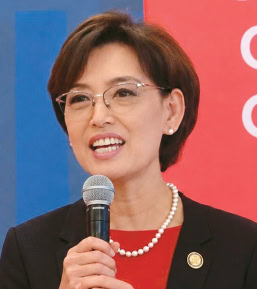 U.S. Rep. Young Kim
Korean Americans have achieved extraordinary success across business, medicine, law, technology, education and other fields. But individual achievement alone does not translate into political influence, according to U.S. Rep. Young Kim.
“Koreans have generally focused on individual success,” Kim said. “But political influence requires more than individual success.”
The challenge, she said, is turning individual accomplishment into coordinated civic and political action.
Kim pointed to voting, campaign participation, communication with elected officials, service on community boards and encouragement of younger generations to pursue public service as essential elements of greater political influence. She also cited organized advocacy and Political Action Committees as vehicles through which the community can build sustained influence.
“Political power is not built just during election season,” she said. “It’s built over consistent civic and political engagement.”
That requires a shift in the community’s relationship with government, Kim said. Rather than approaching elected officials only when there is a specific request or crisis, Korean Americans must become consistent participants in the political process itself.
She also cautioned against limiting Korean American political engagement solely to issues seen as “Korean” concerns.
“We’re part of the larger American community,” Kim said, emphasizing that Korean Americans should be involved in issues that matter to Americans broadly, including but not limited to the Korean American community.
Her assessment ultimately points to a broader transition: from a community rich in individually successful people to one capable of organizing those resources into sustained collective political influence.
“Build a Political Talent Pipeline”
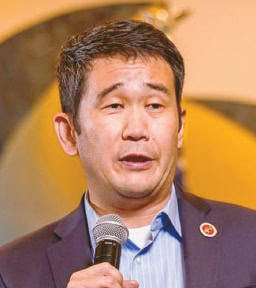 U.S. Rep. Dave Min
For Korean American political influence to become sustainable, the community cannot rely on the success of a handful of elected officials. It needs a structured pipeline that allows young Korean Americans to enter politics, gain experience and advance into positions of greater responsibility.
U.S. Rep. Dave Min said Korean American political engagement and representation have made tremendous progress, but the bench remains far too thin.
The shortage is not limited to elected officials, he said. Korean Americans remain underrepresented among senior legislative staffers, campaign professionals, policy directors and other people who shape elections and policymaking behind the scenes.
“Not everyone needs to run for Congress,” Min said. “We need Korean Americans working as legislative staff, campaign managers, organizers, policy experts, communications professionals, fundraisers, attorneys, commissioners, and leaders throughout government and civic life.”
Min said developing the next generation cannot depend on a handful of elected officials informally making introductions or offering help.
Instead, he called for a more intentional system that begins early — exposing students to government, creating mentorship and fellowship opportunities, connecting young professionals with experienced political leaders and supporting them as they advance.
Throughout his own public service career, Min said he has hired and mentored young people, connected Korean Americans with campaigns and political organizations and supported Korean American candidates.
His measure of success is straightforward: “A young Korean American interested in public service can see a clear pathway ahead of them and a community ready to help them walk it.”
That pipeline, rather than the success of any single politician, could determine whether Korean American political influence endures across generations.
“Create More Opportunities to Discover Politics”
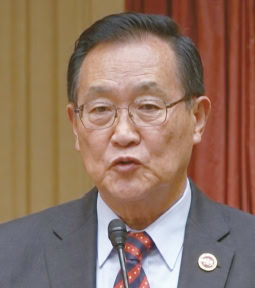 California State Sen. Steven Choi
The next generation of Korean American politicians cannot simply be “produced.” Their interest often begins when they first recognize politics and public service as realistic options for their own future.
California State Sen. Steven Choi said personal interest and individual initiative remain the primary drivers of a political career. But outside influences — encouragement from others, exposure to government and conversations at home and in the community — can provide the spark that turns curiosity into action.
For that reason, Choi said leadership development should not be understood solely as identifying a promising individual and grooming that person for office. The broader task is creating more opportunities for young people to discover politics for themselves.
He pointed to students who visit the State Capitol and meet elected officials. Seeing government up close and speaking directly with lawmakers can lead a student to imagine, perhaps for the first time, “I could be here someday.”
Political awareness can also begin at home, Choi said. Children who regularly hear their parents discussing public affairs and social issues may eventually develop their own desire to address those problems.
Choi’s own path illustrates another route into politics. He said he initially had little interest in running for office, but eventually reconsidered after people around him encouraged him to do so over an extended period.
His broader argument is that there is no single path into politics. The community’s role is to create enough points of contact — at school, at home, in government and in civic life — so that more young Korean Americans can see public service as a genuine possibility.
“Broaden the Base of Everyday Political Participation”
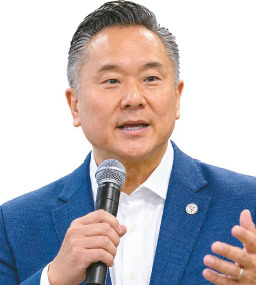 Los Angeles City Councilmember John Lee
The strength of Korean American political influence depends not simply on how many Korean Americans hold office, but on how many people recognize that politics directly shapes their everyday lives and choose to participate.
Los Angeles City Councilmember John Lee said one of the biggest challenges is helping people understand how closely government decisions are tied to their daily experiences.
“Decisions made at every level of government impact our businesses, schools, neighborhoods, public safety, and quality of life,” Lee said.
The problem, he said, is that many people experience the consequences of government decisions without connecting them to their own civic and political participation.
Voting is important, but Lee said engagement cannot end at the ballot box. Korean Americans should advocate on issues important to the community, participate in local government and become involved in the decision-making processes that shape their neighborhoods.
“Political influence is strongest when a community is informed, engaged, and willing to participate together,” he said.
Lee also stressed the importance of exposing younger generations to public service. His office operates the LEE12 Excellence in Leadership Program, which gives students firsthand experience with local government, public service and the political process.
The broader goal is to widen the base of participation itself — creating a cycle in which adults remain engaged in public affairs while younger generations grow up viewing civic participation and public service as natural parts of community life.
“Korean American Politics Cannot Afford Complacency”
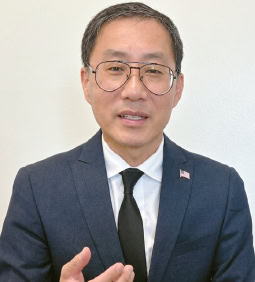 Fullerton Mayor Fred Jung
The growth of Korean American political representation is encouraging, but it is far too early for the community to become complacent, Fullerton Mayor Fred Jung said.
Jung expressed particular concern about Southern California, home to one of the nation’s largest Korean American populations, where the community has lost valuable elected representation.
“The Korean representation in the United States is thankfully slowly growing,” Jung said. “But that said, we cannot be satisfied with those gains and become complacent.”
For Jung, the central issue is not simply producing more candidates. It is developing the collective ability to identify competitive candidates and help them win.
“While many Koreans run for office, very few win,” he said. “We need to do a much better job as a community picking winning candidates and supporting them to victory.”
Jung cited the 1992 Los Angeles riots as a lasting reminder of the consequences a community can face when it lacks representation and a meaningful voice in government.
Looking 10 years ahead, Jung said Korean Americans could expand their political influence by learning from communities that have built stronger traditions of coordinated voting, fundraising and candidate support.
But he also warned that supporting candidates based on personal ties rather than qualifications, or allowing partisan divisions to overwhelm broader community interests, could weaken that influence.
The next stage of Korean American political power, in his view, will depend less on the number of people willing to run and more on whether the community can organize its votes, resources and support to turn strong candidacies into actual electoral victories.
“Local Representation Is the Foundation of Political Power”
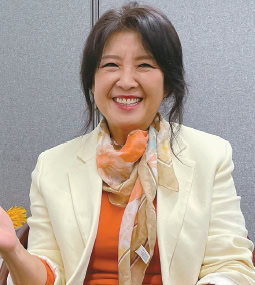 Buena Park Councilmember Joyce Ahn
Korean American representation must grow at every level of government, but local government is particularly important because it is where public policy most directly intersects with daily life.
Buena Park Councilmember Joyce Ahn said greater representation on city councils, school boards and other local bodies can provide the foundation for broader Korean American political influence.
Local governments make decisions involving public safety, housing, education, development and other issues residents encounter every day. Building representation at that level, she said, strengthens both the community’s voice and its culture of political participation.
Ahn identified underrepresentation and lower-than-desired civic participation as major obstacles to greater political influence. Historical political disengagement and language barriers have contributed to the problem, she said, while U.S.-born Korean Americans also participate at lower levels than their naturalized counterparts.
Addressing those gaps requires more voter registration, stronger participation in local elections and better resources for understanding how the political process works.
Ahn also pointed to divisions within the Korean American community. Generational differences, socioeconomic divisions and partisan disagreements can fragment advocacy and weaken the community’s collective voice.
Moving forward, she said, Korean Americans need to identify common political goals while also building coalitions with other minority communities.
Over the next decade, Ahn expects more Korean Americans to serve throughout government, but she sees local representation as a particularly important building block. The ultimate goal, she said, should be influence that advances not only Korean American interests but also equity and representation for other marginalized communities.
“It Is Time to Expand Beyond the Korean American Community”
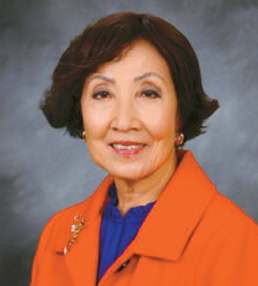 Laguna Woods Mayor Pro Tempore Pearl Lee
The next phase of Korean American political growth should extend beyond representing the interests of Korean Americans alone. It should produce leaders capable of working across racial and ethnic communities and addressing challenges facing American society as a whole.
Laguna Woods Mayor Pro Tempore Pearl Lee said she is optimistic about the coming decade. More young Korean Americans are pursuing public service and elected office, she said, while younger generations face fewer linguistic and cultural barriers and have a stronger understanding of the American political system.
But greater numbers alone will not automatically create influence.
“Political power comes from participation, organization, coalition-building and voting,” Lee said.
One of the community’s biggest challenges, she added, is learning to work together despite internal differences. That requires a stronger culture of teamwork within the Korean American community as well as sustained partnerships with other ethnic and community groups.
Such coalition-building is important not only for expanding a political base, but for changing the kind of leadership Korean American politicians provide. To grow beyond representing a particular ethnic constituency, Korean American leaders must be able to identify shared concerns, build support across communities and represent a broader electorate.
Ten years from now, Lee said she hopes Korean Americans will be recognized not simply as a successful immigrant community but as an important civic and political voice, with leaders serving from local government to state and federal office.
Most important, she said, political influence should not become an end in itself.
“Our goal should not be political power just for Korean Americans,” Lee said. “Our goal should be to use our growing influence to contribute to the larger community and make our society better for everyone.”