“The USC Korean Heritage Library is the product of a grassroots movement.”
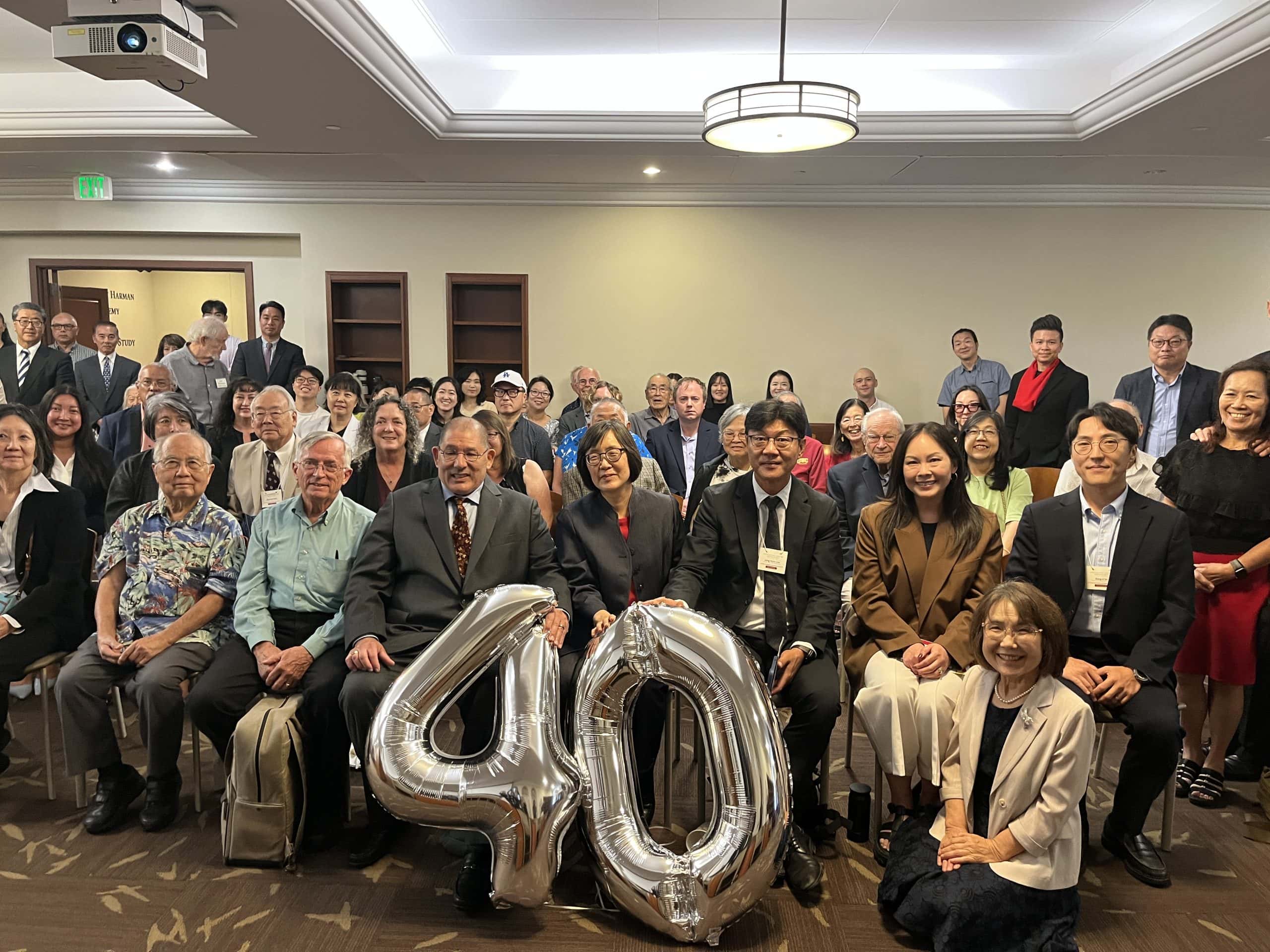
As the USC Korean Heritage Library marked its 40th anniversary on Sept. 25, founding librarian Joy Kim emphasized that the library’s creation and growth were made possible by the Korean American community.
“The USC Korean Heritage Library began when Korean Americans themselves approached the university and proposed the need for a Korean studies program,” Kim told The Korea Daily. “Most of the materials in the collection today were also gathered one by one through donations from Korean Americans across the United States.”
The anniversary event brought together several figures who played key roles in establishing the library, including Kim, former USC East Asian Studies Center director Gordon Berger, and Dr. Ken Klein. Descendants of Korean independence activists also attended, including those whose families donated historical materials to the library and those who continue working to preserve the history of the Korean independence movement in the United States.
Diann Rowland, co-founder of the Korean Independence Legacy, or KIL, said the library’s archival holdings have provided important clues in efforts to identify descendants of independence activists.
Rowland is the great-granddaughter of independence activist Oh Rim-ha, who worked alongside Ahn Chang-ho in the Korean National Association and later served as an instructor at the Willows Aviation School, considered a precursor to the Republic of Korea Air Force Academy.
“One of the library’s extensive collections includes materials related to the Willows Aviation School,” Rowland said. “We used photographs from the library’s collection to help locate descendants of independence activists who were involved with the school.”
She added that some descendants had been unaware of their ancestors’ roles in the independence movement.
“They did not know what their grandfathers had done,” Rowland said. “Through materials held by the Korean Heritage Library, they learned that their family members had contributed to Korea’s independence movement.”
Dr. Jonghyun Lim, who is overseeing the restoration of the former Young Korean Academy headquarters near USC on behalf of South Korea’s Ministry of Patriots and Veterans Affairs, also highlighted the library’s role in preserving historical records.
“In the early stages of the restoration project, old photographs and related materials held by the library were extremely helpful,” Lim said. “The most important part of preserving history is documenting it and keeping those records. The USC Korean Heritage Library has been fulfilling that role.”
The library’s history dates back to 1985, when Korean American scholars at USC, including Drs. Yeonwon Bae and Wansik Kim, along with members of the Los Angeles Korean American community, approached then-East Asian Studies Center director Gordon Berger about establishing a Korean studies program.
Those efforts laid the foundation for Korean studies at USC. The Korean Heritage Library was formally established in April 1986, followed a month later by the creation of a support organization to help sustain its operations.
“The library is something our Korean American community built together and can take pride in,” Kim said. “Building on the past 40 years, it is now time to take another leap toward the next 40.”