Residents of British Columbia will not turn their clocks back one hour this coming November 1. With the implementation of year-round daylight saving time, the current time will remain unchanged even through the winter.
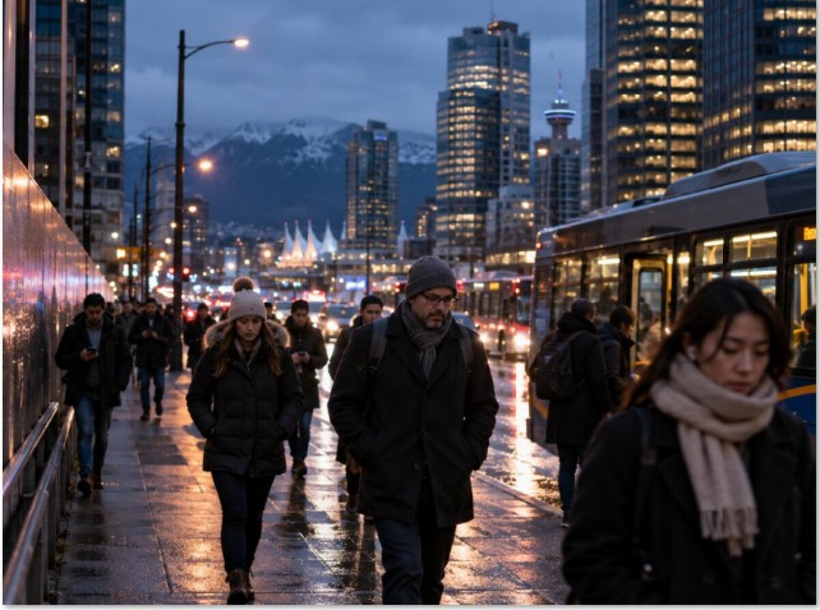
While the hassle of changing clocks disappears, winter morning sun will rise an hour later compared to standard time. Researchers in sleep, mental health, and economics note that while longer evening sunlight is a benefit, extended morning darkness can impact circadian rhythms and daily student life.
Winter Mornings Grow One Hour Darker
A study published on the 5th in the Canadian Medical Association Journal showed that maintaining year-round daylight saving time can impact not only health but also students’ school life and economic activities.
Ralph Mistlberger, an SFU psychology professor who has studied sleep and circadian rhythms for over 40 years, stated that when winter morning sunlight is delayed, the body’s biological clock may still perceive wake-up time as time to sleep. Conversely, in the evening, the body may perceive it as time to stay awake, leading to delayed sleep onset.
The persistent mismatch between lifestyle time and the biological clock is known as ‘Social Jet Lag.’ Researchers stated that long-term sleep deprivation can be linked to metabolic diseases such as obesity and diabetes, as well as increased cardiovascular disease, while some large-scale studies have also shown connections to cancer and mood disorders.
BC and Alberta Opt for Year-Round DST
British Columbia, Alberta, the Northwest Territories, and Manitoba announced the adoption of year-round daylight saving time this year. The BC provincial government cited reduced family living inconveniences, easier schedule management, and an extra hour of sunlight during winter evenings as advantages of eliminating time changes.
In a 2019 provincial online survey, more than 223,000 people participated, with 93% voting in favor of year-round daylight saving time. However, researchers pointed out that the past survey only offered seasonal time changes and year-round DST as options, meaning a year-round standard time option was not provided.
Impact on Student Commutes and Learning
When winter sunrise is delayed, days where students commute to school before sunrise may increase. Existing research examining time zone boundaries in Florida showed that adolescents who received an extra hour of sunlight before school achieved higher scores in math and reading, with the difference being most pronounced among pubertal students.
Patrick Baylis, an assistant professor at the UBC Vancouver School of Economics, stated that it is necessary to continuously check whether there are changes in adolescent learning outcomes following the introduction of year-round daylight saving time.
Regarding economic activity, a study comparing regions within the same U.S. time zone with different sunset times showed that long-term earnings in regions where the sun sets an hour later were about 5% lower. However, research addressing the relationship between time systems and economic activity remains limited.
Russia, Chile, and the US Rolled It Back
There are also cases where year-round daylight saving time was implemented and subsequently repealed. After introducing it in 2011, Russia abolished it three years later following persistent complaints about long winter morning darkness. Chile also introduced it in 2015, but returned to most of its previous practices after complaints arose regarding student life and agricultural activities.
The United States also implemented year-round daylight saving time nationwide in 1974 to save energy, but repealed it in less than a year. Dark winter mornings, children’s school commuting safety, and workplace safety issues were raised, and energy-saving effects were not distinct.
“Maximize Morning Sunlight As Soon As Possible”
Researchers suggested delaying school start times or supplementing lacking natural light on winter mornings with bright lighting if year-round daylight saving time is maintained.
Individuals can also use light to regulate their biological clocks. Professor Mistlberger stated that using bright, blue-toned light in the morning and switching to warm, dim lighting in the afternoon and evening can be helpful. During the winter season, going outside as soon as possible after sunrise to receive natural light also helps reset the biological clock.