Everyone has probably read an article about a ‘supercentenarian diet’ or a ‘single food secret to a long life’ at least once. However, the idea that one specific food is responsible for over a century of life is closer to a fantasy than science.
The truly important detail is what role their diet played within the mechanisms driving longevity.
Surprisingly, the diet of Maria, who lived to 117, often included sausages, ham, pork, beef, and even hamburgers. On the other hand, cardiologist Dr. Eric Topol, who studies supercentenarians, has completely avoided red meat for the past 45 years due to a family history of colon cancer.
One side represents a diet driven by instinct and tradition that achieved super-longevity, while the other represents an optimal diet created by science through analyzing supercentenarians. Placing them side by side makes the structure of a longevity-promoting diet quite clear, and the secrets of a long life are hidden right where these two meet.
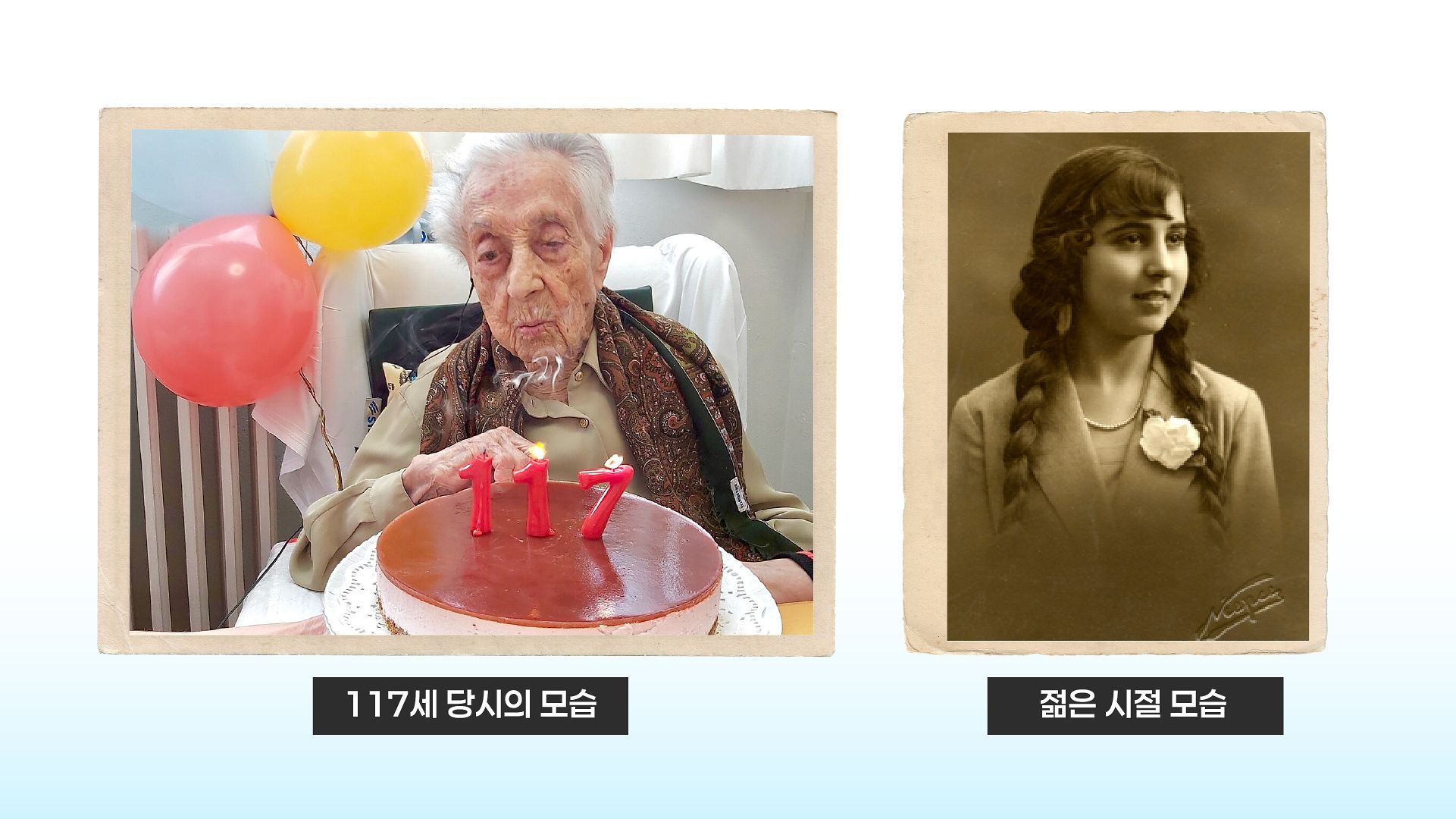
Maria Branyas Morera passed away peacefully on August 19, 2024, at the age of 117. For a Spanish research team, it was a stroke of good fortune to be able to study everything about Maria the previous year when she was 116. Her biological age was a striking 23 years younger than her chronological age. The research team mobilized cutting-edge scientific techniques to analyze the factors that led Maria to become a supercentenarian.
In a paper published in October 2025 in the journal Cell, the research team summarized her longevity secrets into four main categories: rare genetic variants found in Europeans, a youthful epigenome, low levels of inflammation, and exceptionally youthful gut bacteria for her age.
It is true that her innate genetic mutations played a significant part in her super-longevity, and these were not even inherited. None of her family members or relatives lived nearly as long as she did.
First of all, her immune system was unusually robust. Her memory T cells retained countless records of successfully defending against infections and threats from cancer. Genetic variants that preserved cognitive function and protected her heart also safeguarded her brain and cardiovascular system.
However, acquired lifestyle habits also played a contributing role. Her gut was remarkably rich in anti-inflammatory microbes, particularly Bifidobacterium, which has been reported to exist at high levels in other supercentenarians as well.
Gut microbiota are heavily influenced by dietary habits, and it is presumed that the dietary structure Maria maintained for over the last two decades of her life fostered a healthy microbial ecosystem. The research team recorded three weeks’ worth of menus maintained by Maria for more than 20 years in her later life. What matters is the pattern of repetition rather than just the specific foods eaten. A close analysis of her diet reveals four core patterns.
The diet used for comparison is that of Dr. Topol, a renowned longevity researcher who has authored over 1,300 papers and boasts more than 370,000 citations.
While Maria’s diet was tailored to accommodate the physiological conditions of her later years when chewing and swallowing became difficult, the researcher’s diet was designed specifically for his own body. Yet, there were striking overlaps between the two.