Korean reading theater is rapidly expanding its unique artistic territory, replacing lavish stage spectacles with rich vocal performances. Once regarded merely as showcase events to test a work’s commercial viability or as preliminary readings before a full-scale production, reading plays have evolved into a distinct genre that brilliantly reimagines literary masterpieces and classic dramas.
The Rise of Voice-Driven Stage Productions
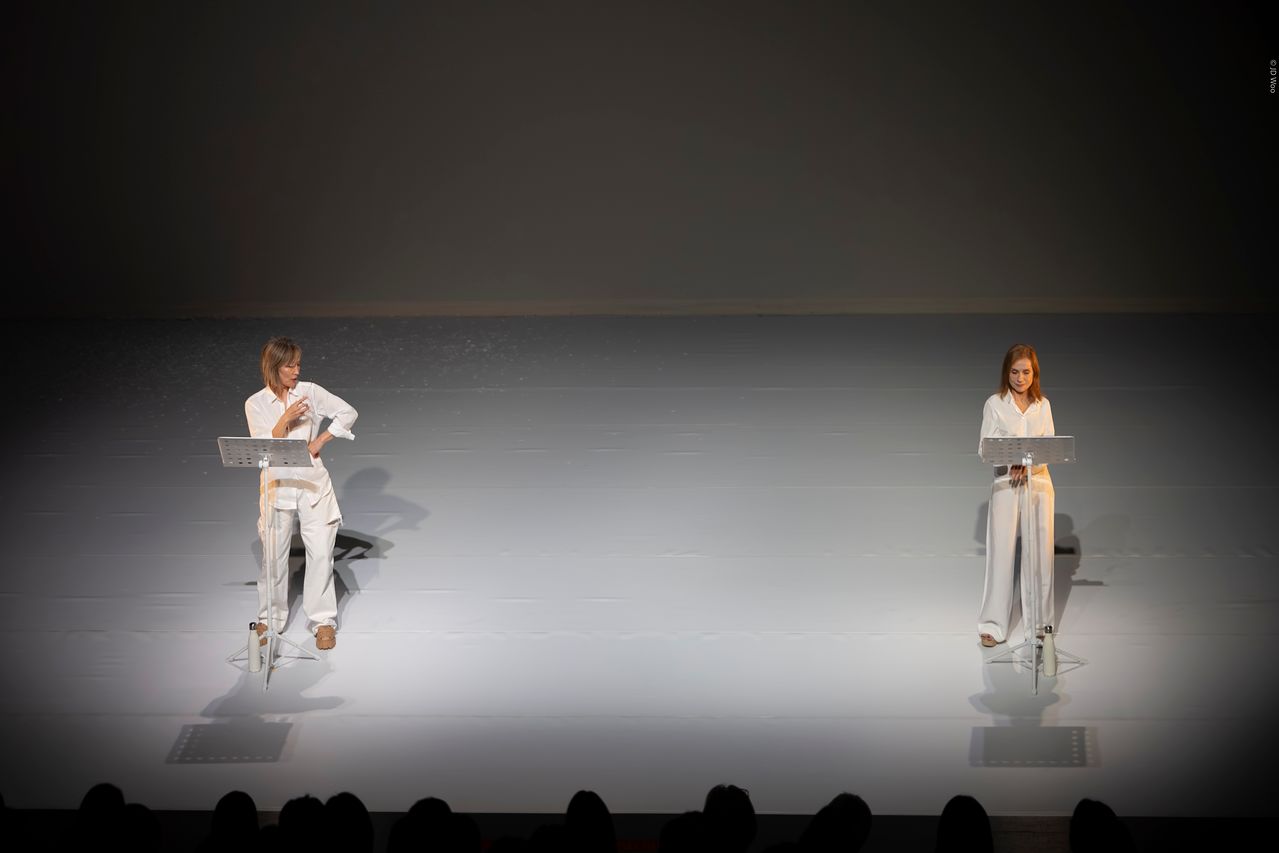
A prime example of this trend is the reading play ‘The Bird,’ based on Nobel laureate Han Kang’s novel ‘We Do Not Part.’ Directed by French director Julie Deliquet and starring French actress Isabelle Huppert alongside Korean actress Lee Hye-young, the production captivated audiences following its world premiere at the Avignon Festival in France and its subsequent run at the Seoul International Performing Arts Festival (SPAF).
Audiences are actively responding to these intimate productions. The Korea Arts Council (ARKO) has been running the ‘2026 ARKO Literature Theater’ program, featuring five reading plays and four reading sessions. Acclaimed works by authors such as Kim Ae-ran, Go Jae-gwi, Kim Bo-young, and Sung Hae-na are being brought to life by prominent actors through a harmonious blend of text, immersive sound design, and projection mapping.
Reinterpreting Classical Literature and Global Works
In addition to contemporary literature, classic plays are being reimagined through the reading format. The creative collective Gongnori Club has been presenting the ‘Four Seasons Chekhov’ series at Mapo Art Center in Seoul, staging works such as ‘The Cherry Orchard,’ ‘Uncle Vanya,’ and ‘The Three Sisters.’ Furthermore, the format provides a platform to introduce rarely seen international contemporary works to local audiences with shorter preparation periods and minimized stage set costs.
Experts note that reading theater allows narrative prose, character dialogue, description, and events to coexist purely within the human voice. By eliminating heavy stage machinery, these productions create expansive blank spaces for the audience’s imagination, offering an entirely different theatrical experience from traditional plays.