Amid US-led manufacturing policies driven by US-China tensions, an increasing number of South Korean component, material, and equipment (commonly known as ‘so-bu-jang’) companies are expanding their presence in the United States. Driven by surging data center demand fueled by the artificial intelligence boom, K-components and materials companies are seizing new opportunities within the evolving US supply chain.
Hanmi Semiconductor, a semiconductor packaging equipment maker, established its US subsidiary ‘Hanmi USA’ in San Jose, California, on the 16th (local time) to officially enter the local market. Hanmi Semiconductor holds the top global market share in thermal compression (TC) bonders, which apply heat and pressure simultaneously to bond semiconductor chips—a crucial process for manufacturing high-bandwidth memory (HBM).
Having previously relied on SK Hynix for 95% of its sales, Hanmi Semiconductor plans to diversify its customer base to include overseas firms. Intel began operating a packaging facility in Chandler, Arizona, late last year, while Micron and SK Hynix are slated to break ground on plants in Idaho and Indiana by 2027 and 2028, respectively. A Hanmi Semiconductor official stated that San Jose was chosen as the operational base due to its proximity to global semiconductor giants, enabling the company to deploy skilled engineers and provide close technical support aligned with local factory schedules.
South Korean energy storage system (ESS) component makers are also establishing production bases in the US in succession. The surge in ESS demand for stable power supply alongside AI data centers coincided with local companies seeking to reduce reliance on Chinese batteries.
In Indiana, secondary battery component maker Seojin System’s plant began operations in July, while another firm, Hanchung NCS, is constructing a production facility. Both companies supply ESS components to Samsung SDI America. Meanwhile, Shin Sung ST, which partners with LG Energy Solution, has established a production plant in Kentucky. A company official noted that while domestic customer sales remain high, the firm plans to diversify its order pipeline toward US local enterprises.
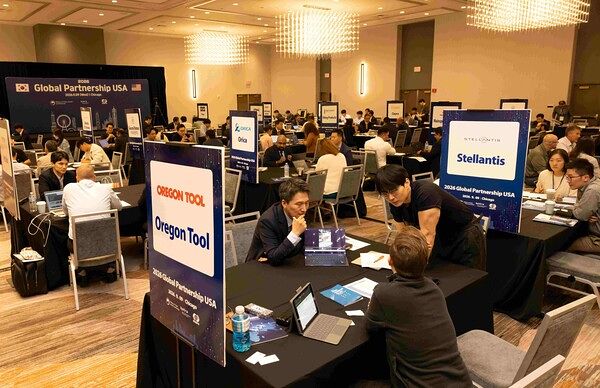
In recent partner events held by the Korea Trade-Investment Promotion Agency (KOTRA) in Chicago and San Francisco, about 80 companies participated and conducted approximately 700 export consultations. An official from Josteam, a semiconductor wafer humidity control technology provider, mentioned that many prospective clients considered replacing imported parts with South Korean alternatives, highlighting strong local demand amid supply chain diversification trends. A KOTRA official emphasized that expanding manufacturing investments and supply chain restructuring in the US are boosting local demand for South Korean suppliers, making it crucial to transition from simple exports into joint R&D and local investments.