If you really had to choose just one thing, it isn’t your kitchen tools—it’s your food.
Why should you change your food rather than your kitchen utensils to reduce plastic exposure? A research team at the University of Western Australia tracked the diets and lifestyle patterns of Australian adults meal by meal, discovering that the decisive variable splitting body plastic levels was entirely different.
The research team gathered 211 adults with an average age of 43 living in Perth, Australia. They recorded the ingredients of every single meal they ate. Urine samples were tested for phthalates and bisphenols. These two substances are representative endocrine-disrupting environmental hormones. Numerous studies have reported that high levels of these chemicals are linked to higher rates of diabetes, obesity, endometriosis, and declined sperm quality.
Among the participants divided into four groups, three groups showed high levels of specific plastic-related chemicals, while only one group did not show this phenomenon. They did not use special water filters, eat exclusively organic, or avoid plastic kitchen utensils. When their urine was analyzed, the levels of endocrine-disrupting plastic chemicals like phthalates and bisphenols were uniquely lower than in the other groups.
Professor Michaela Lucas from the University of Western Australia Medical School said, “We often compare plastic chemicals to cigarettes. Data linking smoking to cancer came out a very long time ago, but it took quite a while after that for people to realize quitting smoking could reduce that risk.” She added, “The plastic chemical issue is now moving into that second phase.”
So what did these individuals do to have uniquely lower plastic chemicals detected? Through interviews with the research team, we explored the best ways to avoid plastic chemicals.
The research team also designed a clinical trial. The project name is ‘PERTH’, which stands for the city where the University of Western Australia is located and ‘Plastic Exposure Reduction Transforms Health’.
Sixty participants received different combinations of: foods with minimized plastic contact; kitchen utensils made of metal, wood, and glass; food storage and cooking methods that reduce plastic; and personal care products like shampoo, toothpaste, and moisturizers with reduced plastic-related chemical exposure.
The research team’s criteria for selecting food were particularly strict. Groceries sold in markets touch plastic somewhere between harvesting, washing, packaging, and transporting. The research team directly tracked down over 100 producers and suppliers with virtually no plastic contact during production to source ingredients.
Participants completely replaced what they normally used with items provided by the research team for seven days.
A week later, the research team tested the participants’ urine again and compared it with previous levels. The group that changed both food and kitchen utensils had a 37.5% lower phthalate metabolite MnBP, 53.5% lower MBzP, and 59.7% lower bisphenol A (BPA) compared to the control group.
The group that changed all four categories showed a 44.1% reduction in MnBP and a 50.5% reduction in total bisphenols. The group that only changed personal care products also saw a 35.3% reduction in MnBP, but bisphenols did not significantly decrease.
When the research team analyzed the diets and lifestyle patterns of 211 individuals, the most important variable separating the four groups was neither kitchen utensils nor cosmetics, but food—specifically, certain types of food.
People who ate a lot of this specific food were clustered in the three groups with high plastic chemical levels.
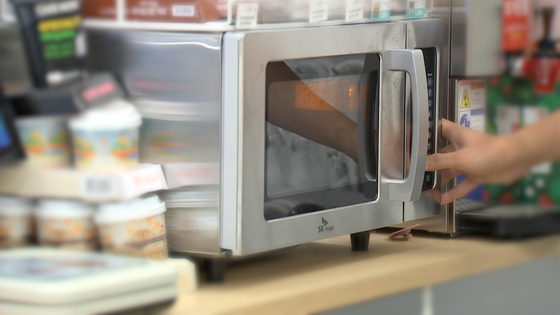
This was even more dangerous than food heated in a microwave.
According to the research results, even those who insisted on organic or health foods were accumulating plastics in their bodies. Why did the research team advise against even silicone, which is commonly trusted as a safe alternative to plastic?
Meanwhile, what is the identity of this food that is more dangerous than a microwave? Eating this food for just five days caused endocrine-disrupting chemical levels in urine to surge more than tenfold.
The food pointed out by the research team was actually something we consumed daily without a second thought.