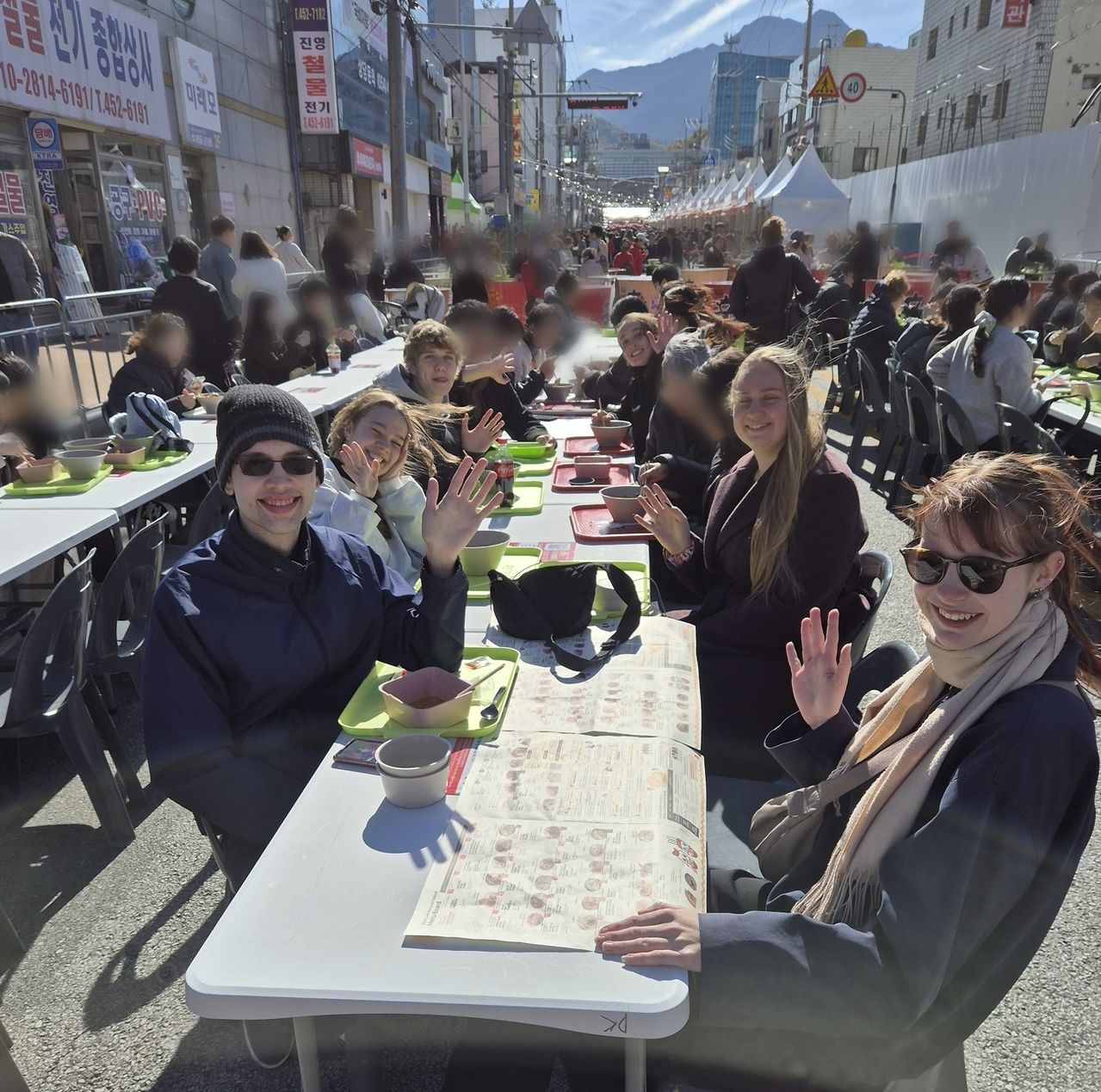
“Korean ramen is the best. The noodles are chewy with a fantastic texture, and the soup base and sauces are very rich. It’s hard to eat just one,” said Nathan Risdon, a 21-year-old visitor from the United States.
Held on November 6 around Gumi Station in North Gyeongsang Province, the Gumi Ramen Festival was bustling with tens of thousands of people across its 475-meter-long festival street. Gumi City, home to a major Nongshim ramen factory, has been hosting the event since 2022, and this year’s festival drew an estimated 400,000 visitors.
Global Popularity Drives Record Export Projections
K-ramen is expanding its footprint into daily meals for people around the world. This trend is driven by the diversification of ramen types into broth-based and stir-fried varieties, combined with a growing food culture of adding local ingredients to suit individual preferences. With this broad consumer base expanding, annual ramen exports are projected to surpass $2 billion (approx. 2.728 trillion KRW) this year for the first time in history.
In fact, Nongshim’s ‘Shin Ramyun’—the top-selling domestic ramen brand—is sold in over 100 countries, including North America, China, Japan, and Europe. Last year, 66% of its 1.54 trillion KRW in sales came from overseas markets.
Reflecting this global momentum, the first-ever ‘Global Ramen Cooking Contest’ held at this year’s festival received applications from 1,263 contestants across 80 countries. Thirteen finalists from 13 countries showcased their dishes on-site, with Jesus Manuel Ponce Ruiz, 38, taking first place with a ramen dish featuring Mexican chipotle and charcoal-grilled chicken skewers. “Korean ramen pairs wonderfully with various Mexican sauces, making it versatile for many recipes,” he said.
Nongshim Expands Production with New Export-Only Facility
To meet the surging demand for K-Ramen Festival products and beyond, Nongshim has built and recently commenced operations at its first export-dedicated plant in the Noksan National Industrial Complex in Busan.
The Noksan New Plant, visited on November 5, spans a floor area of 48,178 square meters and features fully automated production lines covering everything from dough mixing and noodle forming to frying and packaging. Utilizing artificial intelligence (AI) technology, the facility operates at twice the speed of standard production lines, capable of producing over 600 ramen packs per minute and 500 million packs annually. Located just 4 kilometers from Busan Port, the plant significantly enhances logistics efficiency for export shipments.
With the operation of this new plant, Nongshim’s annual export-oriented ramen production capacity has increased to 1.2 billion packs. Combined with the 1.7 billion packs produced at its local plants in the U.S. and China, Nongshim’s total production capacity for export and overseas sales has reached 2.9 billion packs annually. “Building on this expanded production capacity, we will more aggressively target the global market to elevate Nongshim’s total sales to 7.3 trillion KRW by 2030,” said Cho Yong-chul, CEO of Nongshim.