The secrets behind the music that heightens the imperial romance of the main cast—Shin Min-a, Ju Ji-hoon, Lee Jong-suk, and Lee Se-young—in the Disney+ original series Remarried Empress have been revealed.
Since its release, Remarried Empress has been capturing the explosive response of global viewers. Alongside its grand scale and delicate melodies, the show’s music is generating massive buzz and driving its ongoing box office success.
Following the release of episodes 1 to 4 on the 3rd, the series claimed the #1 spot for global most-watched localized Disney+ originals. It ranked #1 among Korean titles in over 50 global markets including the US, UK, France, Spain, Germany, Mexico, Chile, Australia, New Zealand, and Canada, drawing viewers worldwide into its K-romance fantasy.
Music Director Kim Tae-sung focused heavily on establishing a distinct musical identity for the romance-fantasy genre, which is being showcased as a new format in Korea. To capture both the melodramatic narrative surrounding love and desire, and fantasy elements like magic and animal transformation, he pursued an approach that differentiates the show from conventional drama music.
With the mindset of trying to create a new genre, he explored new musical possibilities by adding blockbuster and cinematic elements. He actively utilized cinematic melodies and a grand orchestra, while incorporating unique instruments like the Armenian traditional woodwind instrument Duduk and distinct female vocals to complete the unique atmosphere of Remarried Empress.
He also introduced differentiated methods to express the complex relationships and varying emotional textures of each character. Rather than creating distinct themes for every single character, he adopted an approach centered around a single main melody running through the entire work, varied differently depending on the characters and situations. In particular, to musically express Navier’s independent and strong-willed persona, he noted that he put a tremendous amount of effort into portraying her progression not merely as an emperor’s wife, but as an independent woman moving forward autonomously.
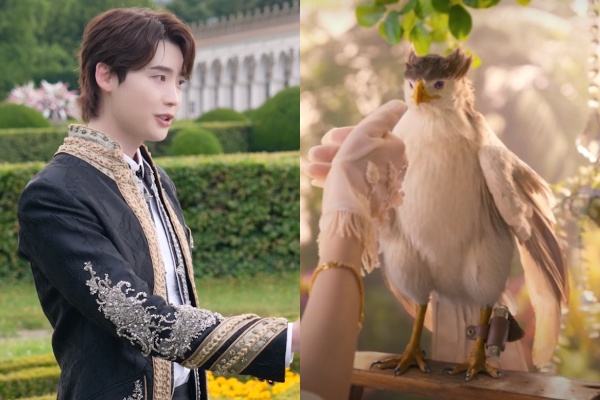
Soviesh captured the sexy, sensual aspects of a character gripped by unprecedented emotions in the music. On the other hand, Heinrey focused on the lightness and playfulness of a bird soaring freely through the sky, while Rashta centered on her innocent and naive traits. For Navier and Heinrey, the score delicately melted the growing emotions of longing gradually turning into love, originating from a relationship that began without knowing each other’s true identities. Lee Jong-suk, who uniquely played both human and bird roles, received rave reviews surpassing expectations right after release, earning affectionate nicknames like ‘Bird-Jong-suk’ and ‘Lee-Jong-bird’ thanks to the ‘mystical bird’ Queen.
Viewers’ reactions to the music have also been explosive. Comments praising the soundtrack’s ability to enrich the atmosphere and emotional lines of the work have continued, such as "They really nailed the romance-fantasy music" and "The music is drawn out so brilliantly." The melodies placed aptly in each scene not only heighten the immersion of the drama but also imprint the unique musical charm of Remarried Empress onto viewers.
Combining unpredictable pacing, overwhelming imperial visuals, and a unique musical color to captivate the eyes and ears of global viewers, Remarried Empress currently streams episodes 1 to 4 on Disney+, with two new episodes released every Wednesday for a total of 10 episodes.
Meanwhile, Remarried Empress is a romance fantasy epic depicting Navier (Shin Min-a), the perfect empress of the Eastern Empire, who is notified of divorce by Emperor Soviesh (Ju Ji-hoon), who has fallen for the runaway slave Rashta (Lee Se-young), and in turn demands approval for her remarriage with Prince Heinrey (Lee Jong-suk) of the Western Kingdom.
Previously, the production team released imperial pictorial stills, during which absurd speculation arose questioning whether Rashta’s necklace was a cheap item from China’s Temu, sparking controversy.
Suspicions were raised that the necklace, mixing black stones and gold, looked identical to a product sold on the Chinese ultra-low-cost e-commerce direct shopping platform Temu. The item was sold on Temu for approximately 2,100 won in Korean currency, and due to the strikingly similar design, reactions questioning whether it was genuinely a Temu prop emerged.
However, the production team firmly drew a line, clarifying to OSEN that the prop was purchased at a vintage shop in Europe and has no relation whatsoever to Temu products.