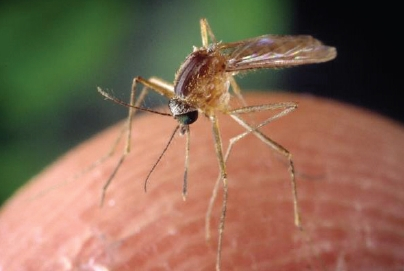
In California, West Nile virus infection cases have reached their highest level since 2017 this year.
With outbreak cases particularly concentrated in Southern California, more than half of all reported cases were tallied in LA County.
According to the California Department of Public Health (CDPH) on the 9th, as of the 6th, total West Nile virus infections statewide stood at 528 cases. This is the highest figure since 2017 (556 cases). Fatalities were tallied at 32. In particular, 304 cases (57.6%) out of all infection cases were concentrated in LA County.
Health authorities analyzed that high temperatures and frequent rainfall that continued across the Southern California region this summer and autumn created a favorable environment for mosquitoes that transmit the virus to breed.
In fact, following the impact of Hurricane Marie in September, over 1.5 inches of rain fell across the LA and Orange County areas, washing away mosquito larva larvicides that had been sprayed across a total of 3,000 miles of underground storm drains. Afterward, daily high temperatures soared up to 104 degrees Fahrenheit, and tropical night phenomena where nighttime temperatures did not drop below 77 degrees Fahrenheit persisted, which is interpreted as the reason for the explosive surge in the mosquito population.
Experts warn that in LA’s coastal regions, even a slight rise in temperature can significantly increase the risk of virus transmission.
As a result of UC Berkeley researchers analyzing LA-area data from 2006 to 2016, it was found that when average temperatures were below 70 degrees Fahrenheit, the possibility of detecting the virus inside mosquitoes was low, but once average temperatures exceeded around 73 degrees Fahrenheit, the detection rate rose markedly. Human infection cases also showed a tendency to increase as temperatures rose.
When nighttime temperatures drop, the reproduction of mosquitoes and the virus proliferation speed slow down. However, control authorities are keeping a close eye on the possibility of torrential downpours due to a strong El Niño phenomenon this winter. If stagnant water in flooded areas is left unattended until the spring when temperatures rise, the mosquito population could surge explosively once again.
Meanwhile, the West Nile virus is transmitted when a mosquito that has drunk the blood of an infected bird bites a person. Most infected individuals do not feel distinct symptoms, but about 1 in 5 experience fevers, headaches, body aches, and other symptoms. Roughly 1 in 150 infected individuals can progress to severe neurological diseases such as encephalitis.