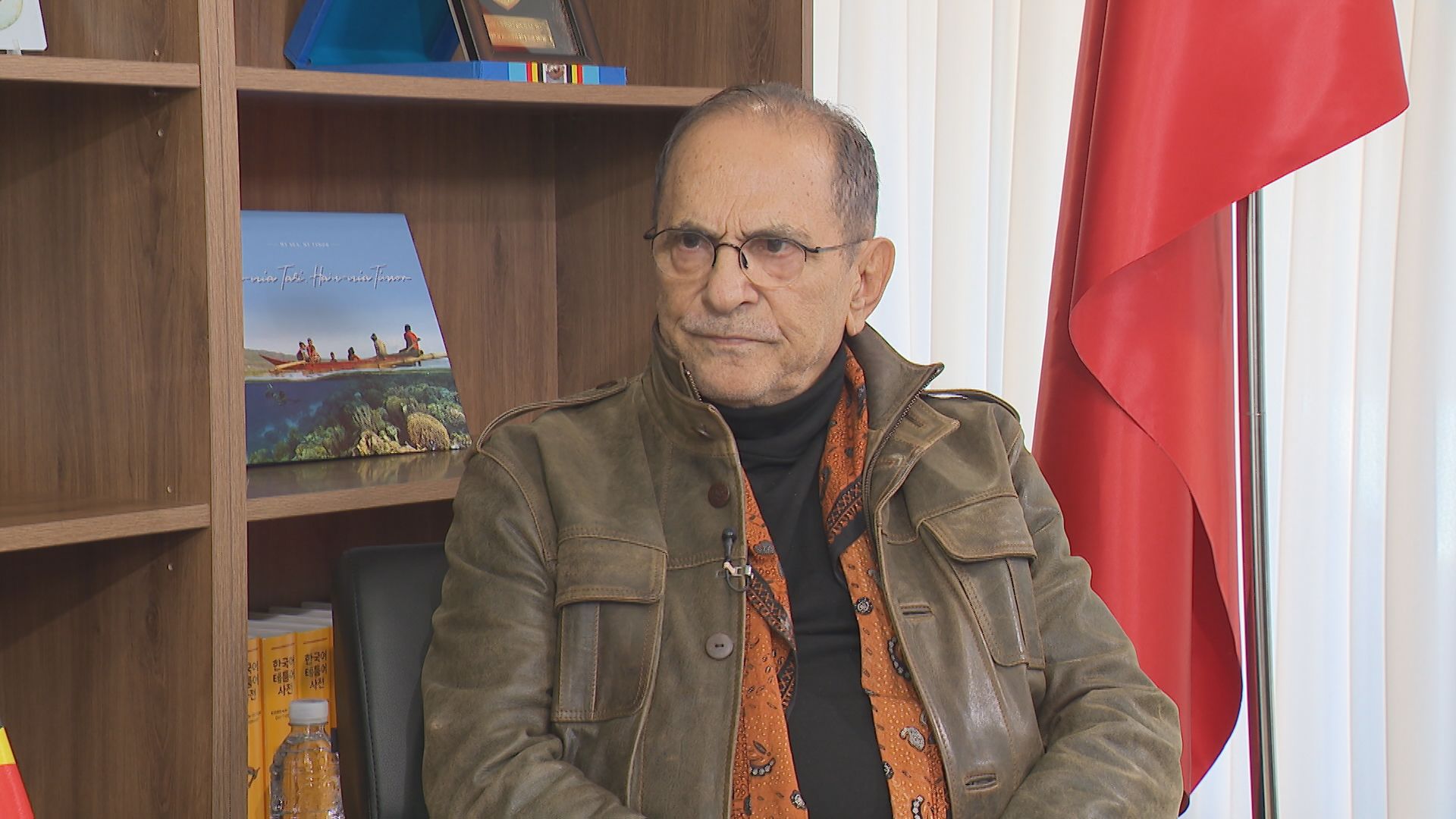
Jose Ramos-Horta, the 1996 Nobel Peace Prize laureate and President of East Timor, praised the actions of South Korean democracy defenders and citizens who stood against the December 3 martial law, stating they are fully deserving of a Nobel Peace Prize.
President Ramos-Horta made these remarks during an appearance on the Arirang TV talk show ‘Within the Frame’ on December 9, sharing his views on Korean democracy, peace on the Korean Peninsula, and bilateral cooperation. Having led East Timor’s independence through 24 years of diplomatic struggle, he arrived in South Korea on December 5 for his first official visit.
Expressing his long-standing admiration for the Korean people, President Ramos-Horta described them as resilient, determined, and proud. He highlighted their patriotism, referencing the 1997 foreign exchange crisis when citizens voluntarily donated gold and valuables to help economic recovery.
As a testament to mutual trust, he recalled the 2030 World Expo bidding process in 2023. He noted that he rejected Saudi Arabia’s request for support and voted for Busan, stating that ‘not stabbing a friend in the back’ is a matter of loyalty to the Republic of Korea.
Regarding the ‘revolution of light’ where Korean citizens protected democracy against martial law, he evaluated that they demonstrated to the world how citizens can safeguard democracy themselves when it is threatened. He also noted his past contribution to former President Kim Dae-jung’s 2000 Nobel Peace Prize win.
President Ramos-Horta also emphasized the roles of the internet and artificial intelligence (AI). Citing past instances during the Rwandan genocide and the Balkan wars where media incited hatred, he stressed that AI and technology must be utilized as tools to spread peace and tolerance.
Concerning bilateral cooperation, he expressed hope for South Korea’s support as East Timor prepares to assume the ASEAN chairmanship in 2029. He noted that South Korea’s infrastructure and administrative experience will be instrumental in expanding facilities like convention centers and hotels, as well as strengthening the capabilities of diplomats and public officials. He also highlighted the experience of East Timorean young workers in South Korea as an important bridge connecting the two nations.