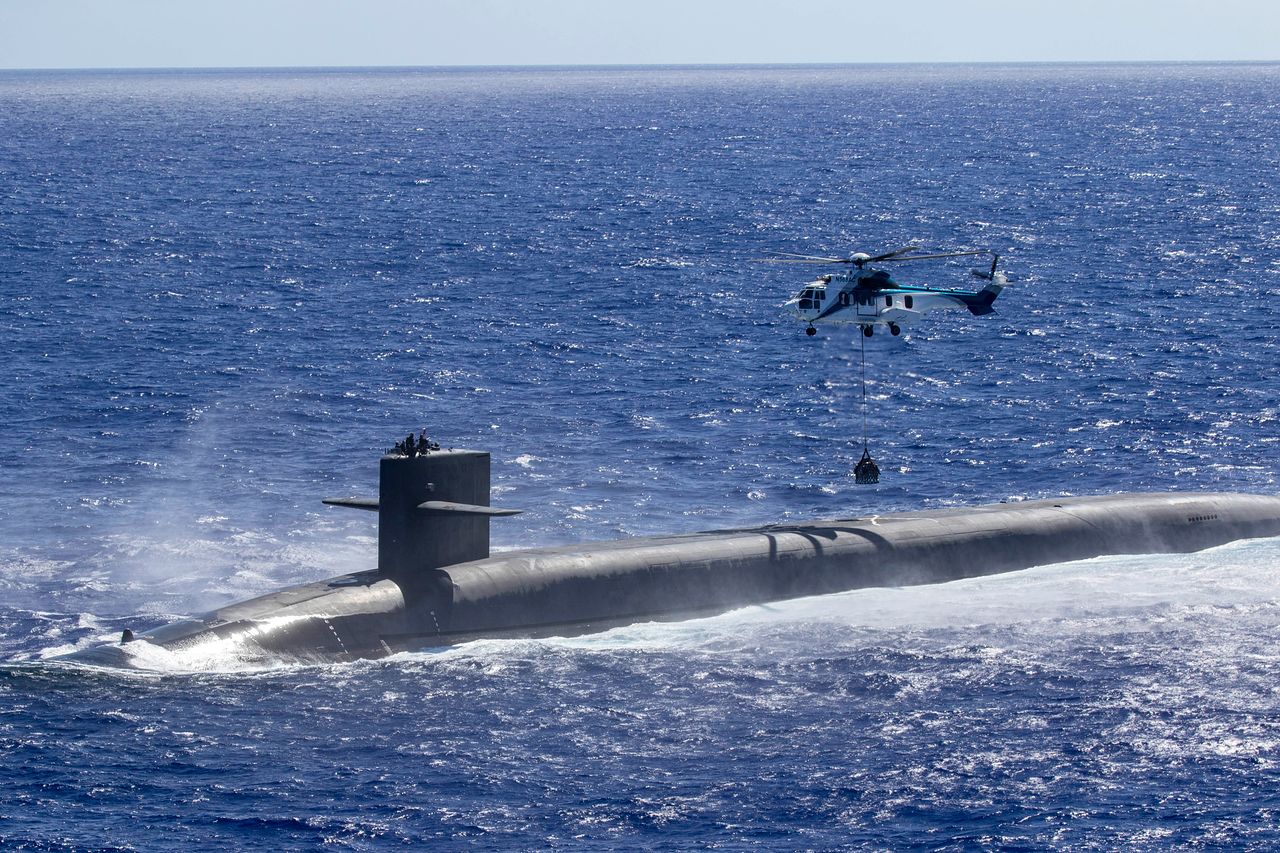
Japan, long regarded as a post-war ‘peace state’ despite its history as a World War II belligerent, has anchored its defense stance on the ‘Three Non-Nuclear Principles.’ Established on December 11, 1967, by then-Prime Minister Eisaku Sato in the House of Representatives Budget Committee, the principles dictate that Japan shall not possess, produce, or permit the introduction of nuclear weapons. However, faced with mounting security threats from North Korea, China, and Russia in Northeast Asia, Tokyo is now signaling a potential review of this core national security policy.
According to the Asahi Shimbun, the Japanese government is considering explicitly stating in its three major security documents&mdashincluding the National Security Strategy slated for revision in late 2026&mdashthat US warships carrying nuclear weapons will be exceptionally permitted to make port calls during emergencies. This move brings the ‘Three Non-Nuclear Principles,’ a sacred symbol of post-war Japanese defense policy, to a critical crossroads.
The possibility of revising the Three Non-Nuclear Principles, maintained for over half a century, stems from the rapidly shifting security environment in Northeast Asia. China’s rapid expansion of nuclear forces and North Korea’s advancing nuclear and missile threats have sparked deep anxiety among Japanese conservative circles and security experts, who argue that conventional defense capabilities alone offer limited deterrence. The Japanese government is introducing the caveat of ‘extreme emergencies where there are no other means to defend the nation,’ using it as justification to maximize the practical effectiveness of the US extended deterrence (nuclear umbrella) in times of crisis.
Japan relies heavily on the US nuclear deterrent, and a growing pragmatic consensus dictates that the country must be able to leverage the mobility and deterrence of US nuclear submarines and aircraft carriers. Prime Minister Sanae Takaichi noted in parliament on October 14 the possibility of refining the wording of strategic documents to reflect this stance. She has previously remarked that past bans on introducing nuclear weapons do not align with the reality of depending on US nuclear deterrence. Last July, Defense Minister Shinjiro Koizumi also urged open discussions on nuclear matters, representing incremental steps forward in the discourse.
This idea is not entirely unprecedented. On March 17, 2010, then-Foreign Minister Katsuya Okada stated in the House of Representatives Committee on Foreign Affairs that if safeguarding national security necessitated the temporary port calls of US nuclear-armed vessels without alternative, the administration would have to make that decision itself and explain it to the public.
Nevertheless, reaching a consensus is expected to prove challenging. Within the ruling Liberal Democratic Party (LDP), concerns have been raised that permitting the entry of nuclear-armed vessels could spark fresh tensions with neighboring countries. Conversely, the coalition partner, the Japan Innovation Party, argues that given the potential future visits of US nuclear submarines armed with nuclear cruise missiles, the principle banning the introduction of nuclear weapons must be actively debated.
Meanwhile, US Pacific Fleet Submarine Force Commander, Capt. Christopher Cavanaugh, recently addressed the rapid development and activities of adversary forces in the Pacific, highlighting critical threats facing the US Navy submarine fleet. Speaking at the Submarine League’s 2026 Annual Symposium, Cavanaugh pointed out that the submarine fleets of the Chinese and Russian navies are growing at a rapid pace, amplifying associated risks.
Cavanaugh noted that the Chinese Navy commissioned eight Type 093B nuclear-powered attack submarines in less than four years. The US anticipates that China will maintain a similar construction pace, keeping a close eye on the potential for an additional 20 to 40 hulls to be built over the next decade, including improved variants.
He evaluated that the Type 093B features improved noise-reduction technology and propulsion systems, alongside 24 vertical launch systems that secure long-range missile attack capabilities. He also drew attention to how China is narrowing the technological gap by continuously upgrading existing submarines and rapidly introducing new designs.
China’s submarine expansion encompasses both quantitative growth and qualitative diversification. Recent novel submarine designs suggest that Beijing is testing new forms of underwater power beyond traditional frameworks, drawing attention to aggressive capabilities such as missile deployment.
In contrast, Russia is likely focusing on the modernization of existing assets and the operation of core strategic assets rather than large-scale new construction plans. Nonetheless, Russian submarines remain a vital variable in the Pacific, leveraging nuclear ballistic missile submarines and cruise missile delivery capabilities. North Korea is similarly complicating regional underwater threats by recently showcasing ballistic missile submarines alongside advanced torpedo and propulsion technologies.
These warnings from the US Pacific Fleet submarine commander indicate that Washington will not take its undersea dominance for granted. Alongside maintaining and modernizing current submarine fleets, the US faces a growing imperative to invest in joint anti-submarine warfare training with allies, unmanned underwater systems, and enhanced long-range reconnaissance and strike capabilities.
In parallel, military media outlet Army Recognition reported that satellite imagery released on YouTube by the Mitchell Institute for Aerospace Studies on November 11 indicates the Chinese Air Force assembled a massive aviation fleet in western desert regions. The institute analyzed that through exercises resembling ‘Red Sword 2026,’ the Chinese Air Force is testing its capability to operate dispersed combat, bomber, and support aircraft across multiple airbases as a single unified operational system, rather than merely deploying large numbers of fighters.
Satellite image analysis identified approximately 279 aircraft exposed across 11 airbases in western China, with total participation likely exceeding 300 units when including aircraft hidden inside hangars. Given that typical visible aircraft counts at these bases usually range from 80 to 100, this deployment represents roughly three times the peacetime level.
The exercises are estimated to have begun in mid-October. Y-20 transport and tanker aircraft arrived first around October 17–18, followed by J-10, J-16, and J-20 fighters, H-6 bombers, and KJ-500 early warning and control aircraft. The sequence where support aircraft were deployed prior to fighters signals the establishment of logistical foundations for large-scale expeditionary drills.
The core of this gathering lies not in individual aircraft performance, but in ‘large-scale mixed formation operations.’ When J-20 stealth fighters, J-10 and J-16 fighters, H-6 bombers, KJ-500 airborne early warning aircraft, and Y-20 transport and tanker aircraft train together, they can practice units with disparate missions and performance executing plans under a common air operation scheme.
Notably, the presence of tankers and transport planes demonstrates that the Chinese Air Force envisions sustained air operations spanning multiple weeks, rather than short-term mass campaigns. Refueling extends aircraft loitering times and operational radiuses, while transports are essential for moving personnel, parts, and equipment between various airbases.
Crucially for the US military, China is cultivating the organizational capacity to integrate and continuously operate modern combat aircraft across multiple bases, transcending mere large-scale acquisition. In a potential Indo-Pacific conflict, the US and its allies depend on operational runways, fuel, maintenance, communications, and support aircraft to sustain missions. Consequently, China’s large-scale air operation capabilities heighten the significance of survivability and generation capacity for US military bases.