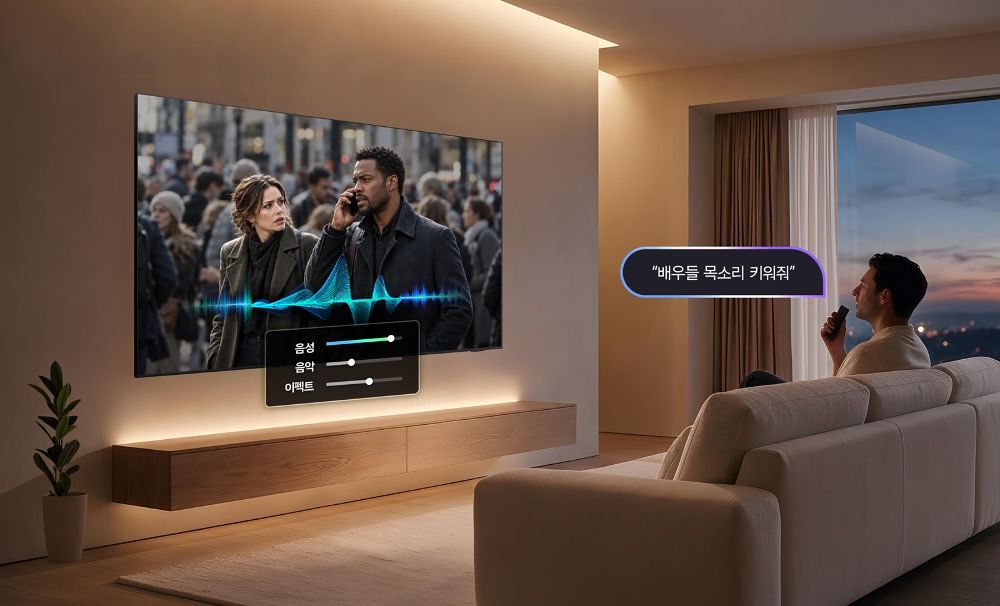
When you leave the TV to grab a drink from the kitchen, the playing video automatically pauses. As soon as you sit back down on the sofa, the video resumes. When you are curious about the clothes worn by an actor in a drama or the restaurant shown on screen, you can immediately search for the information right on the TV. This is a glimpse of the next-generation Samsung AI TV that Samsung Electronics is set to unveil next January at CES 2027, the world’s largest consumer electronics and IT exhibition.
Smarter Viewing Environment and AI Companion
According to industry sources on the 16th, Samsung Electronics plans to introduce a tentative ‘TV-I’ at CES, equipped with AI functions that read user behavior and interests to adjust the viewing environment. The intention is to transform the TV into an ‘AI companion’ in the living room by recognizing viewer movements to play videos and instantly retrieving on-screen information.
The search function is also expected to get much smarter. With the ‘Click to Search’ feature, users can press the ‘AI button’ on the remote control and ask verbally, ‘Where was this scene filmed?’ or ‘What brand is this outfit?’, and the TV will understand the context of the screen and provide an answer. This saves users the hassle of picking up their smartphones, taking a picture of the TV screen, and searching manually.
Expanding Service-Driven Revenue Strategies
When the search function connects with shopping, its impact becomes even greater. Samsung previously partnered with Amazon in the U.S. to introduce the ‘Click to Cart’ feature, which connects TV ads directly to actual purchases. When an Amazon product ad appears while watching the ad-supported free streaming (FAST) service ‘Samsung TV Plus’, users can add the item to their Amazon cart with a single click of the remote control. The process of watching an ad, grabbing a smartphone, opening an app, and paying is streamlined down to a single button press.
This aligns with the strategy of Won-jin Lee, President and Head of Samsung Electronics’ Visual Display (VD) Business, who aims to shift the TV division from a ‘device-selling business’ to a ‘service-monetizing business’. President Lee, a former head of Google Korea, is a service and marketing expert who spearheaded Samsung TV Plus and was abruptly promoted from Global Marketing Office Chief to head of the TV business last May.
The unusual move of replacing the TV chief ahead of the regular year-end reshuffle reflects a growing sense of crisis that profits can no longer be generated through hardware sales alone. Market research firm TrendForce projected that this year’s global TV shipments will reach 194.65 million units, down 0.8% from the previous year. This is attributed to long replacement cycles, sluggish demand recovery, low-cost offensives by Chinese companies, and rising component costs. Rather than clinging to selling more new TVs, the blueprint is to steadily generate revenue from content, advertising, and shopping on already sold TVs.
Venture into Humanoid Robotics
Meanwhile, Samsung Electronics is also pushing to unveil its self-developed humanoid robot for the first time at this CES. The core battleground is the ‘robot hand’. Robot hands are considered high-difficulty technologies because they must recognize the shape and contact state of objects in real time and finely control finger movement and grip strength. Last month, on the occasion of his 4th inauguration anniversary, Samsung Electronics Chairman Jay Y. Lee visited the Robotics Experience (RX) Business Promotion Office to inspect the robotics business.