Ahead of Thanksgiving, grocery prices in the metro Atlanta area are rising sharply, increasing the financial burden on local residents. Over the past five years, food prices in the Atlanta area have jumped by approximately 30%, significantly outpacing the national average increase.
According to recent data from the U.S. Bureau of Labor Statistics (BLS) cited by the Atlanta Journal-Constitution (AJC), food prices in metro Atlanta rose 1.5% from August to October. This figure includes both grocery store purchases and restaurant dining.
During the same period, overall consumer prices saw only a modest increase, making the surge in food costs particularly noticeable. Fruits and vegetables recorded the steepest jump, climbing over 4% in just two months.
The long-term upward trend in food prices is even more alarming. As of October, food prices in metro Atlanta have surged about 30% over the last five years, compared to a 24% increase nationwide. This means Atlanta’s food costs have risen about 6 percentage points faster than the national average.
Stephen Craft, dean of the Oglethorpe University Hammack School of Business, noted that while inflation impacts everyone, food costs are felt more directly because everyone must eat every day. He pointed out that a 1.5% food price increase over two months is remarkably steep and places a heavy burden on households. According to the Bureau of Labor Statistics, the average U.S. household spends about 13% of its annual budget on food, meaning continued price hikes force consumers to cut back on other purchases or dip into savings.
Experts attribute the rising food inflation to import tariffs, agricultural labor shortages, and increased transportation costs. Craft explained that new U.S. tariffs on imported goods are driving up grocery bills. Additionally, tightened immigration policies have strained agricultural labor supply, pushing up labor and production costs.
Furthermore, rising diesel fuel prices following the outbreak of the U.S.-Israel conflict with Iran in late February have increased food transportation expenses. Because food undergoes a lengthy transit process from farms to processing facilities, warehouses, and retail stores, it is highly sensitive to fuel price fluctuations.
Atlanta’s geographic location further exacerbates the problem. Craft noted that compared to similarly sized cities, Atlanta is located farther away from major agricultural crop-relying regions. Greater distance necessitates more transportation, which relies on costly diesel fuel, ultimately driving up retail prices.
This food inflation is also impacting this year’s Thanksgiving tables. According to an annual survey by the American Farm Bureau Federation (AFBF), the average cost for a traditional Thanksgiving meal for 10 people is $58.63, up 6% from last year. The federation has tracked Thanksgiving meal costs for 41 years, and this year marks the first time costs have risen year-over-year since 2022, when inflation hit a 40-year high.
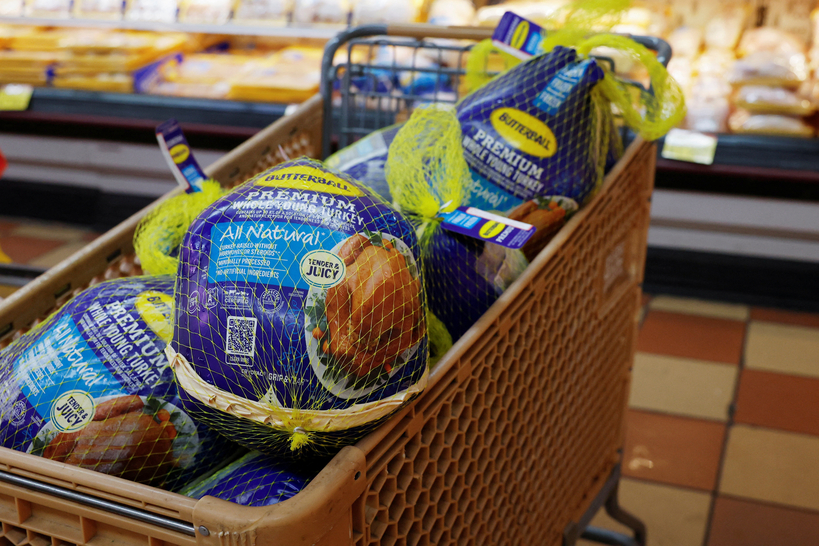
Turkey, the centerpiece of the Thanksgiving table, saw a significant price hike. A 16-pound frozen turkey costs $23.68, a 10% increase from last year. Cranberries rose 8.8% to $5.88 for a 12-ounce package, while pre-sliced stuffing mix increased by 5.4%.
The continuous rise in grocery bills is altering consumer habits. Theresa Morgan, a resident of Marietta, shared that she and her husband are trying to boost their savings ahead of retirement, but soaring food prices make it difficult. Morgan recently hesitated to buy her favorite cookies after noticing the price jumped by $2. To cope with food inflation, many local residents are cutting back on other living expenses.