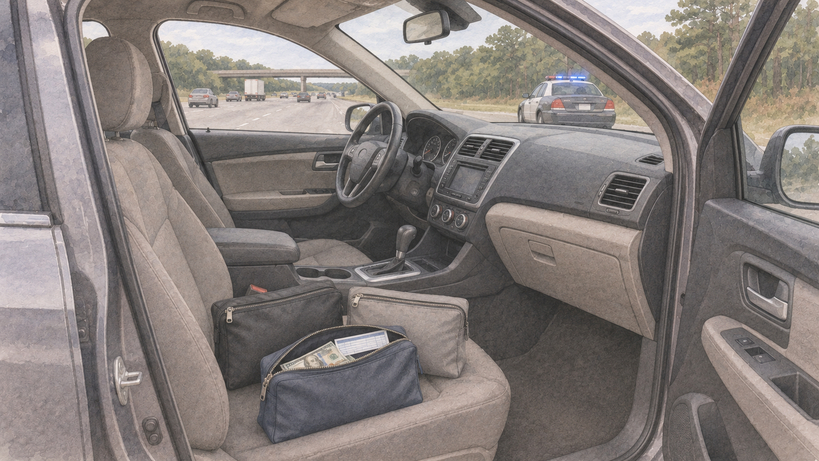
When discussing the controversial practice of civil asset forfeiture, few stories highlight the friction between law enforcement and property rights quite like the recent case in Georgia. An Indian-American gas station operator is fighting to recover nearly $230,000 in cash that was confiscated by law enforcement during a routine traffic stop, leaving him empty-handed for nearly two months without any criminal charges filed.
The Traffic Stop and $230K Cash Seizure
According to local media reports, Amin Dewani, a lawful resident who operates gas stations in Alabama, was driving along Interstate 20 in Georgia back in September when he was pulled over for a minor lane-maintenance infraction. During the stop, officers searched his vehicle and discovered three bags containing $229,981 in cash along with bank deposit slips. Law enforcement officials immediately seized the entire amount under the suspicion of potential money laundering.
Dewani explained that the money represented legitimate daily revenues collected across 10 family-owned gas stations. Because local banks had already closed for the day, he was transporting the funds to a family member’s home in the Atlanta metro area before returning to Alabama. Despite finding no drugs, weapons, or illegal items in the car, and issuing only a warning for the traffic violation, officers kept the cash under a record of ‘seizure for cash-related investigation.’
Controversial Joint Task Force and Profit Incentives
The stop was conducted by a deputy belonging to the Lowndes County Sheriff’s Office, located roughly 230 miles away, who was participating in an aggressive interdiction program known as ‘Operation Interstate Force.’ Under the task force’s cooperative agreement, any successfully forfeited funds are split among participating agencies: 45% to the Haralson County Sheriff’s Office, 45% to the Lowndes County Sheriff’s Office, and 10% to the District Attorney’s office. Legal representatives have strongly criticized these arrangements, arguing they create dangerous financial incentives for police departments to target motorists and seize cash.
The Broader Debate on Asset Forfeiture
This incident has reignited nationwide scrutiny over civil asset forfeiture laws, which allow authorities to seize cash, vehicles, and property suspected of being tied to criminal activity even if the owner has never been convicted of a crime. While law enforcement agencies defend these measures as vital tools to disrupt criminal enterprises and illegal cash flows, critics and civil rights advocates contend that the system undermines constitutional protections and strips innocent citizens of their property without due process.