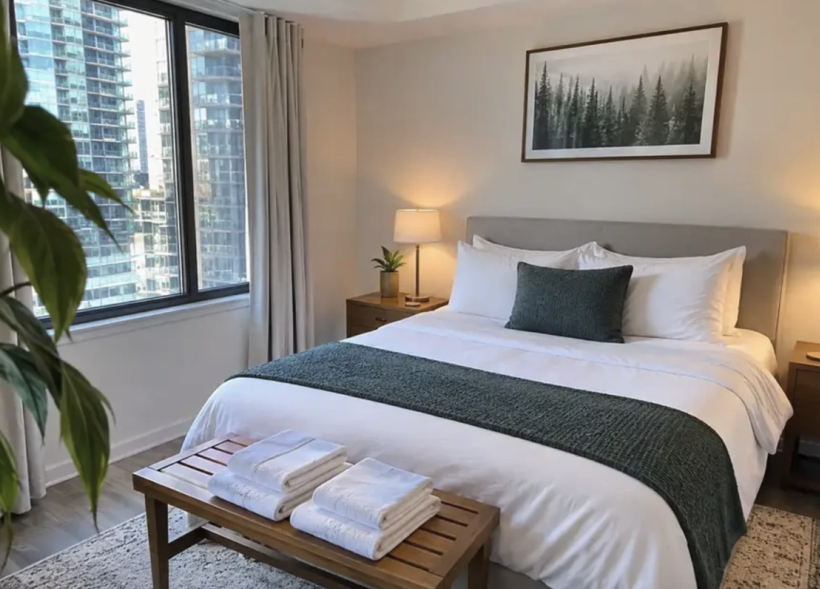
Starting the 20th, Airbnb cleaning rules are tightening globally to eliminate burdensome checkout chores like dishwashing or bed sheet removal for guests. The goal is to reduce the practice of charging separate cleaning fees while still making guests handle household work, providing a hospitality experience closer to traditional hotels. Under the new regulations, all global Airbnb listings must update their checkout procedures and house rules accordingly.
According to the updated guidelines, hosts can no longer demand significant time, effort, or professional-level cleaning tasks from guests. Representative examples include stripping bed sheets, taking out trash outside the property, washing and putting away used dishes, and transporting garbage to external locations. Furthermore, imposing separate fines for failing to complete these cleaning tasks is fundamentally prohibited.
However, basic guest cleanup responsibilities are not entirely eliminated. Simple requests remain permissible, such as placing used plates in the sink, gathering towels in one spot, and sorting waste and recyclables into designated indoor bins. Guests must still use the accommodation, furniture, and appliances normally, and severe property damage or messes requiring professional deep cleaning will still incur liability for damages.
Airbnb is also standardizing property-specific house rules into seven clear categories. These cover essential items like guest limits, pets, smoking, noise restrictions, and checkout security to make them easily verifiable, while limiting additional requests to reasonable boundaries. All house rules must be disclosed prior to booking, prohibiting hosts from unilaterally adding new conditions after a reservation is finalized.
Transparency in rental pricing is likewise being enhanced. Hosts must disclose mandatory costs, including cleaning fees, during the booking stage, and practices such as blocking access to advertised amenities or demanding extra fees are restricted. Airbnb previously rolled out global total-price displays inclusive of all fees excluding taxes in April 2025, and this latest update further clarifies those pricing principles alongside proper usage rules.
These changes reflect the evolution of Airbnb from a casual service sharing spare rooms into a massive commercial market involving professional lodging providers. While the platform began in 2008 primarily as a way for homeowners to share spare rooms with travelers, multiple-property operators now account for a substantial share of the business. A 2019 study by McGill University analyzed that about half of Airbnb’s revenue in Canada came from commercial operators managing multiple listings.
Canada’s short-term rental market has also expanded significantly. According to Statistics Canada, the country recorded over 355,000 short-term rental properties in 2023. Typically encompassing online platforms renting out entire homes or parts of them for 28 days or less, this figure includes non-Airbnb properties and does not represent Airbnb’s exact market share alone.
Along with the commercialization of the lodging industry, user expectations have shifted. Complaints have persisted over the unreasonableness of having to strip beds, wash dishes, and handle trash disposal before checkout even when accommodation rates rival those of hotels. Critics noted that guests paying separate cleaning fees had to spend substantial parts of their final vacation day handling chores.
Conversely, property managers may face heavier maintenance cost burdens. Chores previously handled by guests must now be outsourced to professional cleaning staff, and upkeep costs for tableware and appliances could rise. Christina Grivas, who has experience as both a guest and a host, expressed concern that while the new rules benefit users, they might drive up maintenance expenses for operators. She pointed out that if high-quality kitchenware and appliances are improperly handled, hosts will bear the replacement costs.
The new regulations apply to stays booked from November 20 onward, and Airbnb plans to sequentially review host house rules. Operators with non-compliant guidelines will be given the opportunity to make adjustments or file appeals. Guests are advised to check cleaning fees and checkout terms prior to booking, and hosts must align their property management practices with the updated standards.