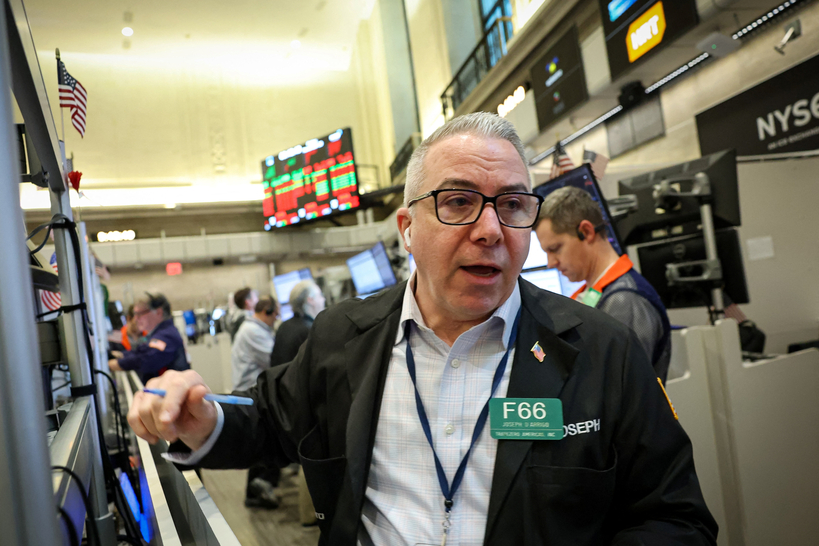
The AI bubble controversy is intensifying as the stock market plunges despite Anthropic’s record-breaking initial public offering (IPO). With concerns over artificial intelligence investment bubbles overlapping with the possibility of interest rate hikes, market analysts predict high volatility for the year-end stock market.
Anthropic raised approximately $81 billion through its IPO on the 19th. While the stock surged 17% on its first day from the $83 offering price to $97.17, it plummeted the following day. Even this highly anticipated mega-IPO failed to revive overall investor sentiment in technology stocks.
The biggest variable for the December stock market is the Federal Reserve’s interest rate decision. As inflationary pressures persist, the market is heavily pricing in the possibility of an additional rate hike in December. Rising interest rates could increase the burden of large-scale data center investments and capital financing for AI companies.
In particular, semiconductor companies including Nvidia and AI infrastructure-related stocks are facing the possibility of additional corrections. This is because investors have begun to focus on whether the AI industry can generate actual revenue corresponding to its massive investment costs rather than just focusing on growth potential.
On the other hand, optimistic views still remain. UBS forecasted that if corporate earnings growth continues, the S&P 500 index could break its all-time high again in the future. Goldman Sachs also maintained its mid-to-long-term upward potential by setting its S&P 500 target for the end of 2027 at 8,700.
In December, the Fed’s rate decision, inflation indicators, and year-end consumer spending performance are expected to dictate the direction of the stock market. While the market could rebound if interest rate pressures ease and corporate earnings are supported, a persistent fear of an AI bubble could trigger additional declines centered around tech stocks. Ultimately, the U.S. stock market in December is expected to prepare for the New Year as a complex mix of year-end rally expectations and AI bubble collapse concerns.