Korean-American author Min Jin Lee, widely known for her best-selling novel Pachinko, recently highlighted South Korea’s intense desire for fairness by discussing how the country utilized emergency disaster text messages to prevent cheating during the college scholastic ability test (CSAT).
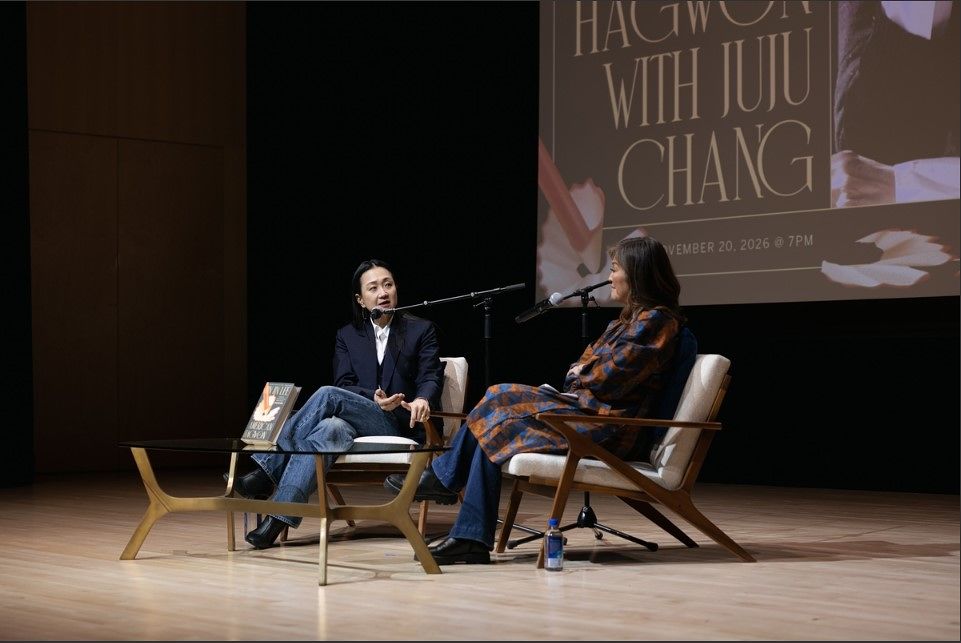
Speaking at a book talk celebrating the release of her new book American Academic at the Korean Cultural Center in New York on the 20th, Lee shared these insights while discussing South Korea’s educational fervor and the influence of artificial intelligence (AI) on education.
She evaluated South Korea’s measure to trigger nationwide cellphone alerts to crack down on CSAT cheating as "very interesting."
She continued, "This is because our attachment to fairness is so strong that we are learning in real-time how we must respond in situations where actual demands for fairness collide with the development and spread of AI."
When an attendee asked how recent controversies surrounding AI cheating in South Korea connect to the themes of her novel, Lee mentioned the opening line of her new work: "The rules of life have already changed."
Lee pointed out that while AI has changed everyone’s lives and continues to do so, society is not sufficiently prepared to properly recognize or respond to these ongoing changes.
She also pointed out contradictions in attitudes toward AI in the educational field.
While students are restricted from using AI, corporations demand that employees utilize AI, and teachers are also using AI themselves.
Sharing a situation where students asked, "Why can’t we use it when teachers use AI too?," she expressed concern, saying, "We are developing the capabilities of machines while focusing on decorating students’ outward achievements."
She also expressed a critical view regarding the relationship between AI tech companies and users.
Lee stated, "We live in an era where we play the role of ‘beta testers’ for companies that generate profits from our labor," adding, "Even our children have become beta testers."
American Academic is a work that deals with the lives of immigrant families and educational issues against the backdrop of South Korea, Australia, and the United States from 1992 to 2008.
The event was co-hosted by the Korean Cultural Center in New York and the Asian American Journalists Association New York Chapter, with around 200 attendees from local media, cultural, and publishing circles participating.