For 167 years, no genius mathematician could crack the Riemann Hypothesis, famously dubbed the ‘holy grail’ of mathematics. Now, claims have emerged that the problem has been conquered with the help of artificial intelligence. Levent Alperget, a mathematician at Anthropic, announced on the 20th (local time) that he believes he has discovered a proof for the Riemann Hypothesis alongside Claude, releasing a 4-page announcement and approximately 17.4 million lines of proof code. The code was written in a language called ‘Lean’ so a computer could check whether each step of the solution is logically sound. Experts note that if it passes final verification, it will mark a turning point in mathematical research.
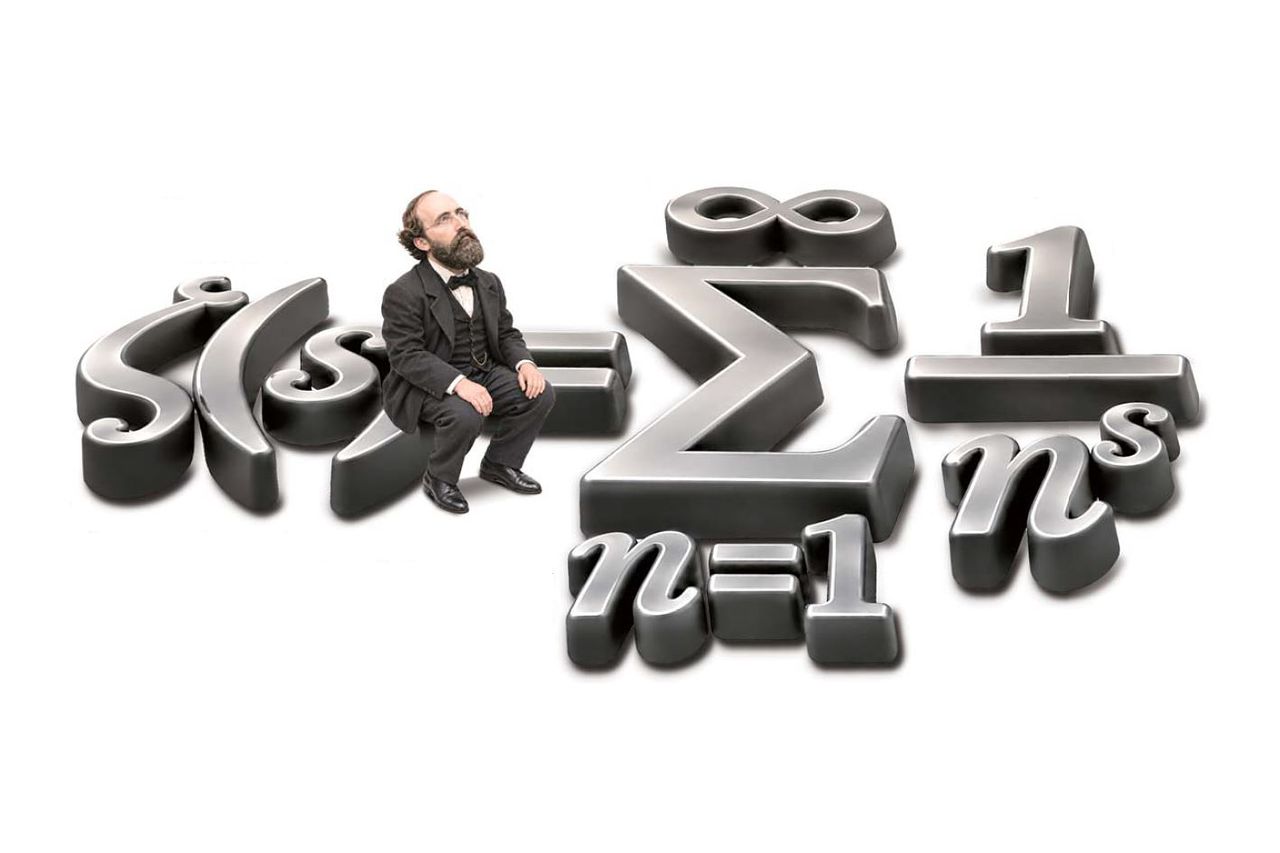
The Riemann Hypothesis is a problem concerning how frequently prime numbers appear among natural numbers. In 2000, the Clay Mathematics Institute in the US selected the Riemann Hypothesis as one of the ‘Millennium 7 Prize Problems’ and attached a $1 million prize. Prime numbers are numbers greater than 1 whose only divisors are 1 and themselves, such as 2, 3, 5, and 7. Although the gaps between primes are irregular, German mathematician Carl Friedrich Gauss devised a rule to estimate the number of primes without counting them one by one. In 1859, Gauss’s student Bernhard Riemann investigated how large this margin of error could get. The clue was the ‘zeta function,’ which contains information about the distribution of primes. Riemann focused on the numbers where this function evaluates to zero. He hypothesized that if the numbers related to prime distribution are plotted as points on a coordinate plane, they all lie on a single vertical line. If this hypothesis holds true, knowing how much Gauss’s approximation deviates from the actual count for any number of primes becomes possible. Later computer checks by mathematicians confirmed that the first 10 trillion points all lay on that line. However, points are infinite. What Alperget and Claude proved is that not a single exception exists beyond that point. Prime numbers form the foundation of RSA encryption used in internet security, meaning verification of the Riemann Hypothesis could send shockwaves through cryptography, quantum physics, and computer science.
The day after the announcement, Andrew Sutherland, a senior research scientist in the MIT Department of Mathematics, stated that he ran the code through a separate mathematical verification program and confirmed no logical errors exist in the solution. However, the possibility of errors within the verification program itself cannot be ruled out, requiring further review by the academic community. The Clay Mathematics Institute also waits until a proof has been published in an academic journal for at least two years and is widely accepted by the international mathematical community before considering prize evaluations.
Mathematicians hold mixed and subtle feelings toward solving difficult problems using AI. This is because humans cannot fully understand the problems solved by AI. Alperget himself admitted that his understanding of the entire proof is ‘just taking a single step.’ Just two months ago, OpenAI shook the math world by announcing it solved the ‘Navier-Stokes equations,’ another of the ‘Millennium 7 Prize Problems’ that had gone unsolved for about 90 years, in just 88 hours.
Reactions to this trend are divided into two paths. On one hand, optimists argue that collaboration with AI allows humans to step into deeper realms of mathematics. Robin Zhang, a number theory researcher at the Institut des Hautes Études Scientifiques in France, stated in a written interview with JoongAng Ilbo that ‘even if AI produces the answer, finding one’s own proof remains the job of the mathematician.’ Dan Boneh, a professor at Stanford University, compared proofs generated by AI to ‘luscious fruit’ during a venture capital Andreessen Horowitz talk on the 18th, implying that mathematicians will have a wealth of new subjects to explore.
However, backlash is also formidable. Kiha Seo, a professor in Yonsei University’s Department of Mathematics who has studied the Riemann Hypothesis for nearly 30 years, said in a phone interview with JoongAng Ilbo that ‘if academic reactions are calmer than before, it is closer to a kind of resignation,’ adding that ‘the more AI solves difficult problems, the more the role of mathematicians will shrink.’ Justin Moore, a professor at Cornell University, remarked that when OpenAI solved a problem he had wrestled with for 19 years last month, the drinking party he and his colleagues promised to hold ‘feels more like a funeral than a celebration.’