“For the first time, I wanted to bring someone back to life.”
Kim Sae-byeol, an artifact organizer who has visited countless scenes of death, felt an unusually heavy heart as he left the site that day.
It was a strange mix of anger and overwhelming emotion. He tightly suppressed the tears that threatened to burst out.
It was all because of a single memento discovered in a shabby rooftop room.
It was early June, right at the start of summer.
The landlord had visited the tenant’s room multiple times, but after receiving no response, turned back repeatedly. Eventually, a strange, unfamiliar stench leaked out from behind the locked door. The landlord reported it to the police. It had been quite some time since the tenant had passed away.
Relatives who were contacted through the police refused to handle the deceased’s belongings and cleaning. That was how Kim came to visit the deceased’s home.
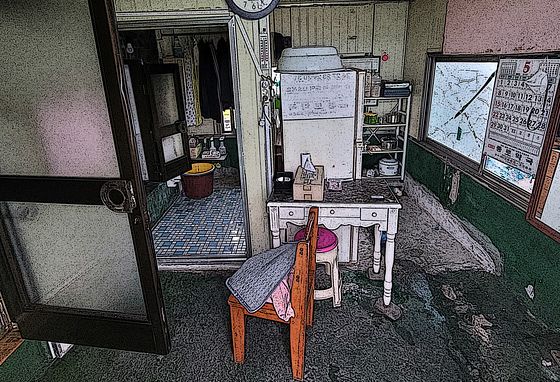
It was a rooftop room consisting of nothing more than a small single room and a bathroom. Even then, the space had been expanded to create a kitchen and shower room.
The rooftop was a place where it was difficult to endure the heat even with an air conditioner running in the middle of summer, yet there wasn’t even a wall-mounted air conditioner. The bathroom, made of sandwich panels, must have had its water pipes freeze solid in the dead of winter.
When Kim encountered such sites in the winter, he used to clean them by carrying water from a neighbor’s house. While it was inconvenient for him for just a day, the deceased must have lived with such daily hardships.
The person who died alone here was a man in his late 70s who had never married and lived as a bachelor all his life.
“Worked 12 hours and earned 50,000 won”
His occupation was a taxi driver.
According to what Kim heard, the daily rental fee (remittance) for a company taxi was 100,000 to 150,000 won. Even after driving for 12 hours straight, the money he took home after paying the remittance was only 50,000 to 70,000 won.
To make 2 million won a month, he had to generate more than 170,000 won in sales every single day without taking a single day off for 30 days. Based on a 4,000-won fare, that meant picking up passengers more than 40 times a day.
Excluding time for meals and using the restroom, he had to spend 10 hours continuously picking up and dropping off passengers. Even then, it required the good fortune of passengers not running out.
The work must have been grueling, and making a living was likely far from easy.
Kim often peeked into the lives of the deceased through their belongings at lonely death scenes.
At the homes of people who once ran large businesses, old business documents were often piled up, or luxury furniture and appliances that felt out of place in a shabby home remained, showing an inability to let go of the attachment to their glory days.
However, this site was different. It only contained simple, modest belongings.
The identity of the letter that made the artifact organizer cry
Yet, there was one item that stopped Kim’s hands as he was sorting through the belongings.
Considering the deceased’s financial situation, it was an unexpected object.
It was a postal money order registration receipt.
It is a remittance method that allows money to be sent without a bank account, requiring the recipient to visit the local post office directly to collect the funds. In case of loss, the full amount is compensated.
Along with it, a short letter was discovered.
“Thank you since I was young.”
It was a letter found in the rooftop room of a 70-year-old taxi driver who lived as a bachelor and died a lonely death. The sender had also sent 500,000 won along with it.
A man who drove a taxi 12 hours a day and lived without even a single air conditioner. Who was the person he poured all his money into throughout his life?
The full story behind the letter that made an artifact organizer cry, saying “It was the first time I wanted to save someone,” can be checked via the link below.
https://www.joongang.co.kr/article/25481465