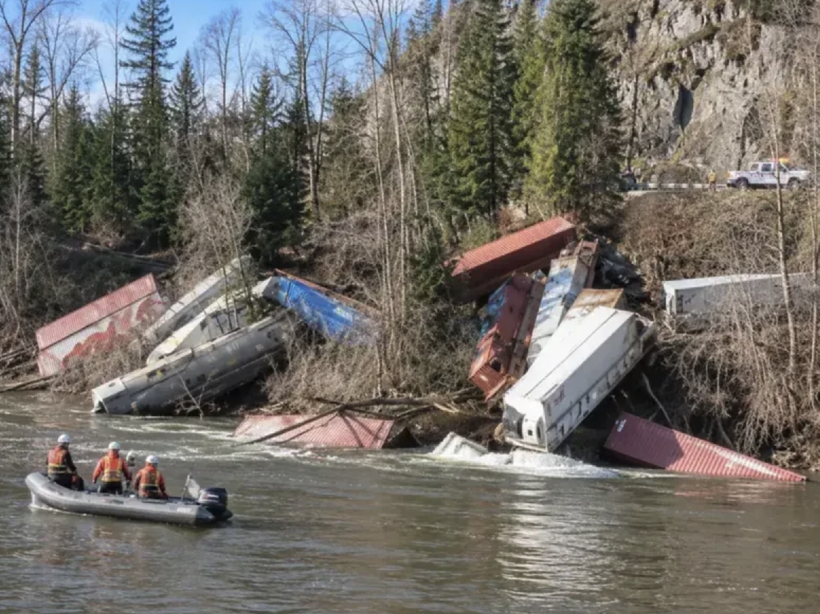
A Skeena River train derailment near Terrace in northwestern British Columbia resulted in a significant fuel spill, with up to 10,000 liters of diesel potentially leaking into the waterway. Although a week has passed since the incident, authorities have yet to confirm the exact volume of the spill. Oil has spread up to two kilometers downstream from the accident site as containment and wreckage recovery operations continue.
Spill Details and Response Efforts
According to an incident progress report released by the Ministry of Environment on the 23rd, the locomotive that plunged into the river contained up to 11,600 liters of diesel fuel, of which approximately 1,400 liters have been recovered so far. It remains unclear how much of the remaining fuel has entered the river. The accident occurred on the 17th when a Canadian National Railway (CN Rail) freight train was passing near Terrace. A rockslide is believed to have covered the tracks, causing the locomotive and multiple railcars to derail and plunge down the embankment into the Skeena River. Two railway employees sustained injuries in the accident, which marks the second train derailment in the Skeena River area this year.
Ongoing Cleanup and Environmental Concerns
While rail traffic has resumed, derailed cars and wreckage still litter the riverbanks and surrounding waterways. The salvage team is currently cutting the submerged locomotive into multiple sections to safely pull it out of the water. Because the dismantling and recovery process carries a risk of additional fuel leakage, parallel containment operations are underway. The BC Ministry of Environment has ordered CN Rail to establish a unified incident command structure and a dedicated environmental response team to systematically manage cleanup, oil spread prevention, water quality testing, and environmental damage assessment. Oil booms have been deployed on the Skeena River to prevent fuel from spreading further downstream, and water samples were collected over the weekend to assess pollution levels as investigations continue.