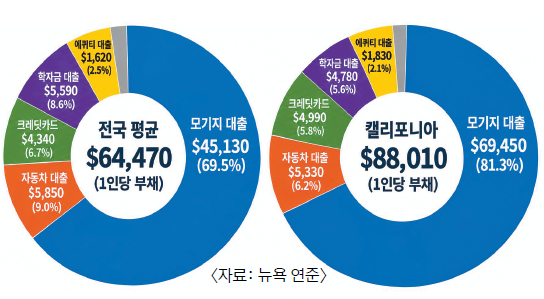
California residents are experiencing a sharp increase in credit card balances and home equity loans, while borrowing for homes and automobiles remains stagnant, reflecting growing financial pressure to cover daily living expenses.
Surging Credit Card and Home Equity Borrowing
According to consumer debt data for the third quarter of 2026 released by the Federal Reserve Bank of New York, the per capita credit card debt in California reached $4,990, marking a 5% increase from a year ago and a 38% jump over four years. This figure exceeds the national average of $4,340 by 13%. Nationally, credit card debt grew by 3% over the past year and 32% over four years.
Home Equity Lines of Credit (HELOCs) and second mortgages have also seen a dramatic rise. California’s per capita balance stands at $1,830, increasing 18% in a single year and 38% over four years. Meanwhile, the national average reached $1,620, showing 13% and 42% growth respectively.
Stagnant Mortgages and Auto Loans Limit Overall Debt Growth
Despite the spikes in revolving and equity debt, overall consumer debt growth in California remained modest. Per capita consumer debt in the state reached $88,010, marking a modest increase of 0.5% over the past year and 6% over four years, compared to the national average of $64,470, which grew by 2% and 11% respectively.
This subdued overall growth is primarily driven by a slowdown in high-value asset purchases like housing and automobiles. California’s per capita mortgage debt sits at $69,450—54% higher than the national average of $45,130—but dropped by 0.5% over the past year with a four-year growth rate of just 4%, largely reflecting high baseline home prices.
Auto loans experienced a similar trend, with California’s per capita balance reaching $5,330, representing a mere 2% increase over the year and 5% over four years, trailing the national average of $5,850.
Potential Risks for California Households
These shifts in debt structure indicate that consumers are postponing home and car purchases due to high housing prices and borrowing costs, relying instead on credit cards and home equity to secure cash flow.
While it remains unclear whether this increased borrowing stems from consumer confidence or living cost pressures, financial experts warn that continued reliance on high-interest debt will escalate household interest burdens and erode spending capacity.
Daryl Fairweather, chief economist at real estate firm Redfin, cautioned that homeowners are tapping into accumulated equity gains to pay off credit card debt, warning of the risk that deteriorating economic conditions could force them to sell their homes due to escalating repayment burdens.