Artificial intelligence (AI) is transforming manufacturing processes far beyond car design and autonomous driving. The introduction of a technology that produces car body panels using only AI and robots—without traditional automotive manufacturing molds—is poised to bring major changes to the automotive industry.
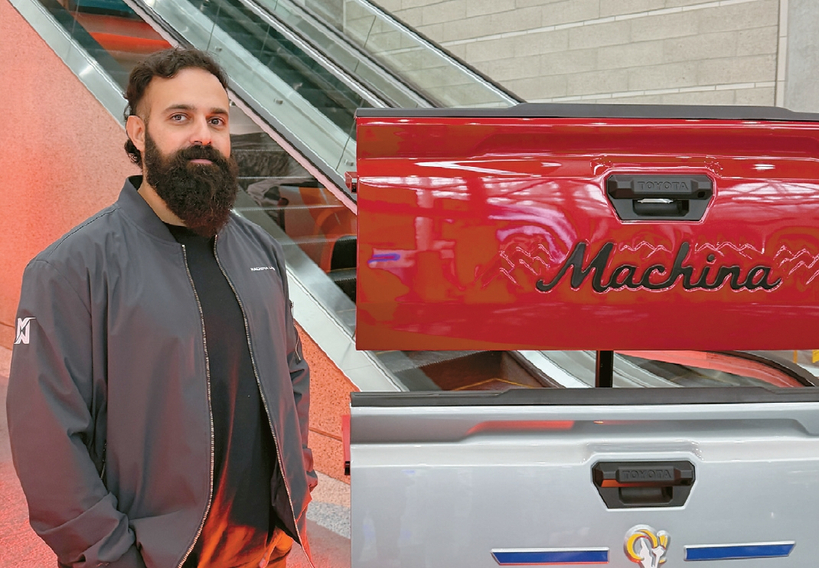
Meeting at the 2026 LA Auto Show media day, Ed Mull, CEO of AI-based robot manufacturing firm Machina Labs, highlighted production flexibility as the greatest competitive advantage differentiating their technology from traditional manufacturing.
"A robot producing car body panels in the morning can manufacture aircraft panels in the afternoon," Mull explained. "When you input a new design into the software, the system figures out the manufacturing method on its own."
Traditional automotive manufacturing processes require dedicated stamping dies to produce metal parts of specific shapes. However, Machina Labs’ technology can produce various products simply by changing the software.
This method involves two robotic arms applying pressure from both sides of a metal sheet to process it into the desired shape. Because AI analyzes design data to determine robotic arm movements and machining conditions, it can fabricate car body panels of diverse forms. It is a form of digital sheet metal technology.
AI analyzes design data to derive the process conditions required for robots to produce parts in the desired shape. Unlike traditional processes where humans must directly program robot operations or manufacture dedicated dies, AI independently determines the operational conditions required for manufacturing.
Shorter production preparation periods and cost reductions are also major strengths. "It took only two and a half weeks to produce all the car body panels displayed at this auto show," Mull said. "If we had proceeded with the same work using conventional technology, it would have taken at least six months no matter how fast."
The degree of freedom in design implementation also increases. Complex and detailed designs that were previously difficult to implement using traditional metal forming methods due to issues like material tearing can now be produced.
The company is also expanding cooperation with global automakers. Machina Labs has attracted investment from Toyota, established a cooperative relationship, and formed a partnership with Yamaha.
Mull predicted that the biggest changes brought by AI-based manufacturing technology will be the diversification of automotive designs and the expansion of customized production. As the burden of costs due to design and material changes decreases, it becomes possible to produce models with various exteriors based on the same vehicle platform.
"In the future, instead of producing 1 million cars with the exact same design, we will be able to introduce vehicles with various designs even on a single platform," Mull emphasized.