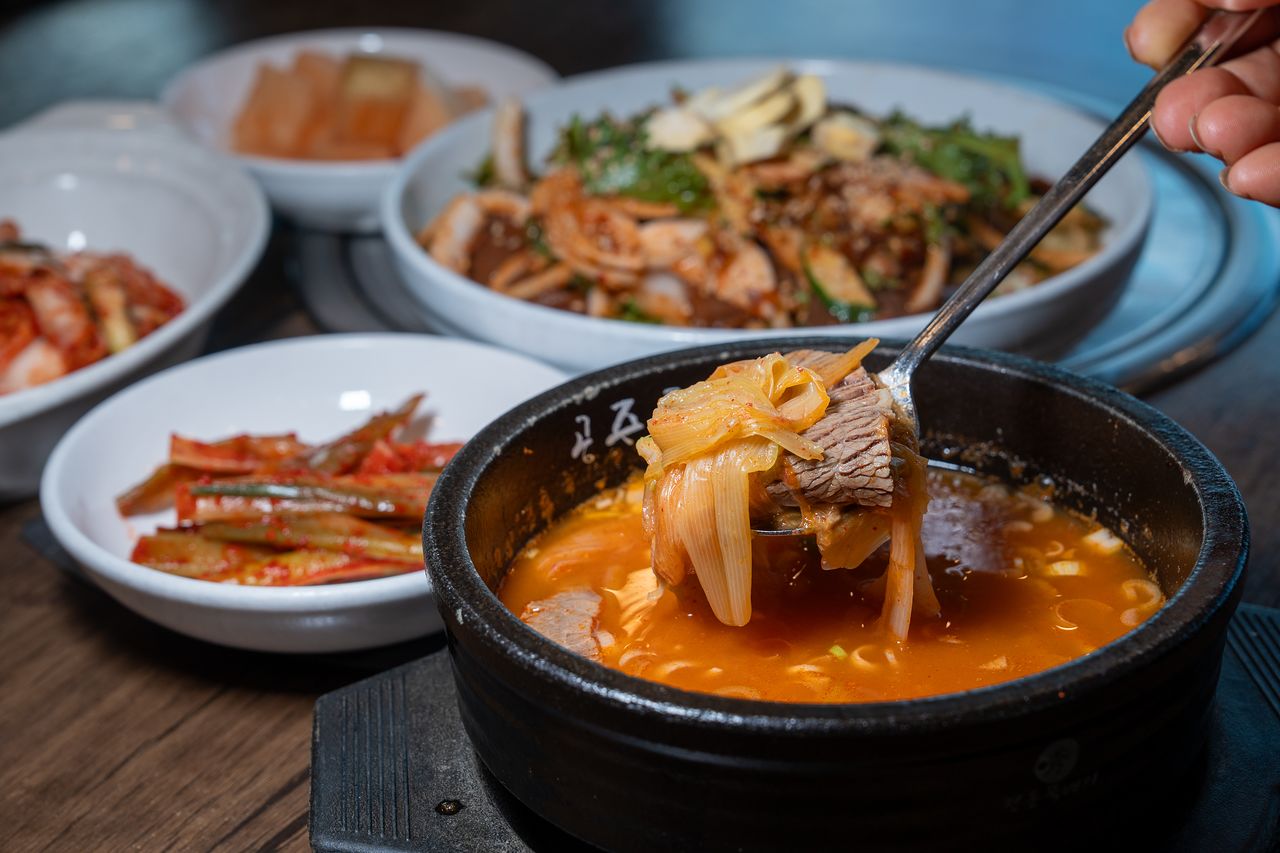
When it comes to iconic Korean soups, Seoul has Seolleongtang, Busan has pork soup (dwaeji gukbap), and Jeonju has bean sprout soup. In South Chungcheong Province, Gongju Gukbap stands proudly as a regional culinary treasure. While it shares the reddish broth of yukgaejang, it is remarkably mild, savory, and clean on the palate. Saeiak Garden is the historic establishment that has preserved this 70-year-old tradition, evolving from a modest market soup stall after the Korean War into a legendary dining destination favored by presidents.
A Presidential Secret and Local Tradition
In the mid-1960s, a middle-aged man wearing a straw hat walked into the original Hak Sikdang. Without even removing his hat, he headed straight to the empty third floor, finished a bowl of soup, and quietly departed. Shortly after, the restaurant received a flurry of phone calls as provincial offices and police stations were sent into a frenzy. The man in the straw hat was none of the other than former President Park Chung-hee.
According to veteran food critic Kim Soon-kyung, President Park covertly visited soup houses across the country to promote affordable and hearty gukbap during times of economic hardship. There was no better advertisement than knowing a president enjoyed the dish, and Hak Sikdang gained massive nationwide fame as a result.
From Marketplace Stall to 3-Story Landmark
Saeiak Garden traces its origins back to an open-air market stall. Founder Go Bong-deok (1928–2011) began selling gukbap without even a sign at Gongju Sanseong Market before the Korean War. Merchants and woodcutters gathered by her soup cauldron on every market day, paying just 30 hwan per bowl. With those hard-earned coins, she managed to build a three-story structure in downtown Gongju in 1963, making it the city’s first three-story building and allowing her to officially put up the sign for Hak Sikdang.
In those days, weddings and banquets in Gongju celebrated with gukbap instead of traditional noodles. The bus stop right in front of the restaurant was even named Hak Sikdang Stop, cementing the eatery as a true landmark of the city.
The Secret Behind the Unwavering Taste
In 1991, the founder’s youngest daughter-in-law, Kim Hye-shik, took over the family legacy. Relocating the restaurant near the Geum River two years later, she changed the name to Saeiak Garden, with her husband managing the massive soup cauldrons while she managed the business and culinary research.
Maintaining the exact flavor proved far more difficult than keeping a sign. Sung Ki-chang spent mornings guarding the cauldrons until his mother finally gave him her highest praise, telling him the broth tasted similar to hers. Kim Hye-shik even earned a master’s degree in 2016 with a thesis dedicated entirely to Gongju Gukbap.
Gongju Gukbap relies on a broth simmered from beef bones and brisket, seasoned with traditional soybean paste and chili powder, and generously loaded with radishes and green onions. It avoids offal and blood sausages entirely. Saeiak Garden boils the broth for over 10 hours and lets it rest for at least a day to eliminate any raw flavors, serving it at an optimal 80 degrees Celsius.
When asked about the ultimate secret to their renowned gukbap, the owners offer a simple, humbling philosophy: patience and persistence.