A&E Foundation Chairman Yi Yong-ki sold his company for $360 million, but the legacy he hopes to leave behind is not his money, business or name.
Instead, he is using his success to nurture people who will one day give back the help they received.
Giving Students Their First Passports
That vision has helped college students who had never traveled abroad receive their first passports.
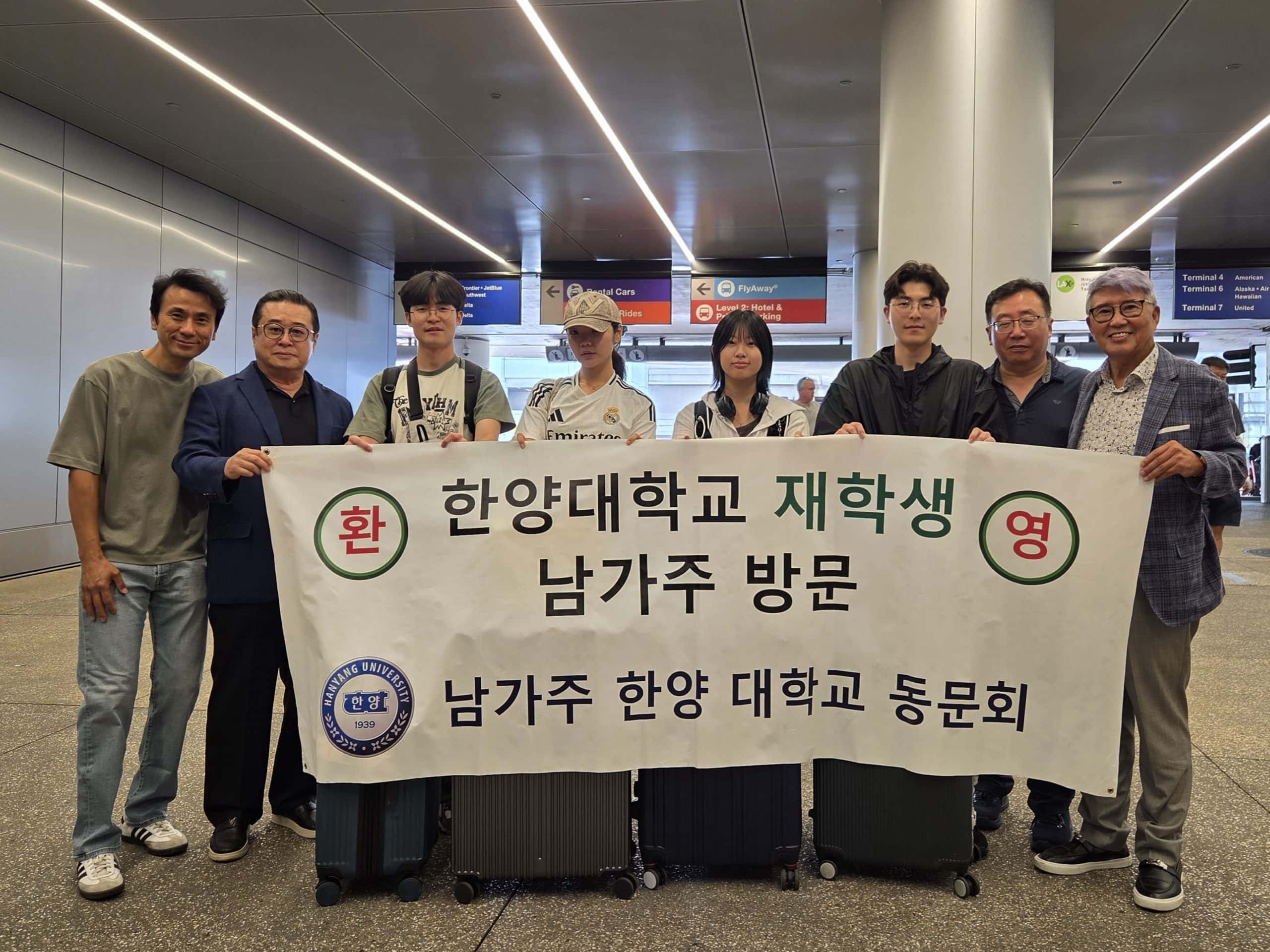
Four Hanyang University students arrived in the United States for the first time on July 18 with Yi’s support. He covered their airfare, accommodations and local program expenses.
Through Aug. 3, the students will visit the University of Southern California, UCLA and companies operated by Hanyang University alumni while gaining firsthand experience of life in the United States.
Yi proposed the “My First Passport” program to Hanyang University in 2022. The initiative fully covers passport fees and U.S. study-tour expenses for students who have never traveled abroad.
By this year, 20 students have broadened their horizons in the United States through the program.
“I wanted students to experience a wider world beyond Korea for themselves,” Yi said. “I also hope they learn to give the help they received to someone else one day.”
Yi wanted to give students opportunities rather than simply scholarships. He hoped to provide the next generation with experiences he could not have when he was young.
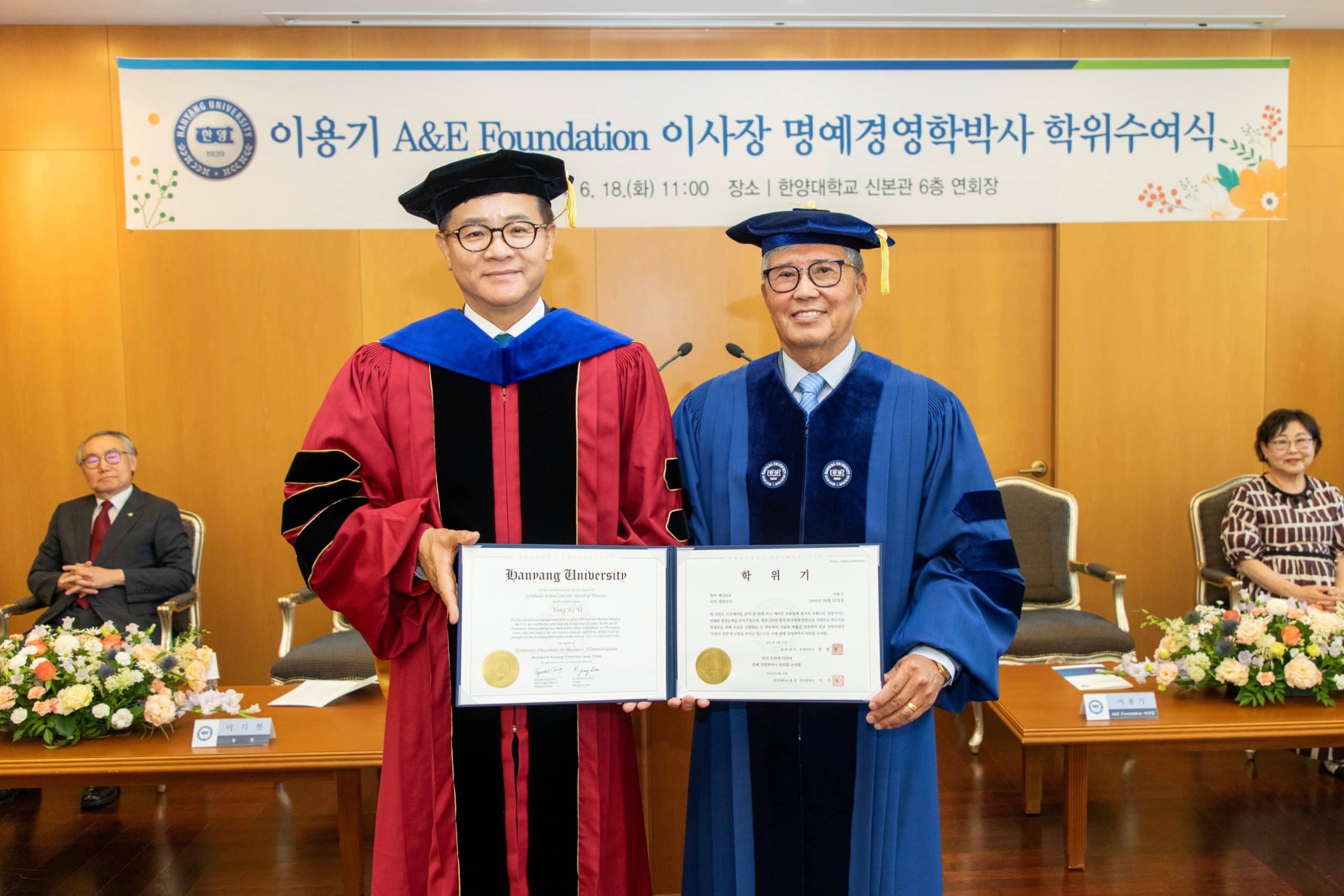
His educational philosophy was recently recognized by Hanyang University, which renamed its interdisciplinary undergraduate division the ‘Hanyang YK Intercollege’.
It was the first case in South Korea in which a university incorporated a donor’s name into the official name of an undergraduate college.
“I hope students will not be confined to a single field but will become people with intellectual breadth, cultural understanding and room to enjoy life,” Yi said.
He describes education as a century-long undertaking. Rather than focusing on immediate results, he believes that developing one person ultimately shapes society’s future.
That philosophy emerged not from a glamorous success story, but from poverty, failure and repeated challenges.
Poverty Fostered a Willingness to Take Risks
Yi was born in Yeosan-myeon, Iksan-gun, Jeollabuk-do. He lost his father while attending high school and continued his education despite his family’s financial difficulties.
He enrolled at Chung-Ang University in 1964 but left the university after one semester because he could not afford tuition. He later supported himself by working as a private tutor and a houseboy for the U.S. Eighth Army.
In 1967, he transferred to the evening electrical engineering program at Hanyang University. He worked during the day and studied at night.
A two-month refrigeration course taken during winter break changed the course of his life. Determined to master technical skills at the U.S. Eighth Army, he studied American textbooks alongside his coursework to learn both English and refrigeration technology at the same time.
The following year, he was selected to work in Vietnam as a technician. He traveled abroad at age 21.
“I took on the challenge believing that I could simply return home if it did not work out,” he said.
Technical Skills Opened the Door to America
After three years in Vietnam, Yi settled in the United States in 1971. While working as a heating and air-conditioning technician, he identified a business opportunity.
His idea was simple: What if we manufactured the necessary parts in advance and supplied them directly?
That idea led him to co-found heating, ventilation and air-conditioning parts manufacturer TRUaire in the mid-1980s.
“I started with nothing but one idea,” Yi said. “Had I known everything in advance, I might not have taken the risk.”
TRUaire grew into a key supplier for Home Depot, the nation’s largest home improvement retailer, and was twice named a Home Depot Partner of the Year.
In 2020, Yi sold the company to Nasdaq-listed CSW Industrials for $360 million.
Trust Mattered More Than Business Success
For Yi, relationships built on loyalty and trust were more valuable than business success.
When his properties faced foreclosure during the recession of the early 1990s and the 1992 Los Angeles riots, he chose not to file for bankruptcy.
Although bankruptcy could have protected some of his assets, he worried that the Korean American bank employees handling his accounts might suffer professional consequences.
“I thought I should not allow someone to be harmed at a workplace where they had spent many years because of me,” he said.
Yi disposed of his assets according to the bank’s instructions and was left with almost nothing.
The loyalty he demonstrated, however, later returned in the form of greater trust. Bank employees who moved back to Korea helped him rebuild by securing a factory and connecting him with financial institutions.
“Trust means keeping a promise, and loyalty is the strength that sustains that trust over time,” he said.
The same philosophy shaped his relationship with his employees. During an economic downturn, workers proposed reducing their hours rather than laying off colleagues so they could overcome the crisis together.
A&E Foundation Chairman Focuses on People
Yi’s sales philosophy throughout his career was also centered on people.
“I am not selling my product. I am selling my heart,” he said.
He believed that you must win the trust of buyers before trying to sell them the product.
Although he has stepped away from business, Yi continues to support educational and medical initiatives through the Andrew & Elizabeth Foundation.
His definition of success is not based on money or professional titles.
“If, at the age of 80, I can say that I have lived a good life, that is success,” he said.
His name now remains at a university. Yet what he truly hopes to leave behind is not his name, but people willing to help others.
“If the students I helped someday think, ‘Now it is my turn to help,’ that will be enough,” Yi said.