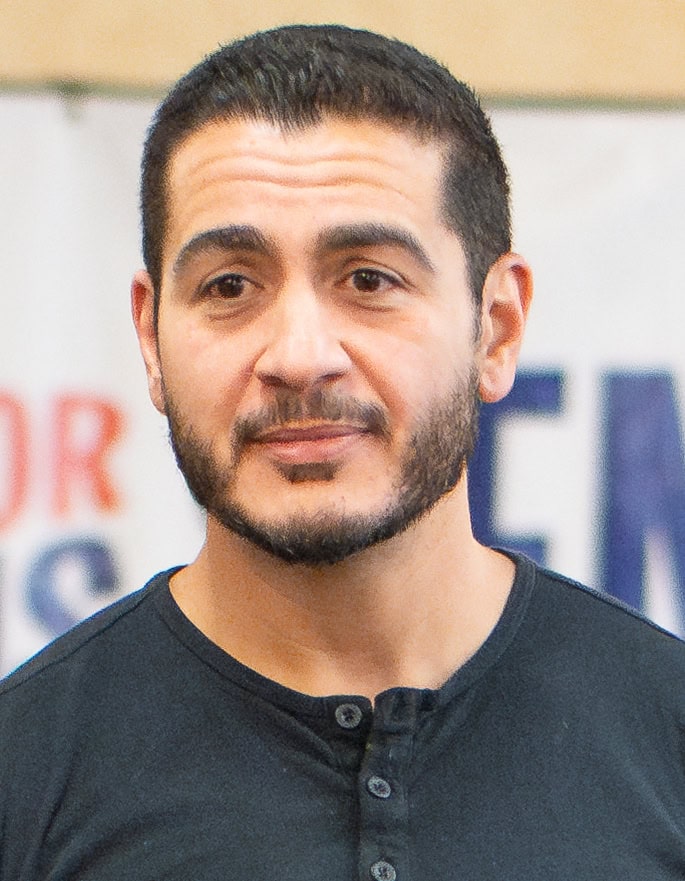
 Democratic leaders are facing a growing political dilemma after progressive newcomer Abdul El-Sayed, who received backing from prominent figures aligned with the Democratic Socialists of America, won Michigan’s Democratic primary for U.S. Senate.
Mainstream Democrats seeking to regain control of Congress are increasingly concerned that the rise of DSA-aligned candidates could ultimately benefit Republicans in November’s election.
El-Sayed defeated incumbent U.S. Rep. Haley Stevens by roughly 1 percentage point in the August 4 Democratic primary.
El-Sayed, who is Muslim, has received support from Sen. Bernie Sanders, a longtime leader of the democratic socialist movement, and Rep. Alexandria Ocasio-Cortez, widely viewed as one of the most prominent figures in the party’s progressive wing.
Stevens, by contrast, lost despite strong backing from establishment Democrats, including Michigan Gov. Gretchen Whitmer and Senate Democratic Leader Chuck Schumer. The outcome underscores the growing influence of the party’s progressive movement and its ability to challenge establishment-backed candidates.
El-Sayed is not a DSA member, but he identifies himself as a strongly progressive politician. During the primary, he campaigned on policies broadly aligned with the progressive left, including expanding public health insurance and opposing U.S. military support for Israel.
Michigan remains one of the nation’s most important battleground states. Its governor and both U.S. senators are Democrats, but President Donald Trump carried the state in the 2024 presidential election. That history has raised questions about whether El-Sayed can translate his success in a Democratic primary into a general-election victory.
Those concerns also help explain why much of the Democratic establishment rallied around Stevens, who was viewed as a more moderate candidate.
El-Sayed, apparently mindful of questions about his general-election appeal, has also taken steps to soften his progressive image. University of Michigan political science professor Jon Barry Ryan told the Los Angeles Times on August 5 that El-Sayed initially positioned himself as a progressive candidate focused on working-class voters but shifted some of his positions toward the political center after attracting national attention.
The debate over the party’s progressive wing is also playing out in Wisconsin. President Trump on August 4 attacked DSA member and Wisconsin gubernatorial candidate Francesca Hong, describing her past positions as those of a dangerous and irrational communist.
Hong, who faces a Democratic primary on August 11, previously called for abolishing the police and ending Thanksgiving, remarks that have drawn renewed scrutiny as Republicans seek to highlight her progressive record.
Democrats are now caught between embracing and distancing themselves from the growing influence of the DSA and its allies. Progressive candidates can energize younger voters and the party’s left flank, but Democratic leaders worry they may also mobilize conservative voters and drive away moderates, complicating the party’s effort to regain control of Congress.
Meanwhile, Sanders said August 5 that he would not endorse Hong. Although Hong is currently leading in the polls, she has also failed to secure support from Wisconsin’s Democratic establishment, including Gov. Tony Evers.