As more people embrace aging in place—living in their current homes as they grow older—the standard for home remodeling is shifting from "how pretty is it?" to "how long and comfortably can I live here?" In the past, senior-friendly interiors were often limited to safety rails and ramps. However, modern senior-friendly design seamlessly integrates stylish aesthetics from the start, ensuring safety and convenience shine when needed. Here are 8 sophisticated aging-in-place design ideas highlighted by Architectural Digest.
Slip-Resistant Flooring: One of the primary hazards to reduce in older homes is falls. Water-prone areas like bathrooms should feature non-slip tiles or finishes that increase surface friction. Past non-slip flooring often resembled hospital or nursing facility setups, but modern options offer a wide range of designs indistinguishable from high-end tiles, eliminating the need to sacrifice beauty for safety.
Curb-Free Bathrooms: Stepping over a bathtub or navigating a high shower threshold becomes increasingly hazardous with age. Modern bathroom trends feature curbless showers that connect the bathroom floor and shower area at nearly the same height, complete with linear drains. While they look like spacious, sophisticated hotel bathrooms for younger adults, they provide effortless access later in life even if walkers or wheelchairs are needed.
Ergonomic Kitchens: Reaching for heavy dishes on high shelves or bending deeply into lower cabinets becomes burdensome over time. Recent kitchen designs focus on minimizing physical strain with easily accessible cabinets, lowered countertops, and user-friendly appliances. Recent surveys indicate that 60% to 80% of older adults are interested in this style of universal kitchen design.
Lever-Style Door Handles: Round doorknobs require finger and wrist strength to operate, whereas lever-style handles can be easily opened with the palm or arm. Drawers and cabinets are also shifting from small pulls requiring finger-pinching to grips that are easy to grab and push. Though minor changes, these adjustments help maintain independent living when hand strength or joints weaken.
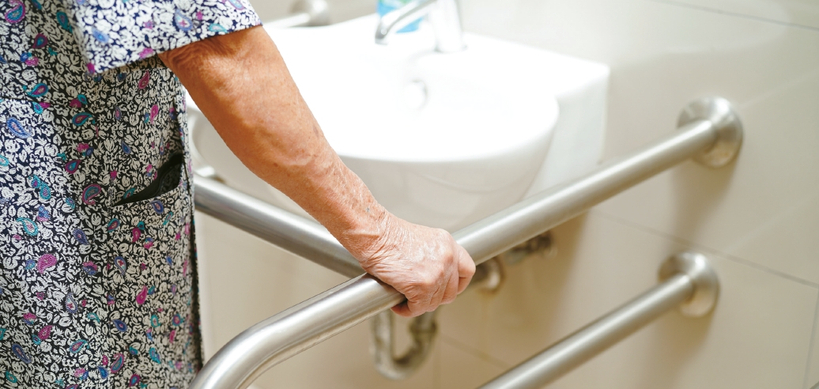
Design-Forward Grab Bars: Bathroom grab bars are quintessential aging-in-place fixtures, but homeowners often avoid them because they make houses look clinical. Today, products and designs look like towel bars or decorative rails while structurally reinforcing the interior walls to support a person's full weight. Rather than being added in a rush when needed, they are structurally and aesthetically installed during the remodeling phase.
Motion-Activated Lighting: Installing motion-activated lighting along pathways from the bedroom to the bathroom, stairs, and hallways eliminates the need to search for switches in the dark. Voice-activated lighting and device controls are also utilized. This goes beyond simple smart home convenience, serving as a vital safety measure to reduce fall risks when eyesight and balance decline.
Wider Doors and Hallways from the Start: Eliminating front-door steps and naturally integrating ramps into architectural designs, along with ensuring sufficient hallway and doorway widths for walkers and wheelchairs, is essential. Designing spaces as a core part of architecture prevents homes from looking institutional. Because these features also simplify moving strollers or luggage, they prove useful for all age groups.
Easy-to-Rise Furniture Design: Excessively low and plush sofas and beds are comfortable for the young, but make sitting and standing difficult as knee and waist strength decline. Modern designs carefully consider chair and bed heights, cushion firmness, and armrest placement to facilitate effortless sitting and standing. This approach extends sustainable living concepts beyond structural home changes to the furniture itself.