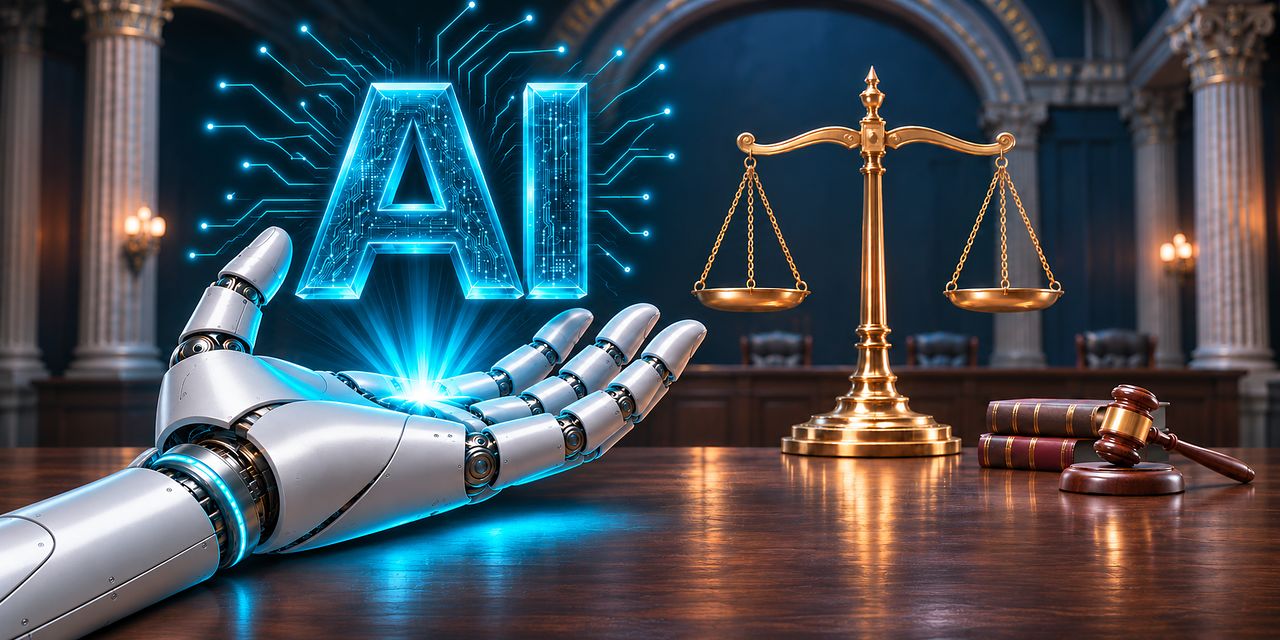
When discussing AI error liability, the question of who bears the responsibility for artificial intelligence mistakes has become a pressing global issue. Recently, a lawyer in the United States used ChatGPT to polish legal documents, only for the submission to include seven fabricated case precedents. The court ordered the lawyer to complete six hours of ethics and legal office management education and make a 1000 dollar donation. Highlighting the risks and limits of AI technology, the court emphasized that users must take responsibility, pointing out both the negligent lawyer and the law firm that failed to establish pre-existing AI usage guidelines. However, the court did not judge the liability of the AI developer.
Despite advertising slogans promising increased efficiency and letting AI handle important tasks, execution screens consistently warn users that systems can make mistakes and important information must be verified. This reality forces legal professionals, medical practitioners, and policymakers to determine where the boundaries of liability truly lie.
Similar issues have emerged in South Korea, where the Patent Court pointed out that significant precedents cited by a plaintiff in a patent invalidation case were entirely nonexistent. The plaintiff admitted to submitting cases found via AI without proper verification. This phenomenon extends beyond the legal sector. An Australian broadcasting service reported a case where an automated AI medical scribe mistakenly recorded that a kidney stone patient consumed hallucinogenic mushrooms, a claim the patient denied entirely.
Surveys underscore the magnitude of the problem. A survey by the Supreme Court of Korea revealed that about 80 percent of civil, domestic, and administrative judges encountered false or nonexistent precedents during trials. Meanwhile, a survey by the Korea Health Industry Development Institute showed that 69.1 percent of doctors utilizing medical AI consider the unclear assignment of legal liability during medical accidents to be the most critical problem.
As these challenges multiply, legal systems worldwide are grappling with reforming regulations. Courts and legal experts emphasize that while users must exercise diligence, developers who design complex deep-learning structures and emphasize high reliability cannot simply shift all verification responsibilities onto the end user. Establishing clear legal frameworks and dividing liability based on risk control and fault degrees remains an urgent necessity across industries.