We are living in an era where artificial intelligence (AI) can instantly produce sophisticated images with just a few lines of commands.
Amidst this confusion, anxiety is prevalent among creators, art school applicants, and parents who worry that the standing of human artists might disappear.
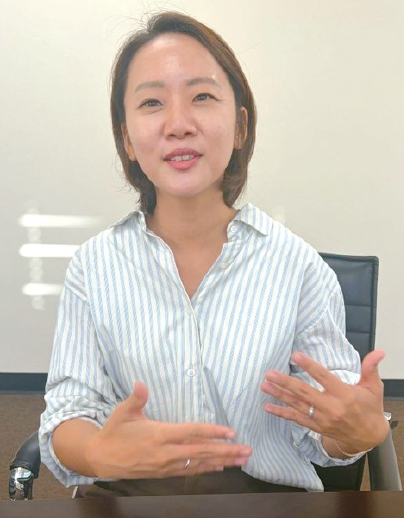
In the midst of this uncertainty, the new book ‘Should I Study Art in the Age of AI?’ is gaining attention and becoming a bestseller in the Korean publishing and art communities. The author, Jung Yoo-jin, is the Associate Dean of International Admissions at Otis College of Art and Design and a veteran curator who has organized over 50 exhibitions. Traveling across six countries including South Korea and North America every year to directly evaluate hundreds of portfolios from applicants, she clearly presents the direction art should take in this turbulent era.
Dean Jung first addressed the historical context of anxiety that has weighed down creators. Whenever innovation appeared in the art world, warnings signaling the end of art were constantly repeated.
She stated, “When the camera was invented in the 19th century, painters lamented, but instead of surrendering to photography, they turned their gaze inward and achieved a leap forward known as modern art. Even when Photoshop and tablets emerged, the initiative in creation always remained with humans.”
She also diagnosed that it is time for artists to calmly examine the structural changes in their work rather than harboring vague fears. Instead of worrying about AI job replacement, creators must objectively evaluate which functions of their work are being transitioned to technology.
How will the role of human artists change in an environment where AI churns out tens of thousands of images? Dean Jung emphasizes that the central axis of creation is shifting from hands-on execution to directing, which involves judging and coordinating.
As world-renowned industrial designer Karim Rashid noted, the role of creators is no longer confined to manual drawing. They are evolving into directors who select results fitting the context of the work among the options provided by AI and ask the fundamental question, “Why are we making this?”
This change is already being confirmed in real-time within industrial fields. New job roles such as ‘prompt engineer’ and ‘narrative designer’—which were unfamiliar just three years ago—have emerged as new axes in the global recruitment market. Ultimately, creative judgment—deciding ‘what to express’ rather than technical mastery—has become the core competitive edge.
Dean Jung, who has reviewed countless portfolios from university applicants every year, remarked, “There are many creators whose works are technically flawless, but when asked why they chose a specific subject, they hesitate to answer. This is because they lack their own clear standards.”
Dean Jung selected ‘uniqueness’ as the artist’s most powerful weapon that technology can never replicate. This uniqueness is formed at the intersection of unique questions, context derived from experience, and perspectives on observing objects, rather than innate genius.
She emphasized, “Art in the age of AI is not a speed competition with technology, but a journey to find the most ‘like-me’ version of oneself. When you focus on the essence of ‘what must be created,’ your own irreplaceable value is completed.”