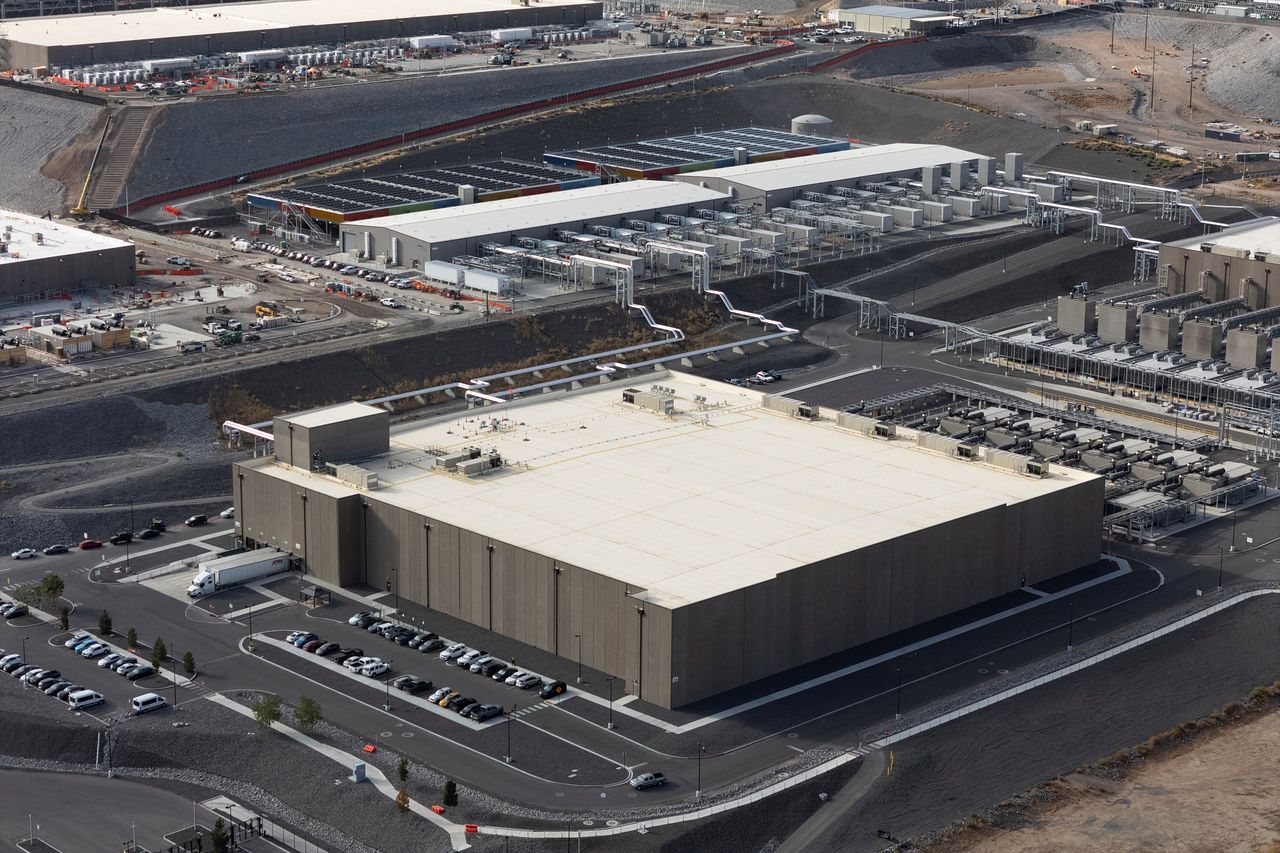
Global financial institutions that were once quick to lend money for AI investment risk are beginning to pull back. Banks are tightening loan screening processes, selling off existing loans, and transferring risks to insurance companies. Warnings are mounting that the AI investment boom could eventually trigger financial distress within the banking sector.
Rising Borrowing Costs and Tightening Credit
According to a November report by the Commercial Real Estate Finance Council (CREFC) in the U.S., the overall funding rate for data center-related asset-backed securities (ABS) has risen by more than 1 percentage point since the beginning of the year. The spread on five-year A-rated bonds issued with data centers as collateral also increased from a quarterly average of 1.95 percentage points in the first quarter to 2.57 percentage points over the recent three months. Investors are demanding higher interest rates.
The financing channels are also narrowing. Data from CREFC shows that U.S. data center-related ABS and commercial mortgage-backed securities (CMBS) issuance reached $21.9 billion through November 6, a 1.2% increase compared to the same period last year. However, issuance over the most recent three months dropped by 19.9% year-over-year.
Surging Capital Demand and Bank Risk Mitigation
Despite tighter credit, capital demand continues to expand. According to Goldman Sachs, global hyperscaler cloud companies have already issued $296 billion in corporate bonds this year, surpassing their original annual forecast of $250 billion. Next year’s issuance outlook has also been revised upward from $420 billion to $440 billion. Conversely, Bank of America reports that the spread on 10-year corporate bonds for major AI-related companies rose by about 0.5 percentage points this year—2.5 times the 0.2 percentage point increase seen in traditional, non-AI blue-chip industrial companies.
Banks are actively reducing their exposure. According to Reuters, global banks have tightened their underwriting standards for AI data center loans. Dutch lender ING is pursuing the sale of approximately $500 million in data center loan assets. Chris Fogt, a finance partner at Ropes & Gray, noted that while there was an overwhelming rush to lend to data center and AI infrastructure builders over the past year, investors are now evaluating how much additional risk they can shoulder given the substantial sums already lent.
Insurance Transfers and Market Caution
Some banks are shifting loss risks onto insurance companies. Financial Times reported that UK-based Barclays utilizes credit insurance for AI infrastructure loans, while HSBC has also considered adoption. The risk transferred from banks to insurers typically accounts for 20% to 50% of the relevant loan amount. Premium costs reach 50% to 70% of the bank’s expected return on the insured portion of the loan. While paying steep premiums, banks aim to mitigate credit concentration and secure room for additional lending. Insurers offering project finance credit insurance have also grown to over 70 firms.
Broader Economic Impacts and Warning Signs
Prudence has surfaced in the stock market as well. State Street reported that its global institutional investor risk appetite index fell to -0.09 in October, dropping from +0.18 the previous month and turning negative. In particular, investment weightings in semiconductor stocks as well as South Korean and Taiwanese equities were reduced. Marija Veitmane, head of equity research, analyzed that as the earnings and outlooks of major tech companies fall short of expectations, re-evaluation pressure on existing investments has intensified.
Central banks are also examining the fallout. The Bank of England analyzed a hypothetical shock in its July financial stability report, assuming a 45% drop in the U.S. stock market over six quarters and a 3.5 percentage point increase in corporate bond spreads. Such a scenario could reduce the UK’s Gross Domestic Product (GDP) by 2.2 percentage points.
The core problem is that rising financing costs could suppress AI investments once again. As interest burdens grow, companies with heavy debt and unstable revenue streams will struggle with new borrowings and debt rollovers. Delays in data center construction could further stall revenue generation, creating a vicious cycle.
The Bank of Korea also warned last month in a report on the key characteristics and risk evaluations of AI industry financing regarding the high debt burdens of nascent AI cloud companies. It analyzed that as ‘circular transactions’ increase—where big tech firms invest in AI startups, and those funded startups in turn purchase products and services from the big tech companies—it has become difficult to gauge actual demand and risk levels.