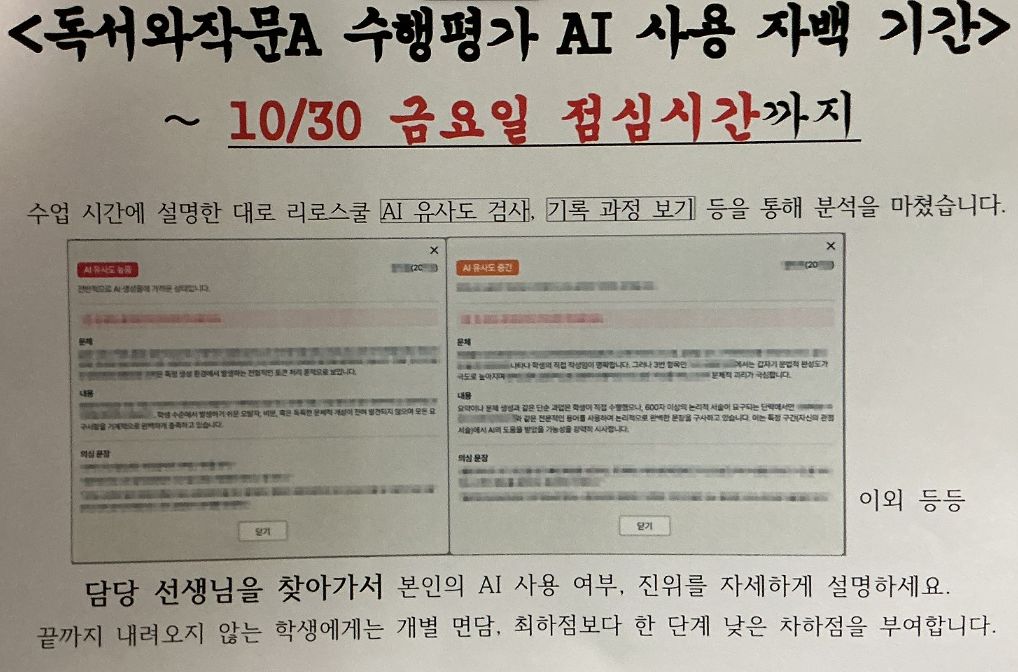
When it comes to maintaining academic integrity in the digital age, AI school cheating has become a pressing concern for educators worldwide. In South Korea, a recent high school performance assessment sparked widespread controversy and a decision for a complete retake after it was revealed that an overwhelming majority of students relied on artificial intelligence to complete their assignments.
Massive AI Usage Detected in Literature Assignment
According to Seoul education authorities, a high school in Yangcheon-gu, Seoul, decided to retake a Korean literature and composition performance assessment after discovering widespread misconduct. The assignment was based on the utilitarianism concept discussed in Harvard Professor Michael Sandel’s book ‘Justice’. Following a tip from several students, a teacher used an AI detection program to scan the submitted answers and found that approximately 170 out of 240 students had utilized AI.
The school initially posted a notice asking students who used AI to voluntarily come forward. When roughly 10 students visited the teachers’ office to admit to it, the scale of the cheating became much larger than anticipated, forcing the administration to mandate a complete re-examination for the entire grade.
Student Outrage and the High-Stakes Pressure of Admissions
The decision to hold a retake has triggered significant backlash, particularly from students who completed the assignment honestly without technological assistance. Many voiced frustration, arguing that studying hard and preparing diligently only resulted in unfair disadvantages when everyone else gets a do-over. Parents also expressed deep anxiety that the retake could negatively impact their children’s final grades.
This particular cohort of high school sophomores is the first to be evaluated under a revised grading system featuring a 5-tier relative evaluation scale instead of the previous 9-tier system. With intense competition for top-tier university admissions—where even a single grade drop can drastically alter prospects—the stakes are exceptionally high, driving some students to extreme measures.
New Measures Against Digital Cheating in Schools
Beyond essay-based assessments, educational authorities have also cracked down on the use of smart glasses equipped with AI features during midterms and finals. A recent nationwide Ministry of Education survey revealed that four schools—three of which are high schools in Seoul, Jeonbuk, and Jeju—caught students using smart glasses to cheat. The offending students received a score of zero for the respective subjects alongside disciplinary measures such as special education and community service.
To combat evolving technological cheating methods, schools are increasingly reintroducing traditional pen-and-paper in-class writing assessments. While educators agree that handwriting is the most foolproof method to prevent AI usage, teachers warn that it significantly increases administrative burdens regarding student record management for college admissions.