In the old Baltimore Koreatown in Maryland, traditional Korean restaurants are carrying on the history and legacy of the local Korean immigrant community.
Local media outlet Baltimore Beat recently highlighted the history of Koreatown and the evolution of its Korean eateries, reporting that the remaining restaurants are successfully maintaining their traditions while welcoming a new wave of customers.
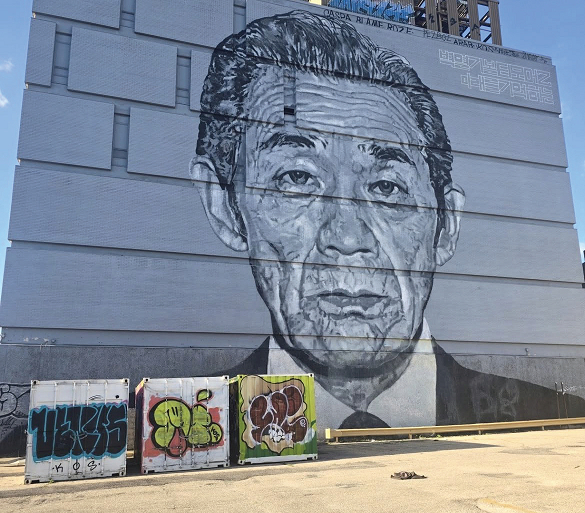
According to the report, faded Korean-language signs from closed businesses still hang on the exterior walls of vacant buildings in Baltimore’s Station North neighborhood. Citing a 1978 article from the Baltimore Sun, the outlet noted that the local Korean population at the time was approximately 14,000, making it the largest Asian community in the area.
The formation of Koreatown was largely driven by the landmark Immigration and Nationality Act of 1965, which abolished explicit legal discrimination against immigrants from Asia and beyond, sparking a surge in Korean immigration. Businesses catering to the Korean community subsequently clustered around Station North. Dozens of establishments opened their doors, including medical clinics, travel agencies, tea houses, and jewelry stores. The approximately 10,000-square-foot ‘Hyundai Plaza’ on North Charles Street once served as a central meeting place for Korean Americans.
While many of these early establishments have since disappeared, the iconic Korean restaurant ‘Jong Kak’ remains. Opened in 1989, Jong Kak is currently run by Jung Suk and his wife, Kim Na-ri, who took over operations from his parents.
Jong Kak historically functioned as a late-night sanctuary for Korean business owners. Until the COVID-19 pandemic, the restaurant stayed open daily until 4 a.m. Korean proprietors who ran liquor stores, takeout shops, and small convenience stores would gather here after finishing their long shifts.
Jung, who immigrated to the U.S. with his parents as a middle school student, frequently served as the family translator. He noted that helping his parents navigate business operations made taking over the restaurant a natural transition.
Operating in its second generation, Jong Kak has seen its customer demographic shift significantly. In the past, about 90% of the patrons were of Korean descent. Today, with a growing non-Korean clientele, the restaurant has had to translate its Korean-language menu items into English.
Despite the changing customer base, Jung strives to keep traditional Korean menu items intact. For instance, ordering a meat dish is accompanied by soybean paste stew (doenjang-jjigae) and steamed egg soufflé in an earthenware pot (gyeran-jjim).
The restaurant has also introduced modern ways to engage new customers, including launching an Instagram account, setting up an instant photo booth, and featuring a Jinro Toad character statue.
Located right next door to Jong Kak, ‘Kong Pocha’ also targets the demands of a younger, multi-ethnic demographic.
Founders Kang So-bin and Wi Dae-han designed the pocha-style (Korean casual pub) restaurant with nearby university students and hospital staff in mind. Last year, they successfully opened a second location in Columbia.
Another long-standing establishment in the former Koreatown, ‘B1 BBQ,’ is undergoing its own transformation. Current owners, who acquired the restaurant after it served the community for about two decades, noted that they are gradually moving away from a strictly traditional Korean-centric customer model.
Ultimately, Baltimore’s Korean restaurants serve as vibrant spaces where the past, present, and future of the Korean immigrant community peacefully coexist.
Efforts to preserve the history of Koreatown are also ongoing. The Towson University Asian Arts & Culture Center and the Central Baltimore Partnership host the annual ‘Asia North Exhibition and Festival.’ Last year, they also launched a dedicated website to document the rich history of Koreatown.