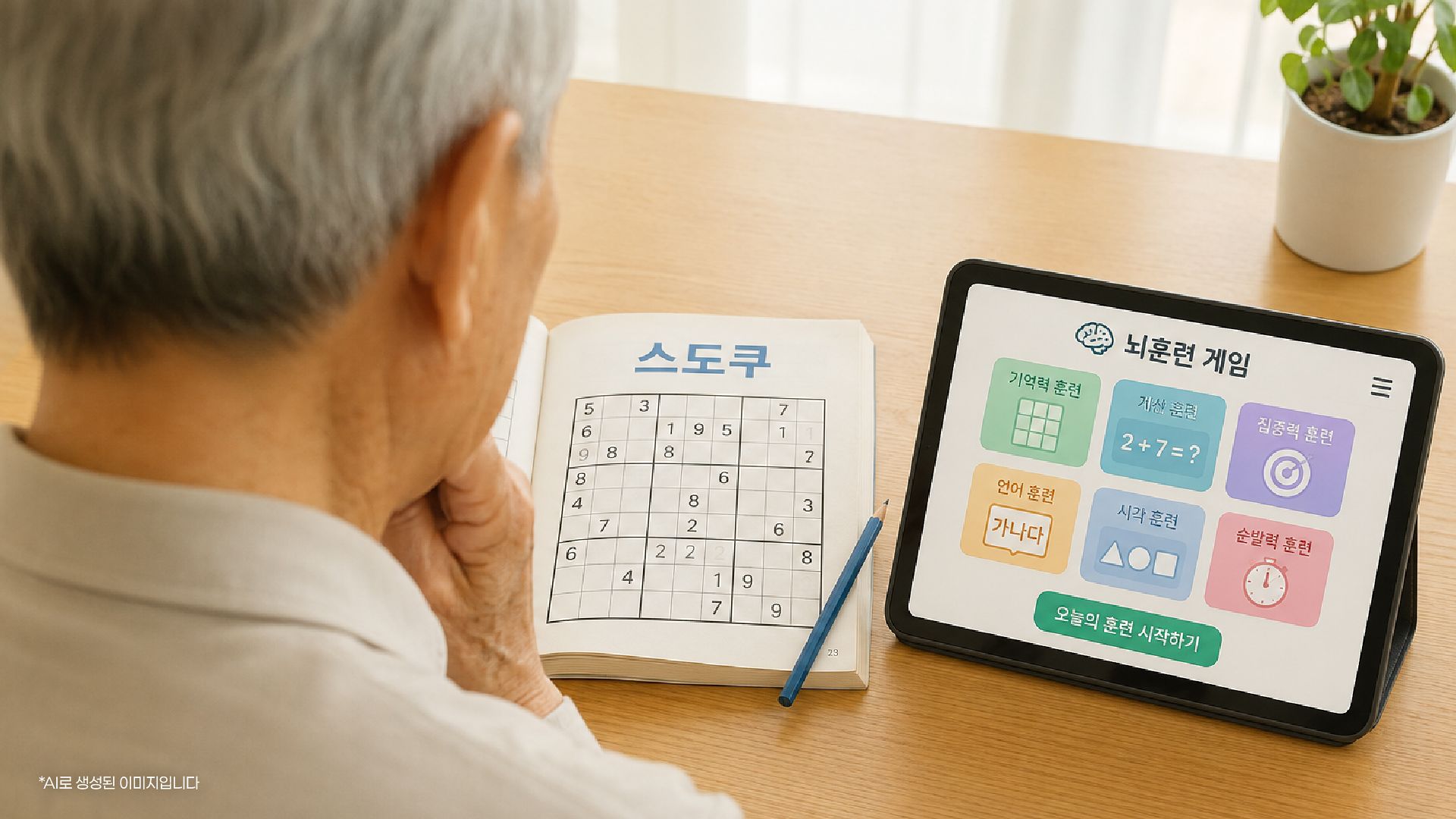
How difficult is brain training to prevent the risk of dementia? The reporters tried out a game most similar to the training used in the research alongside colleagues.
At first, it was not difficult. However, the more correct answers given, the shorter the screen display time became. Reaching more difficult stages felt almost like torture. It felt less like a brain game and more like a rigorous training pushing the brain to its limits.
Many people play Sudoku or solve crosswords out of fear of dementia. This is due to the belief that such games fully engage the brain and help delay dementia. However, research tracking this over 20 years showed results slightly different from many people’s beliefs.
The ACTIVE Study and Different Brain Training
Supported by the U.S. National Institutes of Health (NIH) between 1998 and 1999, the ACTIVE study divided 2,802 elderly participants aged 65 and older with an average age of 74 into four groups. Three groups received different types of cognitive training, while one group served as a control receiving no training.
The training period lasted 5 to 6 weeks, consisting of 10 sessions lasting 60 to 75 minutes each, meaning training took place about twice a week. Some of these participants also received booster training 11 and 35 months later.
First, memory training taught strategies for better retention. Participants learned to group word lists into meaningful categories, create visual images, and utilize associations to remember words or story content.
Second, reasoning training focused on finding rules. This involved finding patterns in upcoming number or letter sequences, or understanding daily routines such as medication and travel schedules.
Third, training was entirely different from the others. While it forced participants to think, it was not a game that allowed leisurely pacing like Sudoku.
The research team utilized Medicare records to verify whether participants received a dementia diagnosis. Among the initial 2,802 participants, 2,021 with connected records were included in the actual 20-year analysis.
Long-term Results and Specific Training Effects
However, the group that showed a meaningful difference in the 20-year dementia diagnosis risk was the one that received both specific training and booster training. Looking solely at those who did not receive booster training, there was virtually no difference compared to the control group.
Then, what exactly is this training? Can it be followed at home? And what specific features of this training helped delay a dementia diagnosis?
"Pushing the brain like going to work."
What is this brain training that pushes both the eyes and the brain simultaneously, becoming harder when done well and easier when failed?
However, simply repeating a similar app alone at home cannot guarantee the exact same effects as the study.
The true identity of the "brain training" that showed a 25% lower risk of dementia diagnosis after 20 years can be found through the provided research links.