When Jin Jung-hee graduated with a graduate degree, passed through the Korea Institute of Science and Technology (KIST), and worked as a large corporate researcher, he never imagined he would become a laid-off worker at age forty. In 2010, the company suddenly reorganized, and his business division was dissolved. Senior executives and colleagues vanished in an instant. He was reassigned to the headquarters new business development team, and younger colleagues were sent to the factory. While there was no direct notice of termination, writing a resignation letter became an inevitable reality.
In truth, Jin always carried a desire to start his own business someday. His affection and confidence in the projects he pursued were strong. Therefore, after tendering his resignation, he took the items he managed at the company and transformed from ‘Jin Jung-hee, 56-year-old deputy general manager’ into ‘Representative Jin Jung-hee.’
Fortunately, about two years later, the business entered a stabilization phase. Things improved to the extent that annual sales reached 3 billion to 5 billion won until his two children entered college. People around him offered congratulations, telling him he could finally relax now that he had established himself.
The variable struck from an entirely unexpected place. South Korea’s overwhelming market share dominance in the display industry was shaken by China’s aggressive pursuit. As industry conditions slumped, company sales plummeted. On top of that, consecutive wars delivered a fatal blow. The production of their company products required special carbon produced exclusively in Finland, and when the supply chain collapsed, all processes went haywire.
Double whammy adversities completely tangled up the business. Looking back now, he feels that out of the terror of facing potential bankruptcy, he kept making misjudgments. China’s pursuit and wars were risks he could not control anyway, nor were they small issues that would end in a year or two. If it was an adverse factor beyond his control, he should have aggressively cleared it out early on, but foolishly holding on with the vain belief that he would somehow rise back up only amplified his losses.
With zero monthly income and 200 million won in debt, he ran around trying to revive the business, but his earnings ultimately plummeted to zero. Uncollected payments exceeded 100 million won, forcing him to take out loans to bring living expenses home. After two years of this, his debt approached 200 million won.
The Road Through Hard Labor and Part-Time Jobs
Seeking a way out, he chose minimum-wage part-time work simply to earn living expenses immediately. Having passed fifty, finding a proper job was difficult, and he also felt a strong desire to punish himself for failing to properly handle the business situation. He took on physical labor at gas station car washes, Coupang logistics centers, convenience stores, and apartment parking lot hand-wash operations. Working his body to the bone, he reviewed his foolishness and misjudgments, sternly scolding himself.
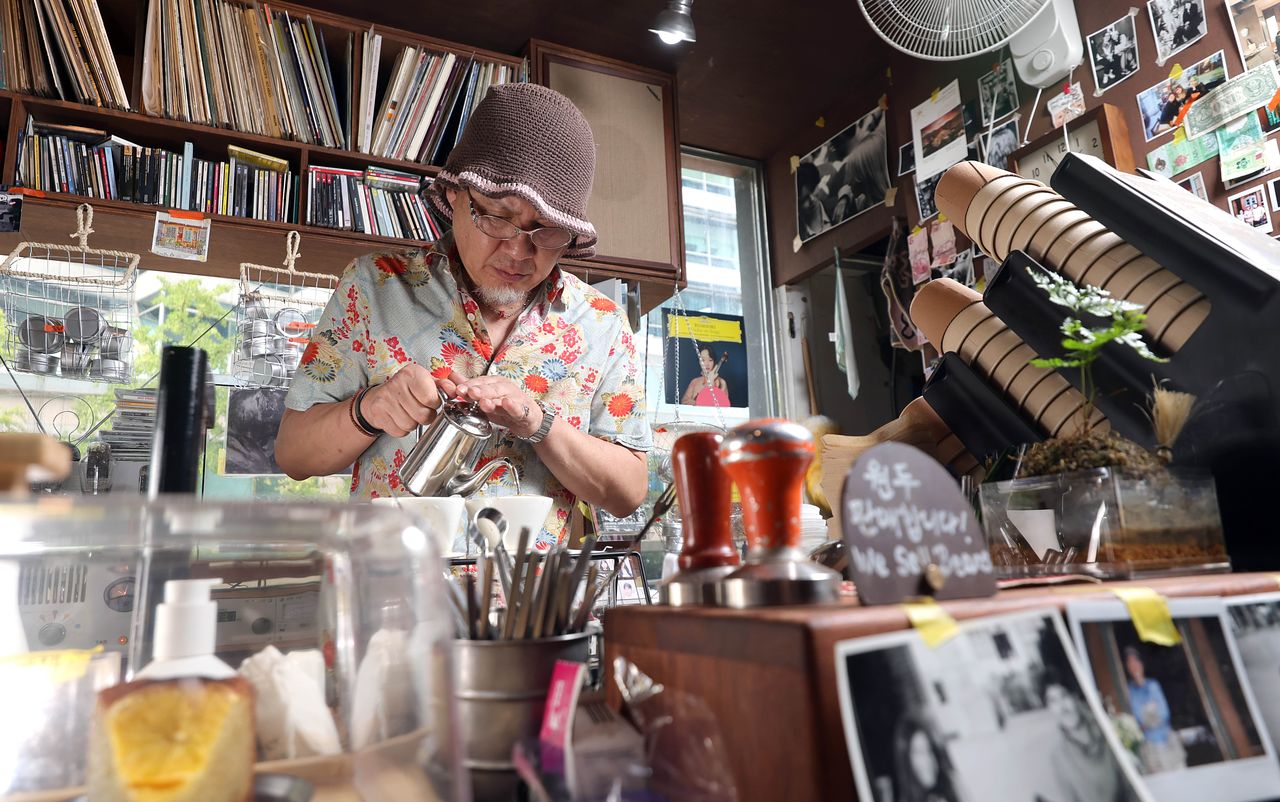
After countless trials and errors, he has now become a cafe owner. Initially, he thought of a low-cost franchise coffee shop. With the money he had, opening a fairly decent shop seemed like a reasonable choice.
However, he soon realized it was a structure where he merely poured his precious money in while earning nothing more than a minimum-wage part-time worker’s salary. Instead of becoming a cafe owner in name only, he opened an independent, personal cafe.
Transforming an Independent Cafe Into a $7,500 Monthly Profit Success
When four people came in and ordered only a single cup of coffee, he simply let them be. Yet, within less than two years of opening, he expanded the first-floor cafe to the second floor. More than 100 customers flock in solely during lunchtime, and weekends leave no empty seats. Sales doubled compared to the early startup days.
With monthly net profits reaching 10,000,000 won, many wonder how an out-of-the-way cafe where four customers share a single cup of coffee achieves such massive earnings. Despite the cafe industry facing higher closure rates than convenience stores, the secrets behind turning a supposedly doomed strategy into a blockbuster cafe are unveiled through his remarkable turnaround.